Bangladesh Bank Dress Code Order for Women Withdrawn After Backlash

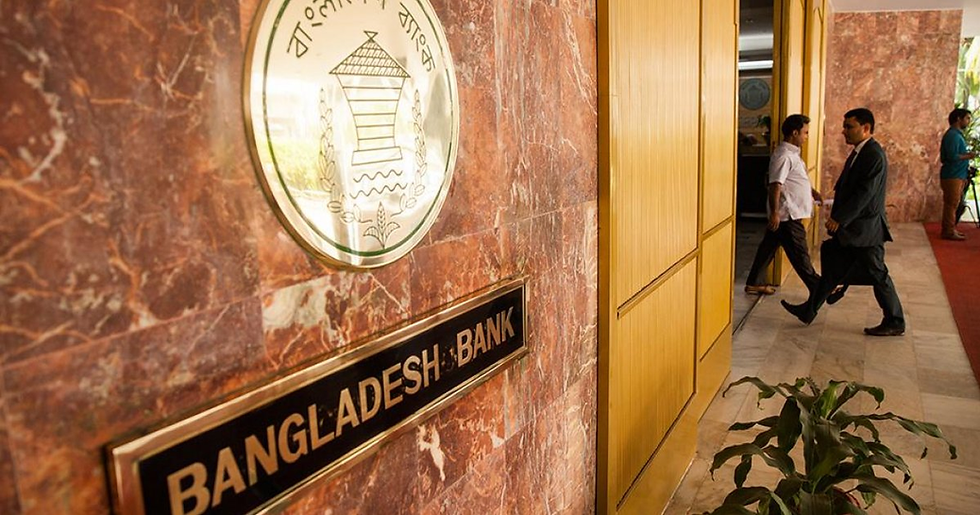
On July 21, 2025, the Human Resources (HR) department of Bangladesh Bank, the country’s central financial authority, issued an internal directive that sparked immediate nationwide debate and widespread criticism. The advisory instructed female employees to adhere to a stricter dress code during office hours, explicitly prohibiting short-sleeved or short-length dresses and leggings. Instead, women were encouraged to wear sarees or salwar-kameez with a dupatta (a long scarf) and were advised—but not mandated—to wear headscarves or hijabs.
For male employees, the guideline discouraged the use of jeans and chino trousers (casual cotton pants), recommending instead formal shirts and trousers.
The advisory also warned that non-compliance would be treated as a breach of discipline, urging each department to appoint an officer to monitor dress code adherence.
This directive, perceived by many as restrictive and culturally regressive, triggered strong backlash across the country, particularly on social media platforms, where users likened the move to the stringent dress codes enforced by the Taliban regime in Afghanistan. One user went as far as calling it the beginning of a “New Talibani era under a meticulous dictator.”
The controversy deepened with statements from civil society and women’s rights advocates. Fauzia Moslem, president of the Bangladesh Mahila Parishad (a prominent women’s rights organization), told local media that this kind of directive was unprecedented in the country’s history. She stated, "A certain cultural sphere is being shaped, and this directive reflects that effort."
Amid the social uproar, the directive's legal and political undertones gained more attention when citizens highlighted another development: an ordinance passed on July 23, 2025 that restricted government employees from protesting against the government. The revised legislation replaced the previous term “disobedience” with “misconduct disrupting public duty”—a subtle yet legally significant change. Under this law, any violation or obstruction of a government order by a public employee could result in dismissal from service or demotion, and notably, there would be no provision for appeal against such punitive actions. Critics argued that this not only suppressed dissent but also silenced institutional resistance to policies like the dress code.
The dress code advisory was also seen as part of a broader trend of religious and cultural conservatism rising in Bangladesh. Just weeks prior, Islamist groups had organized mass protests opposing equal property rights for women, and another group, Jamaat-Char Monai, called for Bangladesh to be turned into a Sharia-compliant state—similar to Afghanistan. In May, thousands of supporters from Hefazat-e-Islam marched near Dhaka University, brandishing banners that read:
"Say no to Western laws on our women, rise up Bangladesh."
Facing growing unrest, on July 24, 2025, the advisory was formally withdrawn. In an official statement, Arif Hossain Khan, the bank’s Executive Director and spokesperson, clarified that the advisory had been misinterpreted. “Considering the social context of all levels of officers and employees working in Bangladesh Bank, a decision was taken in the discussion of the respective departmental meetings to advise them to wear professional and elegant clothes during office hours,” he explained. He further emphasized that no formal policy decision had been taken, and that the guideline was not issued as a circular, thus not legally binding.
Importantly, Bangladesh Bank Governor Ahsan H. Mansur, who was abroad at the time, was reportedly unhappy with the directive once it reached his attention through media coverage. As per his instructions, the HR advisory was rescinded immediately, and the bank reaffirmed that wearing a hijab or headscarf remains a matter of personal choice, not a professional requirement.
In the aftermath, no sanctions were reported against the officials who were involved in drafting or circulating the advisory. The institution also reassured the public that its employees are free to choose attire that reflects both professional standards and personal preferences, as long as it adheres to a general expectation of decency.
Explore more on UPSC Content
Click for Daily Quotes:
Stay updated with the latest news by joining our Telegram channel – The PRESS Pad , and follow us on Instagram


Comments