Bulgaria Adopts Euro as Official Currency, Becomes 21st Member of Eurozone

Updated: Jan 4
Bulgaria has officially adopted the euro as its national currency, becoming the 21st member of the euro area on January 1, 2026, nearly two decades after joining the European Union in 2007. The move marks a historic economic and political milestone for the Balkan nation and completes what leaders have described as the final stage of Bulgaria’s integration into the European project.
To ensure a smooth transition, the Bulgarian lev will remain in circulation alongside the euro throughout January 2026. From February 1, 2026, the euro will become Bulgaria’s sole legal tender.
End of the Lev Era After More Than a Century
At midnight on December 31, 2025 (2200 GMT), Bulgaria formally ended the use of the lev, a currency that had been in circulation since the late 19th century. To mark the moment, Bulgarian euro coins were projected onto the building of the Bulgarian National Bank in Sofia as the country rang in the New Year.
The official conversion rate has been fixed at 1.95583 Bulgarian lev per 1 euro, following a formal decision taken in July 2025.
Why Bulgaria Joined the Eurozone
Successive Bulgarian governments have long advocated joining the eurozone, arguing that adoption of the single currency would:
Boost economic growth in the EU’s poorest member state
Strengthen Bulgaria’s financial stability
Deepen integration with Western institutions
Reduce vulnerability to external geopolitical influence, including from Russia
The eurozone itself was established with the official launch of the euro on January 1, 1999, initially in 11 countries, including France, Germany and Austria.
Public Reactions: Celebration Mixed With Anxiety
The euro’s arrival was met with both celebration and concern among Bulgaria’s 6.4 million people.
In a nationally broadcast address shortly before midnight, President Rumen Radev hailed euro adoption as the “final step” in Bulgaria’s EU integration. However, he also expressed regret that the move was not put to a public referendum, calling the decision a symptom of the deep divide between the political class and the public, a divide reflected in mass protests across the country.
According to the latest Eurobarometer survey, 49% of Bulgarians oppose the switch to the euro, primarily due to fears of rising prices.
Inflation Concerns and Cost-of-Living Fears
Concerns over inflation have intensified in recent months:
Food prices rose 5% year-on-year in November 2025, more than double the eurozone average, according to Bulgaria’s National Statistical Institute
Many citizens fear prices will rise faster than wages
“People are afraid that prices will rise, while salaries will remain the same,” a woman in her 40s told AFP in Sofia.
At major markets across the capital, prices were displayed in both levs and euros, reflecting the transition period. While some voiced concern, others expressed confidence.“The whole of Europe has managed with the euro — we’ll manage too,” said Vlad, a retired resident.
Political Instability Adds to Unease
Bulgaria’s euro adoption comes amid heightened political instability. Anti-corruption protests forced a conservative-led government out of office in mid-December 2025, leaving the country on the verge of its eighth election in five years.
Polling experts warn that any disruptions during the currency transition could be exploited by anti-EU political forces.
Logistical Challenges During the Transition
In the days leading up to the switch:
Long queues formed outside the Bulgarian National Bank and currency exchange offices
Some shopkeepers complained of delays in receiving euro starter kits
Banks warned of temporary disruptions at ATMs during the changeover
Despite these challenges, authorities insisted preparations were largely complete.
European Union and ECB Welcome Bulgaria
European Commission President Ursula von der Leyen described Bulgaria’s entry into the eurozone as an “important milestone”, highlighting its practical benefits:
Easier travel and living abroad
Greater market transparency
Improved competitiveness
Facilitated trade within the EU
Christine Lagarde, President of the European Central Bank (ECB), welcomed Bulgaria into the euro family and confirmed that Bulgarian National Bank Governor Dimitar Radev has taken a seat on the ECB Governing Council in Frankfurt.
The ECB marked the occasion by illuminating its headquarters in Frankfurt, symbolising the integration of 358 million Europeans who now use the euro.
Banking, Supervision and Financial Integration
With euro adoption:
The Bulgarian National Bank has joined the Eurosystem
Bulgaria has become a full member of the Single Supervisory Mechanism
The ECB now directly supervises four significant banks in Bulgaria and oversees 17 less significant institutions
Bulgarian counterparties can participate fully in ECB open market operations from January 1, 2026
Bulgaria has also joined the Eurosystem’s TARGET services, including:
T2 (payments)
T2S (securities settlement)
TIPS (instant payments)
ECMS (collateral management)
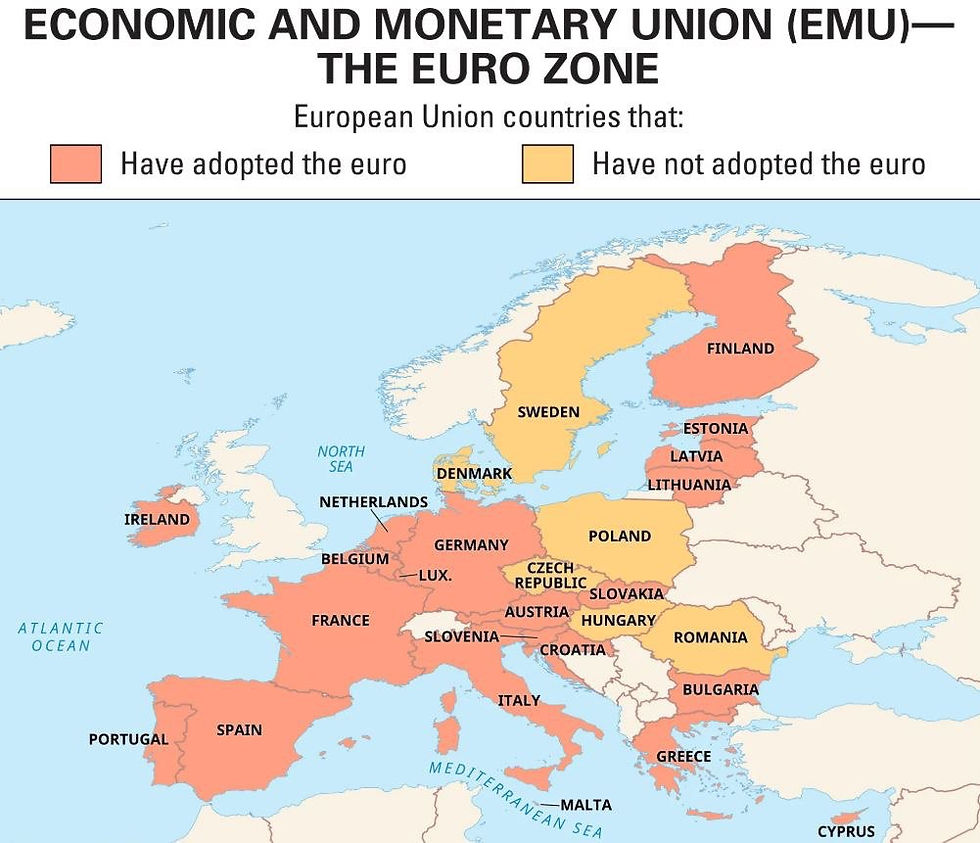
Where Bulgaria Stands Within the EU
With Bulgaria’s accession, six of the EU’s 27 member states still do not use the euro:
Sweden
Poland
Czech Republic
Hungary
Romania
Denmark
The euro was first introduced physically in 2002, while Croatia was the most recent country to join before Bulgaria, in 2023.


Comments