Daily Current Affairs - 23rd & 24th February 2026
Comprehensive UPSC Current Affairs Summary | India–Brazil State Visit & Trade Target 2030, EPM Interventions, EEZ Access Pass for Deep-Sea Fishing, NITI Aayog Apprenticeship Reform Report, New Delhi Declaration at AI Impact Summit 2026, Universal Immunization Programme Expansion, US Radiation Safety Policy Shift, Supreme Court on SWM Rules 2026, Pangolin Seizure Report, Winter Olympics 2026, SANKALP Scheme, Namo Bharat RRTS Launch, Hoysala–Tamil Inscription Findings, BAFTA 2026 Win and more.
Table of Content
State Visit of the President of Brazil to India
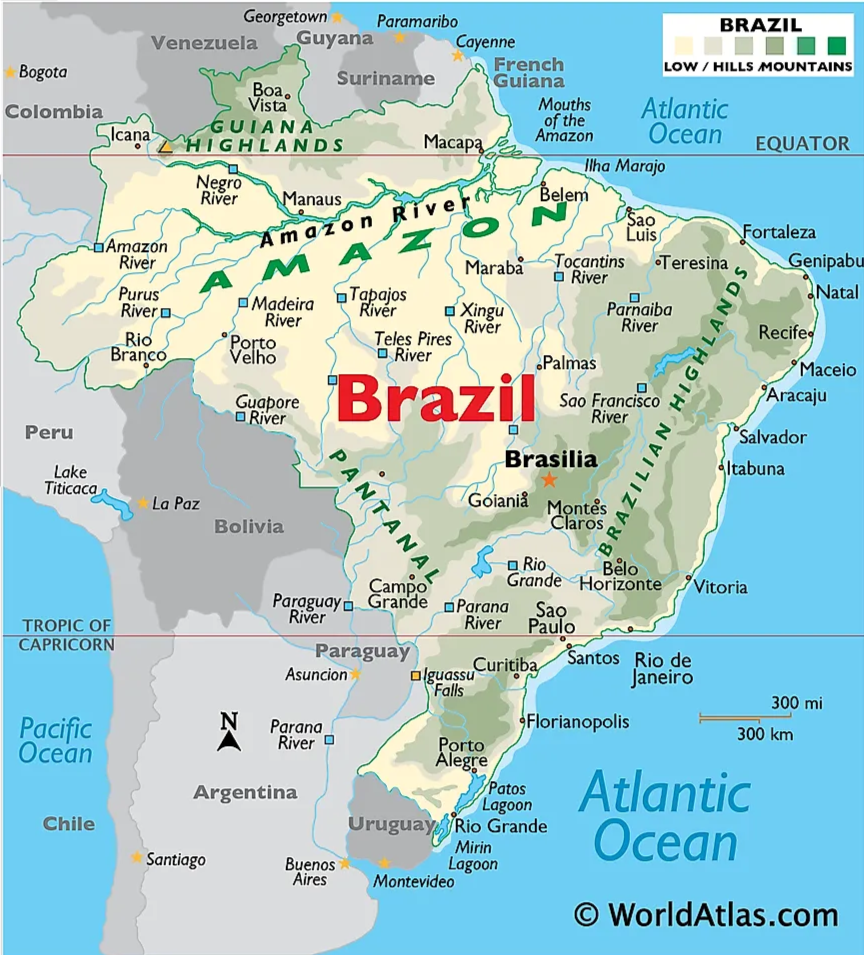
The State Visit of the President of the Federative Republic of Brazil to India concluded with renewed commitment to deepen the India–Brazil Strategic Partnership (a formal long-term cooperation framework upgraded in 2006).
Both countries revised their bilateral trade target from $20 billion to $30 billion by 2030, reflecting enhanced economic ambition.
The two sides emphasized stronger cooperation in the space sector (satellite development, launch services, and research collaboration).
Cooperation in renewable energy (energy generated from sustainable sources such as solar, wind, and biofuels) was strengthened.
Agricultural collaboration was prioritized to improve food security and agritech partnerships (technology-driven farming solutions).
Key Agreements and Strategic MoUs
A total of 10 Strategic Memoranda of Understanding (MoUs) (formal agreements between governments or institutions) were signed during the visit.
One MoU covered cooperation in Rare Earth and Critical Minerals (strategic minerals essential for electronics, defence, and clean energy technologies).
An agreement was concluded in the Postal sector to enhance logistics and communication networks.
Cooperation in MSME entrepreneurship (Micro, Small and Medium Enterprises that drive employment and innovation) was strengthened.
An agreement on pharmaceutical regulations was signed to harmonize medicine standards and streamline approvals.
Digital and Mobility Cooperation
The two countries adopted a Joint Declaration/Action Plan on a Digital Partnership for the Future to deepen collaboration in digital governance and emerging technologies.
The validity of multiple-entry tourist and business visas was extended from five years to ten years.
The visa extension will operate on a reciprocal basis, meaning both countries will offer equal benefits to each other's citizens.
Historical Foundations of India–Brazil Relations
Diplomatic relations between India and Brazil were established in 1948, marking the beginning of formal bilateral ties.
The relationship was upgraded to a Strategic Partnership in 2006, expanding cooperation across political, economic, and strategic domains.
Cooperation in Plurilateral and Multilateral Forums
Both countries coordinate closely within BRICS (Brazil, Russia, India, China, South Africa grouping for economic and political cooperation).
They collaborate under BASIC (Brazil, South Africa, India, China coalition on climate negotiations).
Engagement continues in the G-20 (Group of Twenty major economies focusing on global economic stability).
Both nations work together in the G-4 (Brazil, Germany, India, Japan grouping advocating UN Security Council reform).
Cooperation is active within IBSA (India, Brazil, South Africa Dialogue Forum promoting South–South cooperation).
They coordinate positions in the United Nations (UN).
They work together at the World Trade Organization (WTO) (global body regulating international trade rules).
Engagement continues at UNESCO (United Nations Educational, Scientific and Cultural Organization).
They cooperate within the World Intellectual Property Organization (WIPO) (UN agency dealing with global intellectual property rights).
Trade and Renewable Energy Engagement
In 2025, bilateral trade grew by over 25%, reaching USD 15.21 billion.
Trade engagement is facilitated under the India–MERCOSUR Preferential Trade Agreement (a trade arrangement providing reduced tariffs between India and the South American trade bloc MERCOSUR).
Brazil became a co-founder member of the Global Biofuel Alliance (an initiative to promote sustainable biofuels globally).
Brazil ratified the International Solar Alliance (ISA) Agreement in 2022, strengthening solar energy cooperation under this India-led initiative.
U.S. Departure from International Radiation Safety Standards
The US Department of Energy (DOE) announced the elimination of the "As Low As Reasonably Achievable" (ALARA) philosophy from its directives and regulations for global radiation protection.
This represents a shift to a risk-informed approach, prioritizing operational efficiency and cost-effectiveness.
It risks increasing worker exposure by removing the mandate to minimize doses below statutory limits.
Foundations of Radiation Protection
The global framework for radiation safety has historically rested on two primary pillars:
ALARA: A core safety principle dictating that radiation exposure should be kept as low as reasonably achievable, balancing social and economic factors.
LNT (Linear No-Threshold): The scientific model behind ALARA, which assumes that any radiation dose, no matter how small, carries some cancer risk.
Global Radiation Safety Rules
ICRP: International bodies like the IAEA and the International Commission on Radiological Protection (ICRP) recommend optimization principles similar to ALARA as part of global safety frameworks.
IAEA Updates: The International Atomic Energy Agency (IAEA) plans to update its 2014 Basic Safety Standards based on the new ICRP inputs to ensure universal acceptance of radiation protection practices.
Most countries use dose limits plus optimization to protect workers and the public.
Indian Radiation Safety Rules
The Atomic Energy Regulatory Board (AERB) strictly enforces the ALARA principle across all nuclear facilities, aligning fully with ICRP recommendations.
Indian regulations set dose limits (e.g., 20 mSv/year for workers) but mandate ALARA to keep actual doses far lower.
Seven New Interventions under Export Promotion Mission (EPM)
The Ministry of Commerce and Industry launched seven additional interventions under the Export Promotion Mission (EPM) to strengthen India’s export ecosystem.
About Export Promotion Mission (EPM)
The Export Promotion Mission (EPM) is a flagship initiative aimed at empowering Micro, Small and Medium Enterprises (MSMEs) (small business units classified based on investment and turnover criteria) to access global markets.
The Mission operates through two integrated sub-schemes namely Niryat Protsahan and Niryat Disha.
The Vision of EPM is to provide a comprehensive, flexible, and digitally driven framework for export promotion.
The total financial outlay of the Mission is ₹25,060 crores.
The timeline of the Mission is six years, from FY 2025–26 to FY 2030–31.
Niryat Protsahan focuses on financial support to improve access to affordable trade finance and facilitate diversification into new markets.
Niryat Disha focuses on non-financial support to enhance market readiness and competitiveness of exporters.
The implementing agency of EPM is the Directorate General of Foreign Trade (DGFT), which is responsible for regulating and promoting India’s foreign trade.
New Interventions under Niryat Protsahan (Financial Support)
Export Factoring Support promotes export factoring (a financial service where exporters sell receivables to a third party to receive immediate working capital).
Export Factoring Support introduces a digital claim mechanism to enhance transparency and efficiency.
Credit Assistance for E-Commerce Exporters introduces a Direct E-Commerce Credit Facility.
The Direct E-Commerce Credit Facility provides financial support up to ₹50 lakh.
The Direct E-Commerce Credit Facility offers 90% guarantee coverage, reducing lender risk.
The intervention also includes an Overseas Inventory Credit Facility.
The Overseas Inventory Credit Facility provides financial support up to ₹5 crore.
The Overseas Inventory Credit Facility offers 75% guarantee coverage.
Support for Emerging Export Opportunities enables exporters to access new or high-risk markets.
New Interventions under Niryat Disha (Non-Financial Support)
TRACE (Trade Regulations, Accreditation & Compliance Enablement) supports exporters in meeting Testing, Inspection and Certification (TIC) requirements (quality and compliance standards required in international trade).
FLOW (Facilitating Logistics, Overseas Warehousing & Fulfilment) supports the development of overseas warehousing facilities.
FLOW also supports strengthening of e-commerce export hubs.
LIFT (Logistics Interventions for Freight & Transport) mitigates geographical disadvantages faced by exporters.
LIFT specifically supports exporters located in low export intensity districts (districts with comparatively lower export performance).
INSIGHT (Integrated Support for Trade Intelligence & Facilitation) strengthens exporter capacity-building initiatives.
INSIGHT supports district and cluster-level facilitation under the Districts as Export Hubs initiative (a programme aimed at promoting district-level export specialization).
INSIGHT promotes the development of trade intelligence systems to enhance data-driven export decision-making.
Access Pass for Fishing in India’s EEZ
The Union Government has introduced a national Access Pass system to promote sustainable fishing within India’s Exclusive Economic Zone (EEZ).
Understanding Exclusive Economic Zone (EEZ)
The Exclusive Economic Zone (EEZ) is a maritime zone under international law.
The EEZ extends up to 200 nautical miles from the baselines from which the breadth of the territorial sea is measured.
Within the EEZ, a coastal state has sovereign rights for exploration, exploitation, conservation and management of natural resources.
Access Pass under EEZ Rules
The Access Pass system aims to promote sustainable and regulated fishing practices in deep-sea areas.
One of its key objectives is to facilitate the transition towards deep-sea fishing.
The system encourages the formation of Fisheries Cooperatives (member-owned organisations for collective economic activities).
The system also promotes Fishermen Fish Producer Organisations (FFPOs) (formal producer groups that aggregate fishers for better market access and bargaining power).
The Access Pass is mandatory for approximately 64,000 mechanised vessels operating in the EEZ.
The Access Pass is also mandatory for large motorised vessels exceeding 24 metres in length.
Traditional non-motorised and artisanal fishers (small-scale, traditional fishing communities using simple equipment) are exempted from this requirement.
ReALCRaft Digital Platform
The Access Pass is issued through the ReALCRaft digital platform. The pass is issued free of cost.
The entire process of application and issuance is conducted fully online.
The platform has been developed by the National Informatics Centre (NIC) in collaboration with the Department of Fisheries.
ReALCRaft is integrated with the Marine Products Export Development Authority (MPEDA) for issuance of Catch Certificates (documents certifying legal and traceable fish catch for exports).
ReALCRaft is integrated with the Export Inspection Council (EIC) for issuance of Health Certificates (certification ensuring exported marine products meet sanitary standards).
NITI Aayog releases a policy report on Revitalising Apprenticeship Ecosystem
The report provides critical insights, and outlines actionable recommendations to strengthen the apprenticeship system as a cornerstone of India’s skilling and employment strategy.
Apprenticeships are formal vocational education and training schemes that combine learning in education or training institutions with substantial work-based learning in companies.
Key Highlights of Report
Current Status: 51,133 Active Establishments under NAPS (FY 2024–25), and active engagements under NAP grew 27-fold from 2018-19 rising to 9.85 lakh in FY 2024–25.
Completion rates declined to 25.47% with a high dropout rate of 35.46%.
Key Challenges
Policy & Structural Gaps: Multiplicity of schemes, low stipend levels, and lack of standardised certification reduce effectiveness.
Regional & Industry Disparities: Underutilisation in BIMARU and North Eastern States; low MSME participation due to compliance and ROI concerns.
Aspirant-Level Barriers: Low women participation (~20%), weak career counselling, and social bias favouring academic pathways.
Recommendations
Policy and Systemic Reforms: Establish National Apprenticeship Mission, consolidate apprenticeship portals, seamless mobility between education and skilling pathways.
Structure and Governance: Introduction of Apprenticeship Engagement Index to benchmark performance, accelerating upgradation of Industry 4.0 aligned ITIs.
Industry-facing reforms: Deepening MSME participation through cluster-based consortia, promoting a Startup Apprenticeship Programme (SAP) etc.
Apprentice level support: Improving stipend adequacy, expanding insurance and social security coverage, enable international mobility.
Policy Framework
|
IBBI
IBBI has been sharing Data with Enforcement Directorate(ED) to strengthen anti-money laundering law and aiding recovery of siphoned assets.
About IBBI
It was established in 2016 under the Insolvency and Bankruptcy Code, 2016 (Code).
It is responsible for the implementation of the IBC.
The IBBI regulates professionals as well as processes.
It has regulatory oversight over the insolvency professional agencies, insolvency professional entities, insolvency professionals and information utilities.
It enforces rules for processes of corporate insolvency resolution, individual insolvency resolution, corporate liquidation and individual bankruptcy under the IBC.
AI Impact Summit 2026: Adoption of the New Delhi Declaration
The AI Impact Summit 2026 concluded with the adoption of the New Delhi Declaration, marking a major step toward inclusive and responsible global AI governance.
About the New Delhi Declaration
The Declaration was endorsed by 87 countries.
The Declaration was also endorsed by two international organisations namely the European Union (EU) and the International Fund for Agricultural Development (IFAD).
The guiding principle of the Declaration is “Sarvajan Hitaya, Sarvajan Sukhaya”, which means welfare for all and happiness for all.
The Declaration is structured around 7 key pillars.
The Declaration also announced a series of voluntary and collaborative global initiatives under these pillars.
Seven Pillars of the Declaration
Democratizing AI Resources
This pillar focuses on making foundational AI resources affordable and accessible to all countries.
Foundational AI resources include datasets, computing infrastructure, and foundational models required to develop AI systems.
Economic Growth and Social Good
This pillar promotes the wide-scale adoption of open-source AI applications.
Open-source AI applications are AI tools whose source code is publicly accessible for modification and redistribution.
The objective is to drive economic development and social progress.
Secure and Trusted AI
This pillar emphasizes building public trust in AI systems.
It promotes the development of secure, robust, and trustworthy AI frameworks.
It encourages industry-led voluntary measures to enhance responsible AI practices.
AI for Science
This pillar aims to remove structural barriers to research infrastructure.
It seeks to foster international scientific collaboration in AI-driven research.
Access for Social Empowerment
This pillar focuses on using AI to uplift all sections of society.
It promotes inclusive access to AI-enabled public services and solutions.
Human Capital Development
This pillar aims to equip individuals with skills required for an AI-driven economy.
It promotes AI literacy programs and vocational training initiatives.
Resilient, Efficient and Innovative AI Systems
This pillar promotes the development of energy-efficient AI systems.
It encourages the creation of resilient digital infrastructure to support AI deployment.
Key Initiatives Launched
The Charter for the Democratic Diffusion of AI was launched to support locally relevant innovation ecosystems.
The Global AI Impact Commons was launched to help countries replicate successful AI use cases.
The Trusted AI Commons was introduced as a repository of tools, benchmarks, and best practices for secure AI development.
The International Network of AI for Science Institutions was created to connect global scientific communities and pool research capabilities.
The AI for Social Empowerment Platform was launched as a collaborative space to exchange scalable AI solutions for social adoption.
The AI Workforce Development Playbook and Reskilling Principles were introduced to guide nations in preparing their workforce for AI transformation.
The Guiding Principles on Resilient and Efficient AI were introduced to promote energy-efficient and sustainable AI systems.
Universal Immunization Programme
Union Health Minister launched indigenously manufactured Tetanus & Adult Diphtheria (Td) Vaccine, formally introduced under Universal Immunization Programme (UIP).
About UIP of India
Genesis: Initially launched in 1978 as the Expanded Programme on Immunization, it was rebranded as the UIP in 1985.
Coverage: Provides free immunization against 12 diseases:
Nationwide (11): Diphtheria, Pertussis, Tetanus, Polio, Measles, Rubella, severe form of Childhood Tuberculosis, Rotavirus diarrhea, Hepatitis B, Meningitis & Pneumonia caused by Hemophilus Influenza type B, and Pneumococcal Pneumonia.
Region-specific (1): Japanese Encephalitis (only in endemic districts).
Achievements: Polio-Free India (2014), Neonatal tetanus elimination (2015).
Key Initiatives: Intensified Mission Indradhanush 5.0 (IMI 5.0) campaign with special focus on improvement of Measles and Rubella vaccination coverage, U-WIN Portal, etc.
SC's directions on the SWM Rules 2026
Comprehensive directions issued to enforce the upcoming SWM Rules 2026 (will come into effect on April 1, 2026).
SC reiterated that the right to a clean and healthy environment is an intrinsic part of Article 21 of the Constitution.
The Court noted that despite having 2000-year-old heritage sites, poor waste management and a lack of civic cleanliness severely discourage tourism in India.
Key Directions
Four-Stream Segregation: Pollution Control Boards to expedite infrastructure for four-stream segregation – Wet, Dry, Sanitary and Special Care waste and immediate communication of rules to Bulk Waste Generators (BWGs).
Role of Elected Representatives: Councillors, Mayors, Corporators, or Ward Members are designated as the lead facilitators for source-segregation education and have a statutory duty to enrol every citizen in the implementation of SWM Rules, 2026.
Strict Enforcement and Penalties: Failure to comply with the rules will no longer be treated as a mere administrative lapse. The Court established three tiers of enforcement:
Tier 1: Immediate imposition of fines for initial non-compliance by generators or local authorities.
Tier 2: Continued disregard will result in criminal prosecution under environmental laws.
Tier 3: Prosecution will extend to all responsible persons, including officials who neglect their oversight duties.
Legacy Waste: A separate, time-bound action plan must be activated to address, treat, and remedy legacy waste dumpsites.
Directions to be issued by MoEFCC under EP Act (1986):
Through District Collectors, conduct infrastructure audits of solid waste management.
Every local body must declare an outer time limit for 100% compliance.
Pangolin: CITES Report Highlights Global Seizures (2016–2024)
A recent report by the Convention on International Trade in Endangered Species of Wild Fauna and Flora (CITES) revealed that over 500,000 pangolins were seized globally between 2016 and 2024.
CITES is an international treaty that regulates global trade in wild animals and plants to ensure their survival.
About Pangolins
Pangolins are the only mammals wholly covered in scales.
They use these scales as a defense mechanism by curling into a tight ball to protect themselves from predators.
The scales are made of keratin, which is the same material found in human nails.
Pangolins are also called “scaly anteaters” because they primarily feed on ants and termites.
Pangolins are solitary animals, meaning they live alone rather than in groups.
Pangolins are primarily nocturnal, meaning they are active at night.
They possess long, sticky tongues that are longer than their bodies, which help them catch insects.
Pangolins are toothless mammals.
Distribution of Pangolins
There are 8 species of pangolins found globally.
These species are distributed across Asia and Africa.
Pangolin Species Found in India
Indian Pangolin
The Indian Pangolin is classified as Endangered on the International Union for Conservation of Nature (IUCN) Red List.
It is found throughout India south of the Himalayas.
It is not found in the north-eastern region of India.
Chinese Pangolin
The Chinese Pangolin is classified as Critically Endangered on the IUCN Red List.
In India, it ranges through Assam and the eastern Himalayas.
Fluorescent Proteins
Two studies show fluorescent proteins can detect magnetic fields and respond to radio waves, acting as quantum sensors.
About Fluorescent Proteins
Fluorescent proteins (FPs) are biological macromolecules, initially derived from organisms like the Aequorea victoria jellyfish and corals, that emit visible light when exposed to UV or blue light.
It revolutionised biology by enabling visualisation of molecules inside cells.
Widely used in cancer research, neural circuit mapping and protein tracking.
Traditionally used only as optical markers.
Discovery of Green Fluorescent Protein (GFP) recognised with the 2008 Nobel Prize in Chemistry.
Rapti River
NGT directs Suav’s status be changed from drain to river in official records.
Suav (or Suwawan) is a tributary of the Rapti River.
About Rapti River
It is the most important left bank tributary of the Ghaghra, which is a tributary of Ganga.
Origin: It rises in Nepal in the Dregaunra range.
Its Catchment area falls in Nepal, and the remaining in the State of U.P.
Total length: 782 km.
Gentoo Penguins
Gentoo penguins have become first bird species to be infected with H5 avian influenza on Australia’s Heard Island.
Heard Island is a remote Australian external territory in the Southern Indian Ocean, dominated by Big Ben (Mawson Peak), Australia’s highest active volcano.
It along with McDonald Islands form part of a UNESCO World Heritage Site.
Gentoo Penguins
IUCN Status: Least Concern.
Distribution: Antarctic Peninsula and sub-Antarctic islands; vagrants recorded in Argentina, New Zealand, and Tasmania.
Identification: White head stripe, bright orange beak, peach-coloured feet; third-largest penguin species.
Special feature: Fastest-swimming penguin; generalist feeder on krill, fish, and squid.
Smooth-Coated Otters Recorded in Nandhaur Wildlife Sanctuary
The Uttarakhand Forest Department has documented the presence of smooth-coated otters in the Nandhaur Wildlife Sanctuary.
Otters are considered bio-indicators, meaning their presence reflects the ecological health of an ecosystem.
Smooth-coated otters inhabit only pristine freshwater environments with a robust food chain.
Their presence indicates a healthy and unpolluted aquatic ecosystem.
About Smooth-Coated Otters
Smooth-coated Otter
The Smooth-coated Otter is classified as Vulnerable on the International Union for Conservation of Nature (IUCN) Red List.
The species is listed under Schedule I of the Wildlife Protection Act (WPA), 1972, which provides the highest level of legal protection in India.
The species inhabits freshwater rivers, lakes, wetlands, estuaries, and mangrove forests.
It is distributed across South and Southeast Asia.
In India, it ranges from the Himalayas to southern India.
It co-occurs with other otter species in the Western Ghats and Northeast India.
The Smooth-coated Otter is the largest otter species in Asia.
It has smooth and short fur, which distinguishes it from other otter species.
The species is highly social, often living and hunting in groups.
It is a strong swimmer adapted to aquatic life.
The species is primarily fish-eating, making fish a major component of its diet.
CHaracterising ExOPlanet Satellite (CHEOPS)
European Space Agency’s CHEOPS has revealed a four-planet system (around the red dwarf star LHS 1903) whose outermost world is a small and rocky planet.
This challenges current theories that predict rocky planets form close to stars while gaseous planets form farther out.
About CHEOPS
Launched in 2019.
Objectives: To study the structure of exoplanets in the size range of super-Earths to Neptunes that are orbiting bright stars with revolution periods below 50 days.
CHEOPS observes bright, nearby stars that are already known to host exoplanets, focusing particularly on those with Earth to Neptune-sized planets.
SANKALP Scheme
The Public Accounts Committee flagged weak planning, fund underutilisation, and poor Centre–State coordination in the Skill Acquisition and Knowledge Awareness for Livelihood Promotion scheme.
About SANKALP Scheme (2018)
Objective: Improve quality and scale of short-term skill training through institutional strengthening, better market linkages, and inclusion of marginalised groups.
Ministry: Ministry of Skill Development and Entrepreneurship
It is a World Bank loan assisted scheme
Winter Olympics 2026
The Winter Olympics 2026 (February 6 to 22) have officially concluded.
Key Highlights
Locations: spread across northern Italy, primarily in Milan and Cortina d’Ampezzo.
Sports & Events: 116 medal events across 16 sport disciplines.
Medal Table: Norway (18 gold medals, 41 total) topped, followed by the United States (12 gold, 33 total), and the Netherlands (10 gold, 20 total).
New Sports & Events: Ski mountaineering (skimo) made its Olympic debut with sprint and mixed relay events.
Other new medal events: women's large hill ski jumping, dual moguls in freestyle skiing, and a mixed team relay in skeleton.
India’s First Namo Bharat RRTS Inaugurated
The Prime Minister of India inaugurated the country’s first Namo Bharat Regional Rapid Transit System (RRTS), aiming to revolutionize connectivity in the National Capital Region (NCR).
The RRTS allows commuters to switch seamlessly between local city travel and direct transport to Delhi, improving efficiency and convenience.
About Namo Bharat RRTS
The RRTS is a rail-based, semi-high-speed commuter transit system capable of speeds up to 180 km/hr.
It differs from Metro systems, as it caters to longer-distance travel with fewer stops at higher speeds.
It differs from conventional trains by providing high-frequency, point-to-point regional travel on a dedicated corridor.
The project is implemented by the National Capital Region Transport Corporation (NCRTC), a joint venture between the Centre, Rajasthan, Uttar Pradesh, Haryana, and Delhi.
Significance of Namo Bharat RRTS
Addressing Urban Congestion: By 2030, more than 40% of India’s population will live in urban areas, increasing the need for efficient regional transport.
Reducing Travel Time & Enhancing Productivity: The Delhi–Meerut RRTS will reduce travel time from 3 hours to just 60 minutes, improving labour mobility.
Balanced Regional Development: By encouraging commuters to live in suburban and regional areas, the RRTS promotes polycentric economic growth.
Environmental Sustainability: The system is electrically powered, reducing dependence on private vehicles and lowering carbon emissions.
Social Empowerment: The project promotes “Nari-Shakti”, with women comprising the majority of train operators and station control staff.
Conclusion
The Namo Bharat RRTS promises fast, reliable, and sustainable regional mobility, which can:
Decongest cities,
Boost productivity, and
Foster balanced urban growth.
With strong multimodal integration, innovative financing, and coordinated institutional management, it has the potential to redefine the future of regional transport and urban development in India.
Mandya Inscription Highlights Hoysala–Tamil Connections
An inscription engraved on a slab at the Sri Mahalakshmi Temple offers fresh insights into the 12th century, highlighting close ties.
About Hoysala Dynasty (10th to 14th Century)
Region: Parts of Southern Deccan and Kaveri (Cauvery) River valley
Capital: The initial capital was Belur, later shifted to Halebidu (also known by the name Dwarasamudra/ Dorasamudra).
Founders: Nripa Kama II (started as a feudatory of the Western Gangas).
Administration: The kingdom was divided into Nadus, Kampanas, Vishayas and Deshas (in descending order).
The Sacred Ensembles of Hoysalas in Karnataka,
These were declared as the 42nd UNESCO World Heritage Sites (WHS).
Includes the temples of Chennakeshava (Belur), Hoysaleshwara (Halebidu), and Keshava (Somanathapur).

Hoysala Architecture Style
Followed the hybrid or Vesara temple style (Basic blend of Dravidian and Nagara style).
Show a strong influence of ‘Bhumija’(a variety of North Indian shikhara).
Style: Followed a stellate plan (looking like a star) built on a raised platform (adhisthana).
Material used: Soapstone, which is soft and amenable to carving.
Shrine types: Ekakuta (single sanctum), Dvikuta (double sanctum), Trikuta (triple sanctum) and Rare Panchakuta (five shrines)
NAFED
An extensive review meeting of the National Agricultural Cooperative Marketing Federation of India Ltd (NAFED) was held.
About NAFED
NAFED is an apex organization of marketing cooperatives for agricultural produce in India.
Established in 1958
Registered under the Multi-State Co-operative Societies Act.
Objective: Promote cooperative marketing of agricultural produce to enhance farmers’ income.
Farmers’ cooperatives are core members, participating in governance through the General Body.
Headquarters: New Delhi
BAFTA Awards 2026
Indian movie Boong wins BAFTA award for Best Children’s & Family Film.
About Boong
Manipuri-language movie directed by Lakshmipriya Devi.
Follows a young boy’s emotional quest to reunite his broken family amid conflict in Manipur.
About the BAFTA Awards
Established in 1947 in the United Kingdom.
Honours excellence in film, television, games, and children’s media.
Hosted annually by the British Academy of Film and Television Arts (BAFTA) in London.

Comments