Daily Current Affairs - 27th & 28th April 2026
- Kaushal
- Apr 29
- 20 min read
Comprehensive UPSC Current Affairs Summary | India–New Zealand FTA 2026, SAARC Currency Swap for Maldives, RBI Cancels Paytm Payments Bank Licence, NITI Aayog DPI 2.0 Roadmap, Inland Waterways Growth & Maritime Amrit Kaal Vision, Sacrifice Ratio & Inflation Trade-Off, Anthropic’s Mythos AI Security Concerns, Index of Service Production (ISP) Proposal, SIPRI Military Expenditure Report 2025, Supreme Court on Reproductive Autonomy, Bioeconomy $1 Trillion Vision 2047, Artemis Accords Expansion, HKH Snow Decline Report, Typhoid MDR Threat, Multilateral Climate Action Dialogue and more.
Table of Content
INTERNATIONAL RELATIONS
SECURITY / DEFENCE
SCIENCE & ENVIRONMENT
Geophagy
Conference on Transitioning Away from Fossil Fuels
SHP Development Scheme
Scheme for Special Assistance to States for Capital Investment (SASCI)
India–New Zealand Free Trade Agreement (FTA)
India and New Zealand have signed a landmark Free Trade Agreement (FTA), aligning with India’s “Viksit Bharat 2047” vision (long-term goal of becoming a developed nation) to deepen integration into global value chains (international production networks) and empower MSMEs, farmers, women, and youth.
Key Details of the FTA

The agreement provides 100% duty-free access (removal of import tariffs) for all Indian exports to New Zealand, boosting labour-intensive sectors such as MSMEs, textiles, leather, footwear, and gems.
New Zealand has committed to Foreign Direct Investment (FDI—long-term investment by foreign entities) worth USD 20 billion over 15 years, supporting infrastructure and economic growth.
India has offered market access in 70% of tariff lines (categories of traded goods), covering 95% of New Zealand’s bilateral trade, while keeping around 30% of tariff lines in the exclusion list to protect sensitive sectors like dairy, sugar, onions, and aluminium.
The agreement includes Rules of Origin (criteria to determine product origin) with Product-Specific Rules (PSRs) to prevent misuse of trade benefits through re-routing of goods.
It enhances talent mobility, providing student mobility pathways, post-study work visas for STEM graduates (Science, Technology, Engineering, Mathematics), and an annual quota of 5,000 temporary employment visas for skilled Indians.
A notable feature is the global recognition of AYUSH (Ayurveda, Yoga, Unani, Siddha, Homeopathy), with New Zealand allowing trade and acceptance of India’s traditional medicine systems.
Additional provisions include an Agricultural Productivity Partnership, expanded market access across 118 service sectors, and Most-Favoured Nation (MFN) treatment (equal trade advantages) in 139 sectors.
India–New Zealand Relations
New Zealand is India’s second-largest trading partner in the Oceania region, indicating growing economic engagement.
Bilateral trade volume increased by 49% to USD 1.3 billion in 2024–25, reflecting strengthening trade ties.
India maintains a positive trade balance (exports exceed imports) with New Zealand.
A strong Indian diaspora of around 300,000 people (~5% of New Zealand’s population) acts as a cultural and economic bridge, facilitating deeper bilateral relations.
SAARC and Currency Swap Framework
India has approved the first withdrawal of ₹30 billion by Maldives under the SAARC Currency Swap Framework, strengthening regional financial cooperation and liquidity support.
The framework includes an INR Swap Window (facility to exchange local currency for liquidity support) worth ₹25,000 crore, which complements the USD/Euro Swap Window, and aims to promote the internationalisation of the Indian Rupee (greater global use of INR).
About SAARC
The South Asian Association for Regional Cooperation is a regional intergovernmental organisation established to enhance connectivity, cooperation, and socio-economic development in South Asia.
It was founded in 1985 during the first summit in Dhaka, marking the beginning of structured regional cooperation.
SAARC has 8 member countries—India, Pakistan, Bangladesh, Sri Lanka, Nepal, Bhutan, Maldives, and Afghanistan—covering the South Asian region.
The organisation’s Secretariat is located in Kathmandu, which coordinates its activities and programmes.
RBI Action on Payments Bank
The Reserve Bank of India (RBI) has cancelled the banking licence of Paytm Payments Bank, citing non-compliance with the Guidelines for Licensing of Payments Banks under the Banking Regulation Act, 1949.
About Payments Banks
The concept of Payments Banks was recommended by the Nachiket Mor Committee (2014) to enhance financial inclusion.
A Payments Bank is a financial institution operating on a smaller scale with minimal credit risk, functioning under Differentiated Banking Licences (DBL—specialised licences targeting specific customer segments).
Other institutions under DBL include Small Finance Banks, which cater to different segments of the financial ecosystem.
Objectives and Advantages
Payments Banks aim to promote financial inclusion by serving unbanked and underbanked populations, such as migrant workers and low-income households.
They offer advantages like boosting digital payments, providing safe channels for small transactions, and reducing dependence on cash.
Regulatory Framework
Payments Banks are registered under the Companies Act, 2013 and governed by multiple laws including the Banking Regulation Act, 1949, RBI Act, 1934, Foreign Exchange Management Act (FEMA), 1999, and the Payment and Settlement Systems Act, 2007.
They must maintain a minimum paid-up capital of ₹100 crore, with promoters holding at least 40% for the first five years, ensuring stability.
Their funds are regulated such that 75% must be invested in SLR (Statutory Liquidity Ratio) securities—safe government-backed instruments, and 25% deposited with scheduled banks.
Permitted Activities
Payments Banks can accept deposits up to ₹2 lakh per customer, providing basic banking services.
They can issue debit cards, enable digital payments, and facilitate cross-border remittances, supporting financial transactions.
They are allowed to participate in inter-bank markets (like call money and CBLO—short-term borrowing/lending mechanisms) and may also lend to their own employees under approved policies.
Prohibited Activities
Payments Banks cannot issue loans or credit cards, as their model avoids high credit risk.
They are also not allowed to accept time deposits (fixed deposits), limiting their role to transaction banking.
Additionally, they cannot undertake para-banking activities (such as insurance, mutual funds, or portfolio management) unless specifically permitted by RBI.
Digital Public Infrastructure (DPI) @2047 Report
The Digital Public Infrastructure (DPI) @2047 Report released by the NITI Aayog outlines a long-term roadmap for technology-driven socio-economic transformation, proposing a two-phase strategy: DPI 2.0 (2025–2035) and DPI 3.0 (2035–2047).
About DPI 2.0 (Key Highlights)
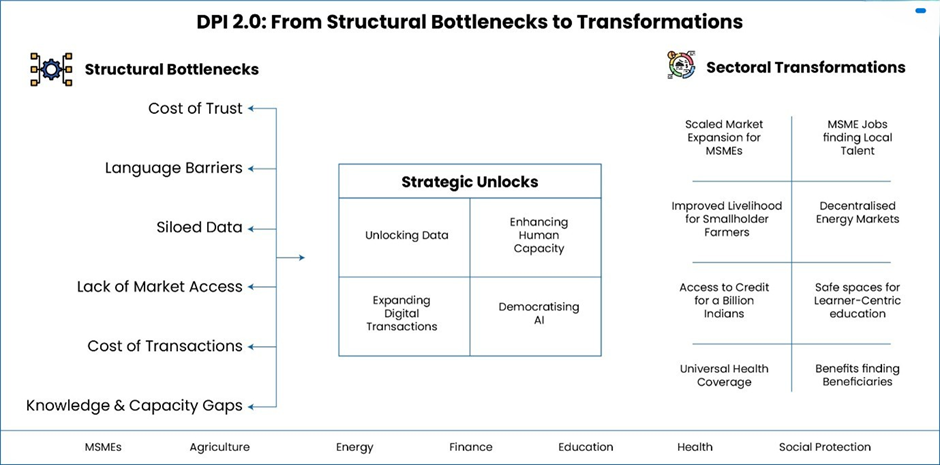
DPI 2.0 focuses on 8 sectoral transformations (multi-sector digital integration) aimed at accelerating development through technology-enabled public systems.
A key execution driver is aggregate demand via district-level programmes, promoting hyper-localised solutions (customised interventions at local level) by aligning DPI with district development goals.
The report emphasises scaling technology entrepreneurship, encouraging startups and innovators to deliver DPI-aligned products and services.
It highlights the need to leverage Artificial Intelligence (AI—machine-based intelligent systems) by making it accessible across sectors and populations.
It also proposes cross-sectoral strategic unlocks, including data unlocking (better data access and sharing), democratising AI (wider availability), enhancing human capacity (skill development), and expanding digital transactions.
Key recommendations include decentralised, state-led execution, with an initial focus on MSMEs (Micro, Small and Medium Enterprises) and agriculture during 2026–2027, along with the creation of a neutral ecosystem body for global engagement.
About Digital Public Infrastructure (DPI)
Digital Public Infrastructure (DPI) refers to a design approach that uses digital technology platforms to enable large-scale, non-linear socio-economic development, combining innovation, public systems, and market participation.
Key Impacts of DPI
DPI contributed approximately 0.9% to India’s GDP in 2022, with projections suggesting an increase to 4.2% by 2030, indicating its growing economic significance.
It has helped unlock new sectors, as seen in the growth of MSMEs registered under GST (Goods and Services Tax) from 5 lakh in 2017–18 to 1.5 crore by December 2024, reflecting rapid formalisation.
DPI has significantly improved financial inclusion, enabling 80% bank account penetration within eight years, compared to the 47 years estimated by the Bank for International Settlements.
It has also created a “hockey stick effect” (rapid exponential growth after a slow start), leading to the emergence of new digital services and accelerated economic expansion.
Inland Waterways as Instruments of Growth
Inland waterways refer to navigable water channels within a country (rivers, canals, lakes, lagoons, and estuaries not part of the sea) that can support vessels carrying at least 50 tonnes under normal conditions, making them viable for transport.
Status of Inland Waterways in India
The National Waterways Act 2016 has declared 111 inland waterways as National Waterways (NWs) with a total length of 20,187 km, expanding the network significantly.
As of March 2026, 32 National Waterways are operational, with the Union Budget 2026–27 announcing operationalisation of 20 additional waterways over the next five years.
Cargo transport through inland waterways has reached 145.84 million metric tonnes (FY 2024–25), reflecting growing adoption.
India aims to increase the modal share of Inland Water Transport (IWT—from 2% to 5%) and expand cargo volumes to over 200 MMT by 2030 and 500 MMT by 2047, in line with the Maritime Amrit Kaal Vision.
Significance of Inland Water Transport (IWT)
IWT is energy-efficient, consuming 3–6 times less energy than road transport and up to 2 times less than rail, reducing fuel costs.
It is highly effective for bulk cargo movement, where a single inland vessel (~2,000 tonnes capacity) can replace around 125 trucks (16-tonne capacity each).
It is economically advantageous, as it involves lower operating costs, utilises natural routes, requires less infrastructure, and helps decongest roads.
IWT is also dependable, offering predictable transit times without traffic congestion or space constraints.
Key Initiatives for Promoting IWT
The Inland Waterways Authority of India Act 1985 led to the establishment of the Inland Waterways Authority of India (IWAI), which oversees development and regulation of inland waterways.
The Harit Nauka Guidelines (Green Transition for Inland Vessels) aim to achieve a 30% reduction in carbon intensity of inland passenger transport by 2030, promoting sustainability.
The Coastal Cargo Promotion Scheme (announced in Budget 2026–27) seeks to increase the combined share of inland waterways and coastal shipping from 6% to 12% by 2047, boosting multimodal logistics.
Major projects include the Jal Marg Vikas Project along National Waterway-1 (Varanasi–Haldia stretch), enhancing navigation capacity on the Ganga river system.
Additional initiatives like the Jalvahak Cargo Promotion Scheme (2024) further incentivise cargo movement through waterways.
Sacrifice Ratio
Recent inflation control measures in countries like India, United States, and United Kingdom highlight the economic costs of reducing inflation, commonly measured using the Sacrifice Ratio.
About Sacrifice Ratio
The Sacrifice Ratio measures the direct economic cost of lowering inflation, indicating the trade-offs involved in stabilising prices.
Specifically, it represents the percentage loss in real GDP (total economic output adjusted for inflation) required to achieve a 1% reduction in the inflation rate (general rise in prices).
This metric reflects the trade-off between price stability and economic growth, as efforts to reduce inflation often involve tight monetary policies (higher interest rates, reduced liquidity).
A higher sacrifice ratio implies that controlling inflation leads to greater short-term economic pain, including higher unemployment, reduced industrial output, and slower growth.
Mythos
The Finance Minister formed a panel under SBI Chairman to assess risks from Anthropic's AI model Mythos.
About Mythos
Autonomous Security Model: It is an advanced unreleased frontier AI model developed by Anthropicwith exceptional cybersecurity capabilities.
So far, Anthropic has released the Mythos Preview underProject Glasswing to a few trusted organisations, under controlled iteration for its evaluation.
Zero-Day Exploits: It can identify and exploit zero-day vulnerabilities across every major operating system and web browser.
In cybersecurity,”zero-day" vulnerability is a software or hardware flaw that is unknown to the developer; hence once identified, they have zero days to defend against it.
Concerns: automated cyberattacks capabilities can threaten national security, banking sector, power sector, etc.
Index of Service Production (ISP)
The Ministry of Statistics and Programme Implementation (MoSPI) has released an approach paper for compiling the Index of Service Production (ISP), aiming to improve measurement of short-term trends in the services sector.
Unlike the Index of Industrial Production (IIP—indicator tracking manufacturing output), India previously lacked a comparable high-frequency index for services, creating a data gap in assessing overall economic performance.
Key Features of Proposed ISP
The proposed base year (reference year for comparison) for the ISP is 2024–25, ensuring alignment with current economic structure.
The index will rely on multiple data sources, including Goods and Services Tax (GST) data (transaction-based tax records), administrative data from sectoral ministries, and the Annual Survey of Incorporated Services Sector Enterprises (ASISSE), enhancing accuracy.
The ISP is designed to track the formal services sector (registered and organised businesses), covering sub-sectors such as wholesale and retail trade, transport, banking, insurance, real estate, and communication.
Avocado Imports in India
Avocado imports in India have surged significantly due to rising consumer demand, as the fruit is increasingly viewed as a heart-friendly alternative to processed fats.
Imports have more than tripled to reach $42.27 million in FY 2025–26 (as of February), reflecting changing dietary preferences and growing health awareness.
The major sources of avocado imports include Tanzania, Kenya, and Australia, among others, indicating reliance on international supply chains.
About Avocado
Avocado (Persea americana) is a fruit-bearing tree species believed to have originated in Mexico and Central America, making it a tropical crop.
It was introduced in India between 1906 and 1914 by an American missionary, marking its early entry into the country’s agricultural landscape.
Avocado is nutritionally rich, containing high fibre (supports digestion) and monounsaturated fats (healthy fats beneficial for heart health), making it suitable for cardiovascular and diabetes-friendly diets.
It is also one of the highest-fat plant-based foods, commonly used in low-carbohydrate diets, contributing to its popularity among health-conscious consumers.
SIPRI Trends in World Military Expenditure, 2025
The Trends in World Military Expenditure, 2025 Report has been released by the Stockholm International Peace Research Institute (SIPRI), an independent international research institute established in 1966 in Stockholm, focusing on conflict, arms control, and disarmament studies.
Key Findings
The report highlights that the five largest military spenders in 2025—United States, China, Russia, Germany, and India—accounted for 58% of total global military expenditure, indicating concentration of defence spending among major powers.
India ranks as the fifth-largest military spender, contributing 3.2% of global military expenditure, with a total spending of $92.1 billion.
India’s military expenditure recorded a growth of 8.9% compared to the previous year, reflecting increased focus on defence modernisation and security preparedness.
Supreme Court on Reproductive Autonomy
The Supreme Court of India allowed a 15-year-old girl to medically terminate a pregnancy beyond 28 weeks, affirming that no authority can compel a woman—especially a minor—to continue an unwanted pregnancy against her will.
The Court emphasised that reproductive choice (right to decide whether to continue a pregnancy) is a core constitutional guarantee, reinforcing individual autonomy.
It held that the right to make decisions concerning one’s body, particularly in matters of reproduction, is an integral part of personal liberty and privacy under Article 21 of the Constitution (right to life and personal liberty).
Legal Framework: Medical Termination of Pregnancy (MTP) Act
Under the Medical Termination of Pregnancy Act 1971 (amended in 2021), pregnancy termination is allowed up to 20 weeks with the opinion of one doctor, ensuring access to abortion services.
For special categories such as minors, termination is permitted up to 24 weeks with the opinion of two doctors, recognising additional vulnerabilities.
Beyond 24 weeks, termination is allowed only in cases of substantial foetal abnormalities, as determined by a Medical Board (panel of medical experts).
Core Issues with Reproductive Autonomy
The ruling highlights the legal and ethical tension between bodily autonomy and the state’s interest in protecting foetal rights, requiring careful balancing.
Safety and access concerns arise because restricting legal abortion can push vulnerable women towards unsafe and illegal procedures, leading to serious physical and psychological risks.
It also reflects patriarchal control, where women are often treated as reproductive instruments rather than autonomous individuals with decision-making power.
There is a broader issue of limited decision-making autonomy, as per NFHS-5 (National Family Health Survey), only 10% of women in India can independently make decisions about their own healthcare, highlighting structural inequality.
Extreme Weather and Terrestrial Biodiversity
A study published in Nature Ecology & Evolution warns that extreme weather events will critically threaten terrestrial biodiversity (land-based plant and animal life) by 2085, highlighting the need to integrate climate mitigation (reducing emissions) with biodiversity conservation (protecting ecosystems).
Key Findings of the Study
The study finds that 36% of land vertebrate habitats (animals with backbones) will face compounding threats (multiple simultaneous climate hazards) such as heatwaves, wildfires, droughts, and floods by 2085.
Among these, heatwaves (prolonged extreme heat) are identified as the primary threat, potentially affecting 93% of species’ geographic ranges (areas where species live), followed by extreme wildfires.
In terms of taxonomic vulnerability (risk across biological groups), amphibians (frogs, salamanders, etc.) are the most severely affected, particularly due to drought conditions.
Additionally, native species and those with restricted geographic ranges face higher extinction risks, as their limited ability to migrate reduces adaptability to changing environments.
Key geographical hotspots facing maximum exposure include the Amazon Basin, regions of Africa, and Southeast Asia, which are rich in biodiversity but highly vulnerable to climate extremes.
Global Initiatives for Conservation
The Paris Agreement under the United Nations Framework Convention on Climate Change aims to limit global warming, thereby reducing climate-induced biodiversity loss.
The Intergovernmental Panel on Climate Change (Sixth Assessment Report) recommends protecting 30–50% of ecosystems to enhance resilience (ability to withstand shocks).
Conservation tools like the IUCN Red List and FAO’s One Planet, One Health Initiative help prioritise at-risk species and ecosystems.
The Kunming-Montreal Global Biodiversity Framework under the Convention on Biological Diversity sets the “30x30 target” (protecting 30% of land and oceans by 2030).
The UN Decade on Ecosystem Restoration promotes restoration of degraded ecosystems, improving species resilience and adaptive capacity.
India’s Bioeconomy Growth Outlook
The Union Minister for Science and Technology highlighted that India’s bioeconomy is projected to grow to $1 trillion by 2047, positioning it as a key driver of sustainable economic growth.
Bioeconomy refers to the production, use, and conservation of biological resources (living organisms and biomass) along with science, technology, and innovation, to generate products, processes, and services across economic sectors with a focus on sustainability.
Achievements of India’s Bioeconomy
The sector has grown rapidly from $10 billion in 2014 to $195.3 billion in 2025, contributing around 4.8% to GDP, indicating strong expansion.
There has been a sharp rise in biotech startups, increasing from 50 in 2014 to 11,855 in 2025, reflecting innovation and entrepreneurship growth.
The bioeconomy has contributed to reducing the current account deficit (gap between imports and exports) by saving $12–14 billion in foreign exchange, mainly through reduced petroleum imports.
Key growth drivers include 20% ethanol blending in petrol, increased use of GLP-1 drugs (medications for diabetes and obesity management), expansion of Global Capability Centers (GCCs—offshore centres for global firms), and the use of enzymes and microbes in industries like textiles, detergents, food processing, and biofuels.
In research and innovation, India has achieved milestones such as the world’s first DNA COVID-19 vaccine (ZyCoV-D), indigenous CAR-T cell therapy (advanced cancer treatment), mRNA vaccine platforms, development of Nafithromycin (first indigenously developed antibiotic), and establishment of a National Biobank (repository of biological samples).
Key Initiatives Promoting Bioeconomy
The BioE3 Policy (Biotechnology for Economy, Environment and Employment) promotes initiatives like advanced biomanufacturing facilities, bio-foundry clusters (centres for rapid bio-innovation), and bio-AI hubs (integration of AI with biotechnology).
The BioPharma SHAKTI Programme aims to strengthen next-generation biopharmaceutical capabilities and expand clinical research infrastructure.
The Research, Development and Innovation (RDI) Fund, with an allocation of ₹1 lakh crore, supports deep-tech innovation including biotechnology.
The Biotechnology Industry Research Assistance Council (BIRAC), a Section 8 not-for-profit public sector enterprise under the Department of Biotechnology, plays a key role in promoting innovation.
BIRAC implements programmes such as National Biopharma Mission (NBM – Innovate in India i3), Biotechnology Ignition Grant (BIG), Small Business Innovation Research Initiative (SBIRI), and Biotechnology Industry Partnership Programme (BIPP), which support startups and industry-academia collaboration.
Artemis Accords
Jordan has become the 63rd signatory to the Artemis Accords, expanding global participation in cooperative space exploration frameworks.
About Artemis Accords
The Artemis Accords were launched in 2020 under the Artemis Program (NASA-led initiative for human exploration of the Moon and beyond).
They are a set of international principles led by the National Aeronautics and Space Administration (NASA) to guide peaceful and collaborative exploration of the Moon, Mars, and other celestial bodies.
The Accords reinforce the principles of the Outer Space Treaty 1967, which forms the foundation of international space law.
Aims of the Artemis Accords
They aim to ensure safe, transparent, and sustainable space activities, promoting responsible behaviour in outer space.
They emphasise the peaceful use of outer space, helping to prevent conflicts and militarisation.
The Accords encourage sharing of scientific data (open access to research findings) among participating countries, enhancing global knowledge.
They promote interoperability (compatibility of systems across countries) and provide for emergency assistance in space missions, ensuring safety and cooperation.
India’s Participation
India is also a signatory to the Artemis Accords, reflecting its commitment to international collaboration in space exploration.
Locally-led Climate Adaptation
Locally-led climate adaptation refers to a shift from top-down climate strategies to decentralised decision-making (power transferred to local levels), ensuring that communities most affected by climate change actively shape adaptation actions.
This approach empowers local institutions and frontline communities by providing direct access to finance and authority to prioritise, design, implement, and evaluate adaptation measures.
Core Principles of Locally-led Adaptation
It emphasises devolving decision-making, where local bodies receive both financial resources and governance authority.
It ensures inclusivity by addressing inequalities, incorporating gender, economic, and social dimensions into climate responses.
It promotes transparency and accountability through open and participatory processes involving local stakeholders.
It supports flexible programming (adaptive management) that evolves through continuous learning and feedback.
It places the community at the centre, recognising local populations as key actors rather than passive beneficiaries.
It calls for patient and predictable funding, ensuring long-term, reliable financial support for sustained adaptation.
It focuses on investing in local capabilities, strengthening institutions and skills for long-term resilience.
It encourages collaborative action and investment, integrating efforts across sectors and funding sources.
It values understanding climate risks through local, traditional, and scientific knowledge, enabling context-specific solutions.
Why Locally-led Adaptation is Critical for India
India faces high climate vulnerability, ranking among the most affected countries, with 430 extreme weather events (1995–2024) causing $170 billion in losses, disproportionately impacting local communities.
There exists a major financing gap, as developing countries face an annual adaptation shortfall of $310 billion, according to global estimates.
Urban Local Bodies (ULBs) often lack fiscal autonomy and creditworthiness, limiting their ability to implement effective climate action.
Steps Taken in India
India’s updated Nationally Determined Contributions (NDCs) for 2031–2035 emphasise climate resilience and integration of adaptation into development planning.
The National Innovations in Climate Resilient Agriculture (NICRA) programme by Indian Council of Agricultural Research promotes climate-smart agriculture and farmer capacity-building.
Municipal green bonds (debt instruments for climate projects) have been issued by cities like Ghaziabad, Indore, Vadodara, and Pimpri-Chinchwad, mobilising climate finance.
Urban initiatives include climate action plans by Mumbai (Brihanmumbai Municipal Corporation) and Solapur, focusing on resilience building.
Rural adaptation efforts include Tamil Nadu’s Climate Resilient Villages (CRV) programme, which adopts a holistic, community-driven approach across vulnerable districts.
Canary Islands
INS Sudarshini (Indian Navy sail training vessel) made its maiden visit to Las Palmas in the Canary Islands, marking the first visit by any Indian naval ship, as part of its transoceanic deployment under Lokayan 26 before a trans-Atlantic voyage.
About Canary Islands
The Canary Islands are an autonomous region of Spain, located strategically in the Atlantic Ocean.
They are situated about 100 km off the northwest coast of Africa, giving them geopolitical and maritime significance.
Geographically, the Canary Islands form a volcanic archipelago (group of islands formed by volcanic activity), including major islands such as Tenerife and Gran Canaria.
The region is home to Mount Teide, the highest peak in Spain, which is a volcanic mountain located on Tenerife.
Cerium–Magnesium Changesite
A new mineral named Cerium–Magnesium Changesite has been discovered in a lunar meteorite (rock originating from the Moon) called Pakepake 005, found in the Taklamakan Desert, increasing the total known lunar minerals to 11.
About the Mineral
Cerium–Magnesium Changesite is a rare earth-bearing phosphate mineral (compound containing rare earth elements and phosphate groups) with distinct physical and chemical properties.
It appears colourless and transparent, with a glass-like lustre (shiny surface similar to glass).
The mineral is fragile and exhibits shell-like fracture (conchoidal fracture—smooth curved breakage), and it glows under ultraviolet (UV) light (fluorescence property).
Scientific Significance
The discovery helps scientists better understand volcanic processes on the Moon, offering insights into its geological evolution.
It also sheds light on the distribution of rare earth elements (critical materials used in advanced technologies) in lunar materials.
Its fluorescent properties make it potentially useful in the development of more efficient LEDs (light-emitting diodes) and other advanced optical technologies.
Multilateralism in Climate Action
The 17th Petersberg Climate Dialogue (PCD)—an informal multilateral climate meeting initiated by Germany in 2010—reaffirmed global commitment to collective climate action, ahead of COP31 under the United Nations Framework Convention on Climate Change.
Role of Multilateralism in Climate Action
Climate change is a global public good problem (benefits and costs shared across borders), making multilateralism (cooperation among multiple countries) essential to address this transboundary challenge.
It enables collective governance, establishing a rule-based system (e.g., Nationally Determined Contributions—NDCs) to ensure coordinated and accountable climate action.
Multilateral platforms like the UNFCCC, Convention on Biological Diversity, and United Nations Convention to Combat Desertification facilitate negotiation and formulation of mitigation (reducing emissions) and adaptation (adjusting to climate impacts) strategies.
It upholds climate justice (fair distribution of responsibilities) through the principle of Common But Differentiated Responsibilities (CBDR—recognising different capabilities and historical emissions).
Multilateralism also mobilises financial mechanisms, including the Global Environment Facility and Green Climate Fund, to support developing countries.
Challenges to Multilateral Climate Action
Decision-making paralysis often arises due to the consensus-based approach in institutions like UNFCCC, slowing progress.
There are significant financial constraints, as developed countries have not fully met the $100 billion annual climate finance commitment.
Geopolitical fragmentation and unilateralism weaken cooperation, as seen in instances like United States withdrawing from key climate frameworks.
Additional issues include asymmetric agenda-setting favouring developed countries and technology protectionism (restricted access to green technologies).
Way Forward: Strengthening Multilateralism
Reform and strengthen existing multilateral institutions such as UNFCCC, COP processes, Intergovernmental Panel on Climate Change, and United Nations Environment Programme for more effective governance.
Promote issue-based coalitions (minilateralism—small group cooperation) focusing on areas like renewable energy and green hydrogen.
Ensure adequate climate finance by reforming Multilateral Development Banks (MDBs) and establishing accountability mechanisms for funding commitments.
Facilitate clean technology transfer to developing countries by reducing risks and barriers, ensuring wider access.
Leverage Public-Private Partnerships (PPP) to scale innovation, share risks, and expand affordable climate solutions.
Prioritise community-owned and nature-based solutions (ecosystem-based approaches like afforestation and wetland restoration).
Empower local communities and Indigenous peoples by strengthening local governance, knowledge systems, and financial access, ensuring inclusive climate action.
Hindu Kush Himalaya (HKH)
According to a report by the International Centre for Integrated Mountain Development, snow persistence (duration of snow cover) in the Hindu Kush Himalaya (HKH) has declined sharply for the fourth consecutive year, indicating growing climate stress in the region.
About HKH Region
The Hindu Kush Himalaya (HKH) is a vast mountain system extending about 3,500 km across eight countries, from Afghanistan in the west to Myanmar in the east.
The region spans multiple countries including Bangladesh, Bhutan, China, India, Nepal, and Pakistan, making it a transboundary ecological zone.
It is often referred to as the “Water Tower of Asia”, as it serves as the source of ten major river systems that support billions of people.
These rivers include the Amu Darya, Indus, Ganges, Brahmaputra (Yarlung Tsangpo), Irrawaddy, Salween (Nu), Mekong (Lancang), Yangtze (Jinsha), Yellow River (Huang He), and Tarim (Dayan), which are critical for water supply, agriculture, and livelihoods.
Significance of ICIMOD
The ICIMOD is an intergovernmental organisation that works to protect the HKH region’s environment, biodiversity, and communities, focusing on sustainable mountain development and climate resilience.
Typhoid
A recent study highlights a high disease burden of typhoid in India, along with the growing presence of multidrug-resistant (MDR—resistant to multiple antibiotics) and extensively drug-resistant (XDR—resistant to most available antibiotics) strains, raising public health concerns.
About Typhoid
Typhoid is an infectious disease caused by the bacterium Salmonella Typhi, which infects only humans.
Infected individuals carry the bacteria in their bloodstream and intestinal tract, making them potential carriers who can spread the disease.
The disease spreads primarily through the faecal-oral route (transmission via contaminated food and drinking water due to poor sanitation).
Common symptoms include prolonged high fever, fatigue, headache, nausea, abdominal pain, and either constipation or diarrhoea, which can worsen without treatment.
Prevention is supported by typhoid conjugate vaccines (modern vaccines providing long-term immunity), which are used in immunisation programmes.
Geophagy
Scientists have observed that the Barbary macaque, found in Gibraltar, is the only wild primate on the European continent practicing geophagy (soil-eating behaviour).
About Geophagy
Geophagy refers to the intentional and regular ingestion of earthy materials such as soil, clay, and small rocks, observed in both humans and animals.
This behaviour is often linked to nutrient supplementation (intake of minerals like iron or calcium), especially in environments where diet lacks essential micronutrients.
It can also help in relieving gastrointestinal disorders (digestive issues) by neutralising toxins or soothing the digestive tract.
In humans, geophagy is sometimes influenced by cultural practices and beliefs, and is commonly observed among children and pregnant women, possibly due to nutritional needs or physiological changes.
Conference on Transitioning Away from Fossil Fuels
The first Conference on Transitioning Away from Fossil Fuels is being hosted by Colombia and Netherlands in Santa Marta, marking a significant step toward global energy transition efforts.
About the Conference
The conference was officially announced in 2025 during COP30 under the United Nations Framework Convention on Climate Change, as a sustained political platform focused on implementation-driven action for an orderly phase-out of fossil fuels.
It is not a negotiating body (does not create binding agreements) and does not form part of formal climate negotiations, distinguishing it from COP processes.
The platform is also not intended to replace the UNFCCC, but rather to complement existing global climate governance frameworks.
Key Highlights
A major outcome is the launch of the Science Panel for the Global Energy Transition (SPGET), aimed at providing scientific guidance for energy transition pathways.
The panel will help develop country-specific and sector-level milestones, aligned with the goal of limiting global warming to 1.5°C by the end of the century, consistent with climate targets.
Small Hydro Power (SHP) Development Scheme
The Small Hydro Power (SHP) Development Scheme has been introduced to harness the potential of small-scale hydropower (electricity generated using flowing water with lower environmental impact) and promote renewable energy generation in India.
About the Scheme
The scheme will be implemented over the period FY 2026–27 to FY 2030–31, providing a structured timeline for capacity expansion.
Its primary objective is to support Small Hydro Projects (SHPs), defined as projects with a capacity of 1–25 MW, enabling decentralised and sustainable power generation.
SHPs are administered by the Ministry of New and Renewable Energy, while large hydropower projects (>25 MW) fall under the Ministry of Power, reflecting administrative division.
India’s SHP Potential and Targets
India has an estimated SHP potential of 21,133.61 MW, of which only 24.5% (5,171 MW) has been harnessed as of early 2026, indicating significant untapped capacity.
The scheme aims to unlock an additional 1,500 MW of SHP capacity, contributing to clean energy goals.
Financial Assistance
For North Eastern States and International Border Districts, financial support is provided at ₹3.6 crore per MW or 30% of project cost (whichever is lower), with a cap of ₹30 crore per project, to incentivise development in strategic and remote areas.
For other regions, assistance is ₹2.4 crore per MW or 20% of project cost, with a maximum limit of ₹20 crore per project, ensuring wider participation.
Scheme for Special Assistance to States for Capital Investment (SASCI)
The Ministry of Mines has introduced a ₹5,000 crore incentive scheme under the Scheme for Special Assistance to States for Capital Investment (SASCI) for FY 2026–27, aimed at strengthening the mining sector and improving state-level governance.
This incentive scheme is designed to facilitate and expedite mine operationalisation (bringing mines into active production), increase mineral output, enhance state revenue collection, and improve overall mining sector governance.
It provides incentives to States and Union Territories across three key reform areas—implementation of mining reforms, mine operationalisation, and State Mining Readiness Index (SMRI)-based reforms (performance-based assessment of mining preparedness).
About SASCI
The Scheme for Special Assistance to States for Capital Investment (SASCI) is a Central Sector Scheme (fully funded by the central government) implemented by the Ministry of Finance.
Its primary aim is to provide financial assistance to state governments in the form of a 50-year interest-free loan, specifically for capital expenditure (long-term investments in infrastructure and assets).

Comments