India's UNESCO Tentative List Gets 5 New Heritage Sites: What It Means & How a Site Becomes a World Heritage Site

India has expanded its cultural heritage footprint by adding five new sites and transnational proposals to UNESCO's Tentative List, taking the country's total to 78 tentative sites. The latest additions include ancient cave paintings, Gupta-era monuments, medieval temples, a Gond fort, and the transnational Sites of Satyagraha linked to Mahatma Gandhi's legacy.
The move is a significant step toward securing future UNESCO World Heritage Site status for these locations. Here's everything you need to know about the new additions, the UNESCO Tentative List, and how sites earn World Heritage recognition.
Key Highlights
|
What Is UNESCO's Tentative List?
UNESCO's Tentative List is an official inventory of cultural and natural properties that a country believes possess Outstanding Universal Value (OUV) and may deserve inclusion on the World Heritage List.
According to UNESCO's Operational Guidelines, a property must first appear on the Tentative List before it can be nominated for World Heritage status.
After inclusion, the concerned country prepares a detailed nomination dossier, which is evaluated by UNESCO's advisory bodies before being considered by the World Heritage Committee.
In India, this process is coordinated by:
Archaeological Survey of India (ASI)
Indian National Commission for Cooperation with UNESCO (INCCU)
Which New Sites Have Been Added to India's UNESCO Tentative List?
India has added five new entries representing different aspects of the country's cultural, religious and historical heritage.
1. Bagh Cave Paintings (Madhya Pradesh)
The Bagh Caves are a group of nine Buddhist rock-cut caves dating from the 4th to 6th century CE.
The caves are internationally known for their beautifully preserved murals, particularly those inside Cave 4, which represent some of the finest examples of post-Ajanta Buddhist paintings.
2. Group of Temples of the Chambal Valley

Built between the 8th and 11th centuries CE, these temples showcase the evolution of Nagara-style temple architecture in central India.
The temple complex represents an important phase in India's early medieval architectural history.
3. Udaigiri Caves (Madhya Pradesh)
The Udaigiri Caves date back to the Gupta period (4th–5th century CE) and comprise 20 rock-cut caves.
Among their most celebrated features are:
The monumental Varaha sculpture of Lord Vishnu (Cave 5)
Anantasayana Vishnu (Cave 13)
Ancient inscriptions reflecting Gupta patronage
The site is considered one of India's finest examples of early Hindu rock-cut architecture.
4. Ginnorgarh Fort
The historic Ginnorgarh Fort served as a major political and administrative centre of the Gond Kingdom from the early 16th to early 18th century.
The fort complex includes:
Palace structures
Stepwells
Reservoirs
Wall paintings
Sophisticated water management systems
It highlights the architectural and engineering achievements of central India's tribal kingdoms.
5. Sites of Satyagraha (India–South Africa)
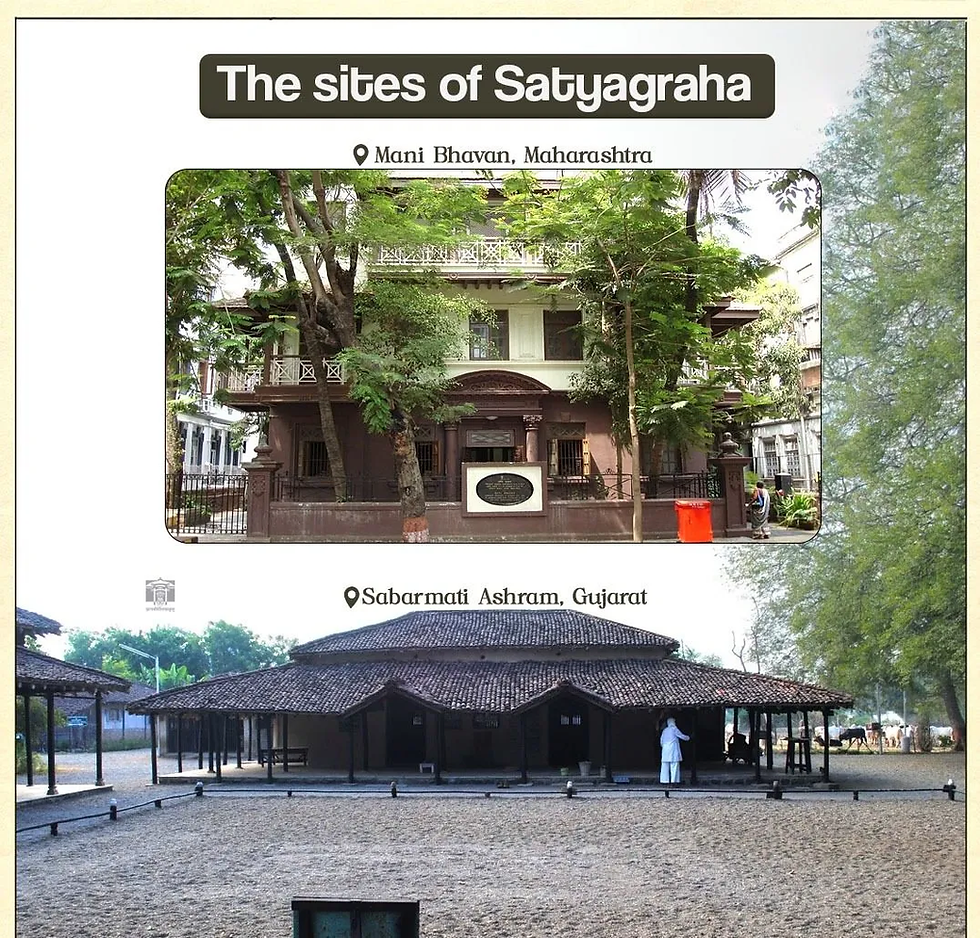
One of the most significant additions is the transnational nomination titled Sites of Satyagraha, jointly proposed by India and South Africa.
The proposal includes important locations associated with Mahatma Gandhi's philosophy of non-violent resistance, including:
India
Sabarmati Ashram
Mani Bhavan
Harijan Sevak Sangh Complex
Sevagram Ashram
Aga Khan Palace
Gandhi Smriti
South Africa
Pietermaritzburg Railway Station
Phoenix Settlement
Other associated Gandhi sites
What Is a UNESCO World Heritage Site?
A UNESCO World Heritage Site is a place recognized for its Outstanding Universal Value (OUV) to humanity.
The designation is governed by the 1972 Convention Concerning the Protection of the World Cultural and Natural Heritage, one of UNESCO's most important international treaties.
World Heritage Sites are considered valuable not only to the country in which they are located but to all humankind.
Three Categories of UNESCO World Heritage Sites
UNESCO classifies World Heritage Sites into three categories.
Cultural Heritage
Includes monuments, archaeological sites, buildings and historic landscapes possessing exceptional historical, artistic or scientific value.
Examples:
Taj Mahal
Agra Fort
Sydney Opera House
Natural Heritage
Recognises exceptional natural landscapes and ecosystems.
Examples:
Sundarbans National Park
Victoria Falls
Mixed Heritage
Sites possessing both cultural and natural significance.
How Does a Site Become a UNESCO World Heritage Site?
The process involves several stages.
Step 1: Inclusion in Tentative List
Every site must first be included in the country's Tentative List.
Step 2: Nomination Dossier
The country prepares a comprehensive nomination document demonstrating the site's Outstanding Universal Value.
Step 3: Evaluation
Independent advisory bodies such as:
ICOMOS
IUCN
evaluate the nomination.
Step 4: Decision by World Heritage Committee
The 21-member World Heritage Committee meets annually to decide whether to:
Inscribe the site
Defer the nomination
Refer it back
Reject it
UNESCO's 10 Selection Criteria
To qualify, a property must satisfy at least one of UNESCO's ten selection criteria.
Cultural Criteria
Masterpiece of human creative genius
Exchange of human values
Testimony to a civilisation
Outstanding architecture
Traditional settlement or land use
Association with important events or traditions
Natural Criteria
Exceptional natural beauty
Geological significance
Ecological processes
Biodiversity conservation
India's Latest UNESCO World Heritage Site
At the 48th Session of the World Heritage Committee held in Busan, South Korea, Sarnath was officially inscribed on UNESCO's World Heritage List.
The recognition makes:
Sarnath India's 45th UNESCO World Heritage Site
Uttar Pradesh's fourth UNESCO World Heritage Site
Sarnath is revered as the place where Lord Buddha delivered his first sermon, setting in motion the Dharmachakra Pravartan.
Interestingly, Sarnath had remained on UNESCO's Tentative List since July 3, 1998, before finally receiving World Heritage status.
What Is the List of World Heritage in Danger?
UNESCO also maintains the List of World Heritage in Danger.
The list includes heritage properties facing serious threats due to:
Armed conflict
Earthquakes
Pollution
Poaching
Uncontrolled urbanisation
Unsustainable tourism
Climate-related impacts
The objective is to mobilise international support for conservation.
Examples include:
Bamiyan Valley (Afghanistan)
Historic Town of Zabid (Yemen)
Bam (Iran)
Why India's New UNESCO Additions Matter
The inclusion of five new sites on UNESCO's Tentative List reflects India's rich cultural diversity and strengthens its prospects for future World Heritage inscriptions.
If successfully inscribed, these sites will gain international recognition, increased tourism potential, enhanced conservation support and greater global awareness of India's civilisational heritage.
Frequently Asked Questions (FAQs)
Q1. What is UNESCO's Tentative List?
Answer. It is an inventory of cultural and natural properties that a country intends to nominate for UNESCO World Heritage status.
Q2. How many sites are on India's UNESCO Tentative List?
Answer. India now has 78 sites on UNESCO's Tentative List.
Q3. Which five sites were recently added?
Answer. Bagh Cave Paintings, Group of Temples of the Chambal Valley, Udaigiri Caves, Ginnorgarh Fort and Sites of Satyagraha.
Q4. What is India's latest UNESCO World Heritage Site?
Answer. Sarnath became India's 45th UNESCO World Heritage Site during the 48th Session of the World Heritage Committee.
Q5. Can a site become a UNESCO World Heritage Site without being on the Tentative List?
Answer. No. Inclusion on the Tentative List is a mandatory first step before formal nomination.


Comments