Nobel Prize in Economic Sciences 2026: Robert E. Hall and Michael Woodford Honoured for Transforming Macroeconomic Stabilisation


The Royal Swedish Academy of Sciences has awarded the 2026 Sveriges Riksbank Prize in Economic Sciences in Memory of Alfred Nobel to Professor Robert E. Hall of Stanford University and Professor Michael Woodford of Columbia University.
The Nobel Prize recognises the two economists "for microeconomic foundations of macroeconomic stabilisation," honouring their groundbreaking work that reshaped modern macroeconomics and transformed how governments and central banks respond to recessions, inflation, and economic crises.
Their research laid the foundation for New Keynesian macroeconomic models, which are now widely used by central banks and finance ministries around the world to design monetary and fiscal policies aimed at smoothing economic fluctuations.
Key Highlights
|
Who Won the Nobel Prize in Economic Sciences 2026?
The 2026 Nobel Prize in Economic Sciences has been jointly awarded to:
Robert E. Hall – Stanford University, California, USA
Michael Woodford – Columbia University, New York, USA
The Royal Swedish Academy of Sciences recognised their pioneering contributions that rebuilt macroeconomic theory using microeconomic foundations, making economic stabilisation policies more reliable and effective.
Why Were They Awarded the Nobel Prize?
Hall and Woodford demonstrated that macroeconomic policies should be built on the behaviour of individual households and businesses, rather than relying solely on historical statistical relationships between inflation, unemployment, and economic output.
Their research transformed the understanding of how fiscal and monetary policies influence economic activity.
Instead of viewing the economy only through aggregate indicators, they showed that millions of individual decisions collectively determine economic outcomes.
What is Macroeconomic Stabilisation?
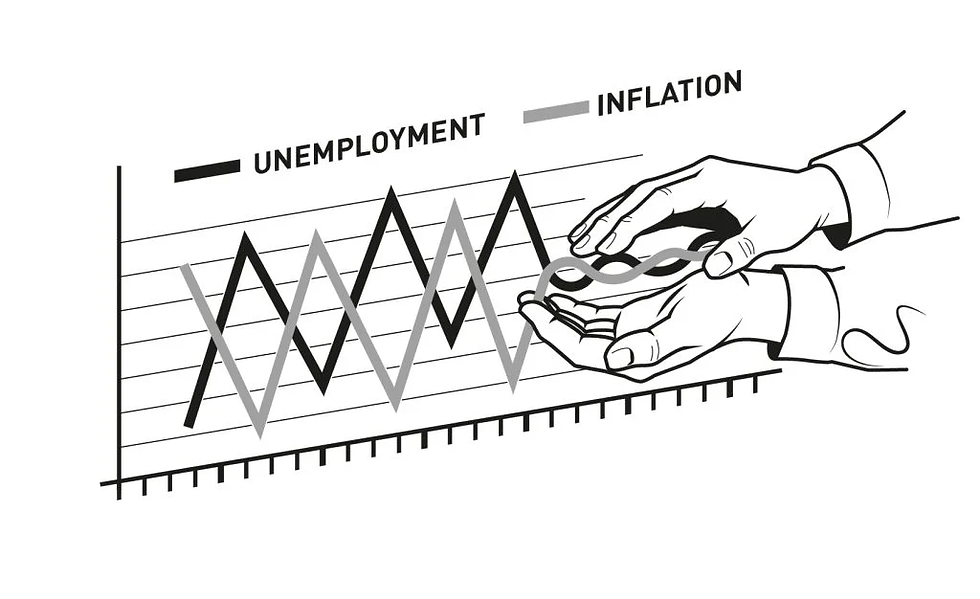
Macroeconomic stabilisation refers to government and central bank policies designed to reduce large fluctuations in the economy.
Its primary goals include:
Controlling inflation
Reducing unemployment
Maintaining steady economic growth
Preventing severe recessions
Avoiding overheating during economic booms
Governments generally use fiscal policy (taxes and public spending), while central banks rely on monetary policy (interest rates and money supply) to stabilise the economy.
Why Did Earlier Economic Models Fail?
For decades, policymakers relied on traditional Keynesian models, which assumed stable relationships between economic variables such as inflation, unemployment, production and consumption.

However, these assumptions broke down during the oil crises of the 1970s.
Many economies experienced:
High inflation
High unemployment
Weak economic growth
This phenomenon, later known as stagflation, exposed the limitations of traditional macroeconomic models.
Hall and Woodford's Solution
Rather than depending on broad statistical relationships, Hall and Woodford proposed building economic models from the "bottom up."
They argued that economic outcomes emerge from the decisions of:
Individual households
Consumers
Workers
Businesses
Investors
This approach became known as microeconomic foundations.
It marked the beginning of the New Keynesian paradigm, now considered the standard framework in modern macroeconomics.
Robert E. Hall's Contribution
Robert Hall revolutionised the understanding of household consumption.
Earlier theories assumed consumption depended mainly on current income.
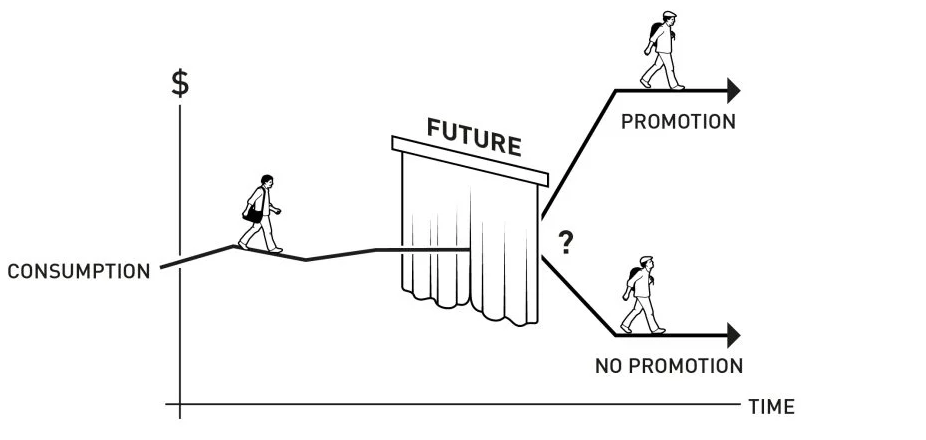
Hall argued instead that households make spending decisions based largely on expectations about future income.
His research showed that changes in consumption occur mainly when people receive new information that alters their expectations about the future.
This insight became one of the central building blocks of modern macroeconomic models.
Michael Woodford's Contribution
Michael Woodford integrated these behavioural insights into a comprehensive macroeconomic model.
His influential work demonstrated how:
Interest rates affect household consumption
Businesses adjust prices
Inflation expectations shape economic outcomes
Central bank communication influences public behaviour
His New Keynesian model became a practical tool used by policymakers to evaluate how different monetary policy decisions affect inflation, GDP and employment.
The Importance of Expectations
One of the Nobel-winning insights is that households and businesses are forward-looking.
Consumers decide whether to save or spend based on expectations about future:
Income
Inflation
Taxes
Interest rates
Similarly, businesses set prices based on expectations of future demand and production costs.
Because expectations influence economic behaviour, credible communication from central banks has become an essential part of monetary policy.
How Their Research Changed Central Banking
Before New Keynesian economics, policymakers focused primarily on controlling the money supply.

Woodford showed that interest rate policy, combined with credible communication, is a far more effective stabilisation tool.
Today, central banks routinely:
Announce future policy intentions
Publish inflation targets
Provide economic projections
Use forward guidance to influence expectations
These practices are rooted in the Nobel laureates' research.
Real-World Impact
According to the Nobel Committee, the models developed by Hall and Woodford have been instrumental in helping governments respond to:
Financial crises
Economic recessions
Pandemic-related disruptions
Energy price shocks
Inflation surges
The committee noted that these models helped policymakers manage recent crises more effectively than during the oil shocks of the 1970s.
What Are New Keynesian Models?
New Keynesian models combine Keynesian ideas about demand management with microeconomic decision-making.
Key features include:
Forward-looking households
Forward-looking firms
Sticky prices
Inflation expectations
Interest-rate-based monetary policy
Today, these models form the backbone of economic forecasting and policy analysis in many countries.
Why This Nobel Prize Matters
The Nobel Committee described Hall and Woodford's work as providing a stable theoretical foundation for the models now used by central banks and governments worldwide.
Their research has improved policymakers' ability to:
Reduce recessions
Control inflation
Respond to supply shocks
Stabilise employment
Promote sustainable economic growth
Their contributions remain central to modern macroeconomic policy.
The 2026 Nobel Prize in Economic Sciences recognises two economists whose research fundamentally changed modern macroeconomics.
By placing individual households and businesses at the centre of economic analysis, Robert E. Hall and Michael Woodford developed the theoretical framework that underpins today's monetary and fiscal policies.
Their work continues to guide central banks and governments in responding to economic crises, controlling inflation, and maintaining stable growth—making it one of the most influential contributions to modern economic policymaking.
Frequently Asked Questions (FAQs)
Q1. Who won the Nobel Prize in Economic Sciences 2026?
Answer. Robert E. Hall of Stanford University and Michael Woodford of Columbia University jointly won the 2026 Nobel Prize in Economic Sciences.
Q2. Why did Robert E. Hall and Michael Woodford receive the Nobel Prize?
Answer. They were honoured for developing the microeconomic foundations of macroeconomic stabilisation, leading to New Keynesian models widely used in economic policymaking.
Q3. What is macroeconomic stabilisation?
Answer. It refers to fiscal and monetary policies used to reduce economic fluctuations, control inflation, support employment and maintain stable economic growth.
Q4. What are New Keynesian models?
Answer. New Keynesian models are modern macroeconomic frameworks that explain economic behaviour using microeconomic decisions made by households and businesses.
Q5. How did Hall contribute to macroeconomics?
Answer. Hall showed that household consumption depends largely on expectations about future income rather than only current income.
Q6. What was Michael Woodford's contribution?
Answer. Woodford developed comprehensive New Keynesian models showing how interest rates, inflation expectations and central bank communication influence the economy.
Q7. Why are expectations important in modern economics?
Answer. Expectations influence household spending, business investment and pricing decisions, making central bank communication an essential policy tool.
Q8. How are these models used today?
Answer. Central banks and finance ministries use New Keynesian models to forecast inflation, set interest rates and design policies to stabilise economic growth.


Comments