Daily Current Affairs - 14th March 2026
- Kaushal
- Mar 14
- 13 min read
Updated: Mar 17
Comprehensive UPSC Current Affairs Summary | Lebanon Peacekeeper Protection at UN, Special 301 Report & IP Watchlists, V.O. Chidambaranar Port Digital Twin Initiative, Article 105 Parliamentary Privileges, Defence Forces Vision 2047 Roadmap, Operation Sagar Bandhu in Sri Lanka, National Geospatial Policy 2022, CE20 Cryogenic Engine Test, Supernova–Magnetar Discovery, International Solar Alliance 10th Foundation Day, FraudPro AI Telecom Security, FSSAI Dairy Registration Directive and more.
Table of Content
ECONOMY
SECURITY / DEFENCE
India has joined 29 countries in demanding protection for peacekeepers in Lebanon.
Lebanon is located in West Asia.
It lies along the eastern shore of the Mediterranean Sea.
Political Features
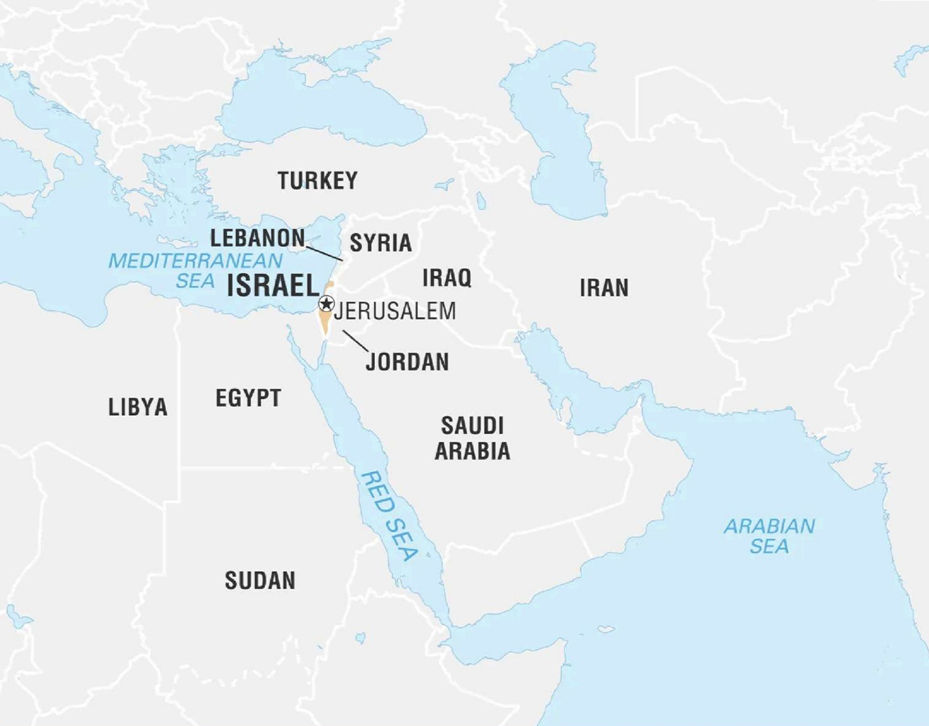
Lebanon is a narrow strip of territory.
It is bounded by Syria to the north.
It is bounded by Syria to the east.
It is bounded by Israel to the south.
It is bounded by the Mediterranean Sea to the west.
Geographical Features
Physiography
Lebanon is divided into four distinct physiographic regions.
The first region is a narrow coastal plain along the eastern Mediterranean (Levant).
The second region is the Lebanon Mountains, also known as Jabal Lubnān.
The third region is the Biqa (Al-Biqāʿ) Valley.
The Biqa Valley is an important agricultural zone.
The fourth region comprises the Anti-Lebanon and Hermon ranges.
Mount Hermon is the highest peak in the region.
Major Rivers
The Līṭānī River is a major river of Lebanon.
The Orontes River (Nahr al-ʿĀṣī) also flows through the region.
The Kabīr River forms part of the northern boundary.
Climate
Lebanon has a Mediterranean climate.
Winters are wet and mild.
Summers are hot and dry.
The climate supports olive and citrus cultivation.
US launched Section 301 investigations into the manufacturing policies of 16 major trading partners, including the EU, China and India, to address unfair trade practices.
This Section 301 investigation – under Trade Act 1974 – culminates in Special 301 Report published annually by the Office of the US Trade Representative.
This report identifies countries that are considered by the US as not providing adequate and effective protection of Intellectual Property Rights (IPRs) or fair and equitable market access to IP rights holders from the US.
Categories: It designates countries as “priority foreign country”, “priority watch list”, and “watch list”.
The V.O. Chidambaranar Port Authority has become the first port in India to launch a Digital Twin initiative.
The port was earlier known as Tuticorin Port.
It is one of India’s 13 major ports.
It is located in Thoothukudi, Tamil Nadu.
It is an artificial deep-sea harbour.
Its history dates back to 123 AD. The Greek geographer Ptolemy described Tuticorin as a flourishing maritime trade centre.
Tuticorin historically engaged in maritime trade with Western and Eastern regions.
It has also been a centre for pearl fishery for centuries.
About the Digital Twin Initiative
A Digital Twin is a virtual representation of a physical object or system.
It uses real-time data to mirror real-world performance and conditions.
It enables continuous monitoring and simulation.
It supports lifecycle analysis from design to decommissioning.
Digital Twin for Port Management
The initiative will create a real-time virtual replica of port infrastructure.
It will model operational assets and maritime ecosystems.
It enhances operational visibility and predictive analytics.
Predictive analytics refers to forecasting future conditions using data models.
It supports data-driven decision-making.
The platform will use IoT sensors.
IoT refers to Internet of Things devices collecting real-time data.
It will integrate GPS tracking systems.
It will use LiDAR mapping technology.
LiDAR uses laser pulses to measure distances and create 3D maps.
Drone imaging and CCTV networks will also be integrated.
Use Cases of Digital Twins
Manufacturing
Digital twins enable design customization.
They simulate and validate development stages.
They improve operational processes.
They reduce engineering costs.
They enable predictive maintenance.
Predictive maintenance prevents equipment failure through data-based alerts.
Aerospace and Automotive
They assist in aircraft tracking.
They support weather condition simulation.
They enable defect detection.
They optimize transport load planning.
They allow real-time monitoring.
Construction and Real Estate
They enable automated project control.
They support safety monitoring.
They assist in project planning and logistics.
They assess building performance.
They help optimize space capacity.
They enable quality assessment.
Utilities
They support power grid planning.
They enhance visibility across physical grids.
They improve grid efficiency.
They enable grid self-evaluation.
They assist ecological reconstruction planning.
Agriculture
They enable smart farming.
They assist in planning and monitoring farm processes.
They support weather prediction.
They identify crop stress.
They enable livestock monitoring and management.
Healthcare
They assist diagnosis and therapy.
They support preventive treatment strategies.
They help in drug development.
They optimize medical device utilization.
They assist facility and operational design.
They support education and training.
Retail
They optimize supply chains.
They assist in product development and distribution.
They improve fleet management.
They enhance route efficiency.
They support facility design.
Mining
They improve machinery productivity.
They enable realistic simulation training.
They assist in equipment monitoring.
They support operational efficiency.
Significance for Port Sector
The Digital Twin initiative enhances operational resilience.
It reduces downtime through predictive systems.
It improves cargo handling efficiency.
It strengthens India’s maritime digital transformation.
It aligns port management with Industry 4.0 standards.
The Lok Sabha Speaker clarified that Article 105 places freedom of speech within the framework of parliamentary rules.
Freedom of speech in Parliament is therefore not absolute.
It operates subject to procedural rules of each House.
About Article 105
Article 105 defines the powers, privileges, and immunities of Parliament.
It applies to Members of Parliament (MPs).
It also applies to parliamentary committees.
Privileges are special rights necessary for the effective functioning of Parliament.
Immunities protect members from legal liability for actions taken in the House.
Key Provisions
1. Freedom of Speech in Parliament
No MP is liable to court proceedings for anything said in Parliament.
No MP is liable for any vote given in Parliament.
This protection also extends to speeches made in parliamentary committees.
The immunity applies only to parliamentary proceedings.
It does not extend to statements made outside Parliament.
2. Protection for Official Publications
No person is liable for publication of parliamentary reports.
This applies when publication is authorised by either House.
Protected materials include reports, papers, votes, and proceedings.
This ensures transparency without fear of litigation.
3. Other Powers and Privileges
Other privileges may be defined by Parliament by law.
Until defined by law, they continue as those existing at the time of the 44th Constitutional Amendment (1978).
The 44th Amendment clarified continuation of parliamentary privileges.
4. Eligibility to Participate
Article 105 applies to persons entitled to speak in Parliament.
This includes elected Members of Parliament.
It includes the Attorney General of India.
The Attorney General can participate in proceedings but does not have voting rights.
Other authorised participants are also covered.
Significance
Article 105 safeguards parliamentary independence.
It protects free deliberation within legislative forums.
At the same time, it subjects speech to internal parliamentary discipline.
The provision balances freedom of expression with institutional accountability.
The Defence Minister released ‘Defence Forces Vision 2047: A Roadmap for a Future-Ready Indian Military’.
The blueprint has been articulated by the Headquarters Integrated Defence Staff (IDS).
The roadmap aims to transform India’s Armed Forces into a modern, integrated, and technologically advanced military.
It aligns defence preparedness with India’s long-term strategic objectives by 2047.
Key Highlights of the Roadmap
1. Combat Readiness and Responsiveness
The roadmap focuses on strengthening deterrence capabilities.
It proposes acquisition of intelligent and autonomous platforms.
It emphasises modernisation of weapon systems.
It calls for promulgation of Theatre Strategies.
Theatre strategies integrate Army, Navy, and Air Force operations under unified commands.
2. Organisational Agility and Interoperability
The plan proposes a tri-services integrated logistics and inventory management system.
Integrated logistics ensures efficient resource utilisation across services.
It recommends establishment of a Joint Headquarters.
It proposes creation of a Joint Operations Coordination Centre.
Interoperability enhances coordinated multi-domain operations.
3. Capability Development and Sustenance
The roadmap includes development of a Defence Geo-Spatial Agency.
Geo-spatial capabilities enhance mapping and surveillance accuracy.
It includes strengthening Air Defence systems under Mission Sudarshan Chakra.
Mission Sudarshan Chakra aims to build an integrated air defence network.
It proposes creation of a Data Force.
It also envisions a Drone Force for unmanned operations.
4. Conceptual and Doctrinal Clarity
The roadmap emphasises transition from Net-Centric Warfare to Data-Centric Warfare.
Net-Centric Warfare focuses on information sharing.
Data-Centric Warfare prioritises rapid decision-making using advanced analytics.
It seeks to achieve decision superiority.
It includes development of Cognitive Warfare capabilities.
Cognitive warfare targets perception and decision-making processes.
5. Training, Education and Empowerment
The roadmap proposes strengthening the Agnipath Scheme.
The scheme aims to attract youth into short-term military service.
It promotes advanced military technical training.
It emphasises Artificial Intelligence and emerging technologies.
Skill enhancement aligns with next-generation warfare requirements.
6. Defence Diplomacy
India aims to establish itself as a ‘Vishwabandhu’.
Vishwabandhu implies a trusted global partner.
The roadmap emphasises first-responder capability in Humanitarian Assistance and Disaster Relief (HADR).
HADR operations enhance regional goodwill and strategic partnerships.
7. Strategic Culture and Climate
The vision seeks to root defence thinking in indigenous knowledge systems.
It calls for shedding colonial-era institutional practices.
The proposed Indian Defence University (IDU) will align professional military education with innovation and strategic leadership.
Phased Implementation Strategy
Phase 1 (Up to 2030) – “Era of Transition”
This phase focuses on organisational restructuring.
It prioritises strengthened border management.
It emphasises optimal use of human resources.
Phase 2 (2030–2040) – “Era of Consolidation”
This phase aims to achieve multi-domain operational capability.
It focuses on transition to data-centric operations.
It consolidates integrated theatre commands and advanced technologies.
Phase 3 (2040–2047) – “Era of Excellence”
This phase aims to transform India into a world-class military power.
It seeks global standards in technology, integration, and readiness.
It aligns defence transformation with India’s centenary of independence in 2047.
The Vision 2047 roadmap outlines structural, doctrinal, and technological transformation.
It integrates defence preparedness with emerging global security challenges.
It reflects India’s aspiration for strategic autonomy and global leadership in defence.
The Indian Army launched a major bridge project in Sri Lanka under Operation Sagar Bandhu.
About Operation Sagar Bandhu
Launched: In November 2025 to provide urgent Humanitarian Assistance & Disaster Relief (HADR) support to Sri Lanka in the immediate aftermath of the devastating Cyclone Ditwah.
Guided by: India’s Neighbourhood First policy and Vision MAHASAGAR.
The Union Minister stated that the National Geospatial Policy 2022 has democratized access to geospatial data.
The policy aims to position India as a global leader in the geospatial sector.
It promotes open access, innovation, and private sector participation.
About Geospatial Technology
Geospatial technology is an umbrella term for tools used to collect and analyse location-based data.
It helps map the Earth’s surface.
It supports spatial analysis.
Spatial analysis refers to examination of data linked to geographic locations.
The term “geospatial” relates to information about physical features on the Earth.
Types of Geospatial Technologies
Remote Sensing collects data from satellites or aircraft.
Geographic Information Systems (GIS) manage and analyse spatial data.
LiDAR (Light Detection and Ranging) uses laser pulses to measure distances and generate 3D models.
Global Positioning System (GPS) provides precise location and timing data.
Internet mapping technologies include platforms such as Google Earth.
These systems support urban planning, disaster management, and defence applications.
National Geospatial Policy 2022
Key Goals
The policy seeks to establish a high-resolution topographical survey system by 2030.
It aims to develop a highly accurate Digital Elevation Model (DEM) for the entire country.
A DEM represents terrain elevation digitally.
It proposes creation of a Geospatial Knowledge Infrastructure (GKI) by 2030.
GKI will be supported by an Integrated Data and Information Framework.
The policy aims to generate high-resolution bathymetric data.
Bathymetric data refers to mapping of underwater topography.
It seeks to develop a National Digital Twin for major urban centres by 2035.
A digital twin is a real-time virtual model of physical systems.
Institutional Framework
The policy establishes the Geospatial Data Promotion and Development Committee (GDPDC).
GDPDC will function as the apex national body for the sector.
It will coordinate policy implementation and ecosystem growth.
Data Infrastructure
The policy mandates creation of the National Geospatial Data Registry (NGDR).
NGDR will act as a central catalogue of geospatial datasets.
It proposes a Unified Geospatial Interface (UGI).
UGI will enable seamless access and data sharing.
The framework promotes interoperability and standardisation.
Government Initiatives in Geospatial Sector
The National Geospatial Mission (NGM) was launched in 2025–26.
It aims to build foundational geospatial infrastructure.
Operation Dronagiri is a pilot initiative.
It demonstrates practical applications of geospatial technologies.
The Continuously Operating Reference Stations (CORS) Network has been launched by the Survey of India.
CORS provides high-accuracy positioning data.
The Bhaskaracharya National Institute for Space Applications and Geo-informatics (BISAG-N) delivers GIS-based solutions.
BISAG-N supports map-based governance and decision-making.
Significance
The policy promotes open geospatial data access.
It strengthens disaster management and infrastructure planning.
It enhances precision agriculture and urban governance.
It supports digital economy growth.
It advances India’s strategic autonomy in spatial technologies.
CE20 is an advanced cryogenic rocket engine, indigenously developed by the Indian Space Research Organisation (ISRO).
Only 6 countries possess this technology i.e. USA, Russia, Japan, France, China and India.
Significance: Used in third stage of LVM3 launch vehicle; for enhancing future payload capacities (e.g. Gaganyaan Programme); and becoming self-reliant.
About Cryogenic Engines
Definition: A cryogenic engine is a type of rocket engine that utilizes liquefied gases for its fuel and oxidizers.
The term "cryogenic" signifies that these liquefied gases must be kept at extremely low temperatures (below -150°C).
Types of Propellants Used: Cryogenic engines typically employ Liquid Oxygen (LOX) and Liquid Hydrogen (LH2).
Principle of Operation: A cryogenic engine is a reaction enginewhich generates thrust by expelling high-speed exhaust gases in one direction, producing an equal and opposite reaction that pushes the rocket forward.

Astrophysicists have identified a magnetar as the driving force behind an extremely bright supernova.
This finding links stellar death processes with extreme magnetic phenomena.
About Supernova
A supernova is a powerful and luminous stellar explosion.
It occurs during the final stages of a massive star’s life cycle.
A supermassive star exhausts its nuclear fuel over time.
When nuclear fusion stops, gravitational collapse occurs.
This collapse triggers a violent explosion.
Supernovae release enormous amounts of energy.
They briefly outshine entire galaxies.
They disperse heavy elements such as iron and gold into space.
These elements later contribute to formation of planets and life.
About Magnetar
A magnetar is a special type of neutron star.
It possesses an extremely powerful magnetic field.
Its magnetic field is billions of times stronger than Earth’s strongest magnets.
Magnetars are formed after certain supernova explosions.
They can emit intense X-rays and gamma rays.
Magnetars occasionally produce energetic bursts known as starquakes.
Neutron Stars
A neutron star is the collapsed core of a massive star.
It forms after a supernova explosion.
It is composed almost entirely of neutrons.
Neutrons are subatomic particles with no electric charge.
Neutron stars are extremely dense.
A teaspoon of neutron star matter would weigh billions of tonnes.
The extreme density occurs because electrons and protons are crushed together.
This crushing process forms neutrons.
Link Between Supernova and Magnetar
Certain supernovae become exceptionally bright.
The rapid rotation and strong magnetic field of a newly formed magnetar can inject additional energy into the explosion.
This additional energy increases luminosity.
Such events are sometimes called magnetar-powered supernovae.
The discovery improves understanding of stellar evolution.
It also enhances knowledge of high-energy astrophysical phenomena.
The 10th Foundation Day of the International Solar Alliance (ISA) was celebrated in New Delhi.
On the occasion, ISA announced the Green Hydrogen and Storage Start-up Challenge 2026.
The challenge aims to identify innovative startups.
It focuses on green hydrogen and energy storage solutions.
Green hydrogen is hydrogen produced using renewable energy sources.
Energy storage technologies help manage intermittent renewable power supply.
About the International Solar Alliance (ISA)
ISA is a global intergovernmental organisation.
It is dedicated to advancing solar energy adoption.
It aims to promote a carbon-neutral future.
ISA was launched in 2015.
It was jointly initiated by India and France.
It was launched at the COP21 Climate Conference in Paris.
Its headquarters is located in Gurugram, India.
ISA currently has 125 Member and Signatory Countries.
Four Strategic Pillars of ISA
The first pillar is the Catalytic Finance Hub.
It aims to mobilise large-scale solar investments.
The second pillar is the Global Capability Centre and Digitisation.
It promotes innovation and digital capacity building.
The third pillar is Regional and Country-level Engagement.
It supports customised solar interventions.
The fourth pillar is Technology Roadmap and Policy.
It accelerates deployment of emerging solar technologies.
Mission: “Towards 1000 Strategy”
ISA aims to mobilise USD 1,000 billion in solar investments by 2030.
It seeks to deliver clean energy access to 1,000 million people.
It aims to facilitate installation of 1,000 GW of solar capacity.
The initiative seeks to mitigate 1,000 million tonnes of CO₂ emissions annually.
This supports global climate mitigation goals.
Governance Structure
The ISA Assembly is the apex decision-making body.
Each Member Country is represented in the Assembly.
The Assembly approves policies, programmes, and budgets.
Key Initiatives under ISA
Global Solar Facility
This initiative aims to unlock commercial capital.
It focuses on solar projects in underserved regions.
Viability Gap Funding (VGF) Scheme
VGF provides grants covering 10% to 35% of total project costs.
It supports projects in Least Developed Countries (LDCs).
It also supports Small Island Developing States (SIDS).
VGF reduces financial risks for investors.
Solar Technology Application Resource Centre (STAR-C)
STAR-C focuses on skill development.
It aims to build a highly skilled solar workforce.
SolarX Startup Challenge
SolarX promotes entrepreneurship.
It supports scalable solar solutions across ISA member countries.
Significance
ISA strengthens global solar cooperation.
It promotes climate-resilient development.
It enhances energy access in developing regions.
The Green Hydrogen and Storage Challenge expands ISA’s clean energy focus beyond solar generation.
The Centre for Development of Telematics (C-DOT), has received global recognition at the Mobile World Congress 2026 for “FraudPro”.
About FraudPro
Overview: It is an advanced Artificial Intelligence (AI) and Machine Learning (ML) driven fraud detection platform aimed at securing telecom ecosystems against identity-based fraud.
Applications: Enables telecom operators to proactively detect fraudulent mobile connections in the network and prevent misuse of telecom resources.
It is deployed by the Department of Telecommunication in India as part of Digital Intelligence Platform and Sancharsaathi portal.
The Food Safety and Standards Authority of India (FSSAI) has directed milk producers who are not members of dairy cooperative societies to obtain mandatory registration or a licence.
The requirement applies before commencing or continuing food business operations.
This step aims to strengthen food safety compliance in the dairy sector.
About FSSAI
FSSAI is a statutory body.
It was established under the Food Safety and Standards Act, 2006.
It functions under the Ministry of Health and Family Welfare.
The Act consolidates laws relating to food safety in India.
Functions of FSSAI
FSSAI lays down science-based standards for food articles.
Science-based standards rely on risk assessment and evidence.
It regulates manufacture of food products, storage & distribution and sale & import of food items.
The objective is to ensure safe and wholesome food for human consumption.
Wholesome food refers to food that is safe, nutritious, and free from contaminants.
Composition
FSSAI consists of a Chairperson.
It has 22 members.
One-third of the members are women.
The composition ensures multi-sectoral representation.
Key Initiatives
Eat Right India promotes safe and healthy eating habits.
RUCO (Repurpose Used Cooking Oil) prevents reuse of cooking oil in food businesses.
It diverts used cooking oil for biodiesel production.
Food Fortification initiatives promote addition of essential micronutrients to staple foods.
Fortification addresses nutritional deficiencies.
Significance of Recent Direction
Mandatory registration improves traceability of milk producers.
It strengthens regulatory oversight in the dairy supply chain.
It ensures uniform compliance standards.
It enhances consumer safety and public health protection.

Comments