Daily Current Affairs - 20th & 21st January 2026
- TPP

- Jan 21
- 31 min read
Comprehensive UPSC Current Affairs Summary | Rise of Neo-Royalism & Neo-Feudalism, Responsible Nations Index, India–UAE Strategic Visit, India’s 2026 Small-Table Diplomacy, China’s Demographic Winter, Monroe Doctrine, RBI PSL Reforms, MSME Credit, Lancet Commission on Citizen-Centred Health, Light Water Reactors Push, EPF Rules 2026, Expanded Carbon Credit Trading Scheme, Northeast Development Focus, Kumbhalgarh ESZ, Keeladi Climate Study, Global Water Bankruptcy Report, Indian Skimmer Conservation, Root Wilt Disease and more.
If you missed Monthly Current Affairs Pointers (CAP) | Nov - Dec 2025, read it here.Table of Content
SECURITY / DEFENCE
SCIENCE & TECHNOLOGY
SCHEMES
Emergence of Neo-Royalism Challenging Institutionalised International Order
World politics is currently witnessing the rise of neo-royalism and neo-feudalism, which are reshaping global power structures.
US President Donald Trump is seen as a symbol of this wider shift, with similar patterns observed in Russia, China, and Turkey.
From the 17th century onwards, and especially through the 19th and 20th centuries, foreign policy ceased to be the private enterprise of kings.
It became a rational and institutionalised activity, meaning state decisions were guided by bureaucracies and formal rules rather than personal whims.
However, the weakening of bureaucracies and the erosion of elite authority have contributed to a shift reminiscent of the pre-modern past.
The emergence of transnational technology giants and the rise of personalised politics have further accelerated this change.
Neo-Royalism and Neo-Feudalism
Neo-royalism is characterized by the concentration of power in a sovereign leader.
Leaders in neo-royalist systems rule through loyalists rather than institutions, challenging institutional, rule-based international order and multilateralism.
Power in neo-royalism is vertically centralized, relying on dense social ties that create personal loyalty and connections.
Policies are driven by personal preferences, grievances, and transactions, rather than institutionalised national interest.
Neo-feudalism, on the other hand, disperses power across private actors and transnational networks, undermining state authority.
Examples of neo-feudalism include tech giants controlling digital spaces, and platforms like Starlink and social media influencing politics, war, and peace.
Neo-feudalism resembles a medieval order with multiple overlapping authorities, where no single institution has complete control.
Emerging Challenges from Neo-Royalism and Neo-Feudalism
One major challenge is the erosion of the rule-based international order, where multilateral institutions like the UN, WTO, and NATO are weakened.
Leaders prioritising personal authority over institutional processes have contributed to this weakening.
An example is the US withdrawal from 66 international organisations, highlighting declining multilateral engagement.
Another challenge is the weaponisation of economic tools, where tariffs, sanctions, and market access are used as tools of coercion.
Such actions threaten global supply chains and economic stability, affecting international trade and investment.
Weakening of state institutions is also observed, with a decline in bureaucratic autonomy and expert-led decision-making by legislatures and other agencies.
Finally, the rise of private power is a critical concern, as tech corporations and digital platforms exert quasi-sovereign influence.
This influence is exercised via control over data and narratives, shaping public opinion, politics, and even international conflicts.
India Launches Responsible Nations Index
India launched the Responsible Nations Index (RNI) on January 19, 2025.
The Responsible Nations Index is designed to shift global focus from mere economic strength to ethical governance and global responsibility.
The index reflects India’s emphasis on value-based leadership in global governance.
About the Responsible Nations Index (RNI)
The Responsible Nations Index has been developed by the World Intellectual Foundation (WIF) in collaboration with Jawaharlal Nehru University (JNU) and Indian Institute of Management (IIM) Mumbai.
The RNI is a global framework that evaluates national responsibility.
The index assesses 154 countries across the world. It evaluates countries on the basis of ethical governance, which refers to transparency, accountability, and rule of law.
The index measures social well-being, which includes health, education, and social equity outcomes.
It assesses environmental stewardship, meaning responsible management of natural resources and sustainability practices.
The index also evaluates global responsibility, which reflects contributions to international peace, cooperation, and global public goods.
The methodology of RNI uses 58 indicators. These indicators are drawn from internationally recognized data sources to ensure comparability and credibility.
Rankings Under the Responsible Nations Index
Singapore ranked first, Switzerland secured the second position and Denmark ranked third.
India was ranked 16th.
India ranked ahead of the United States, which stood at 66th position and also ranked ahead of China, which was placed at 68th position.
Official Visit of the UAE President to India
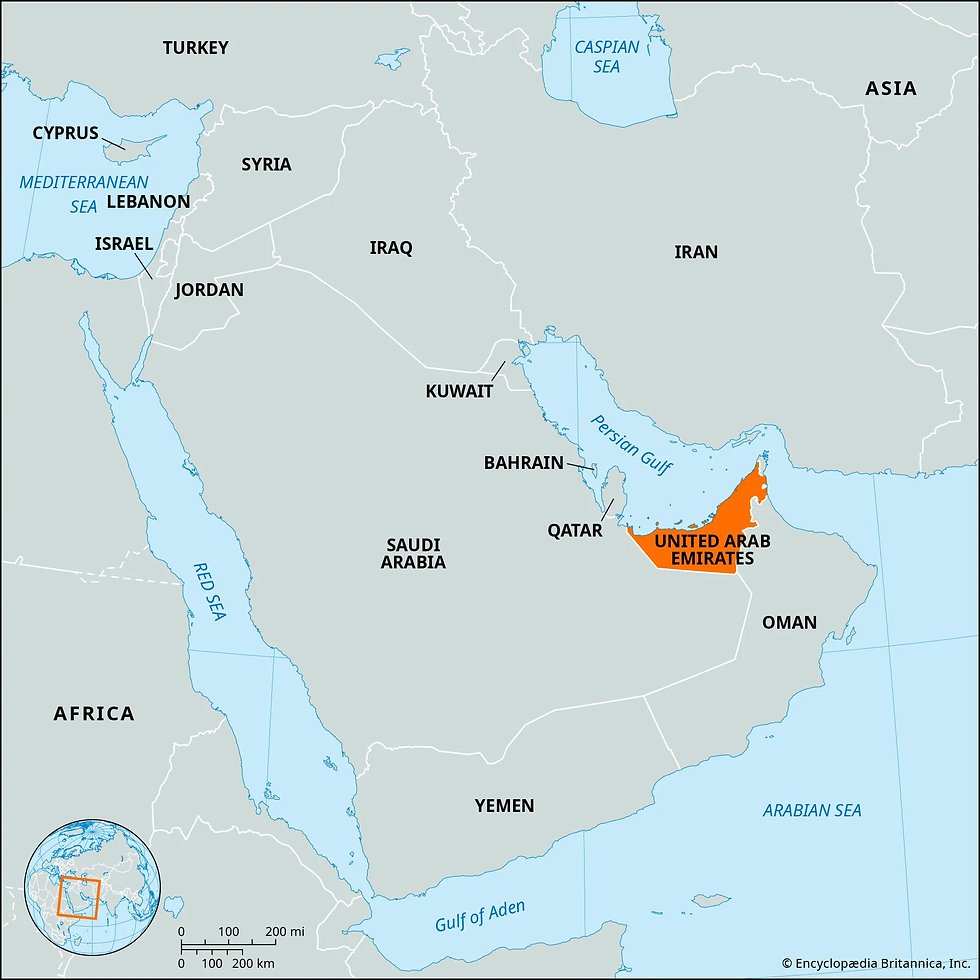
The President of the United Arab Emirates (UAE) paid an official visit to India, reinforcing the strategic partnership between the two countries.
The visit focused on deepening cooperation across trade, energy, technology, defence, and digital governance.
Key Outcomes of the Visit
India and the UAE agreed to double bilateral trade to over US$ 200 billion by 2032.
This trade target builds upon the existing momentum in India–UAE economic relations.
Both countries agreed to promote new markets to achieve the enhanced trade target.
Market expansion will be supported through initiatives such as Bharat Mart, which facilitates Indian exports.
Trade facilitation will also be promoted through the Virtual Trade Corridor, which enables seamless digital trade processes.
The Bharat–Africa Setu initiative will be used to connect Indian and UAE trade with African markets.
India and the UAE agreed to explore civil nuclear cooperation.
This cooperation will focus on advanced nuclear technologies.
These technologies include Small Modular Reactors (SMRs), which are compact and scalable nuclear reactors.
Cooperation will also include nuclear safety frameworks.
These nuclear initiatives follow the enactment of the SHANTI Act, 2025, which enables civil nuclear engagement.
Both countries agreed to establish Digital or Data Embassies.
A Digital/Data Embassy is an offshore facility where a nation stores critical digital data.
Such embassies ensure digital continuity and data sovereignty.
They protect data against cyberattacks, natural disasters, and geopolitical conflicts.
India and the UAE agreed to collaborate on Artificial Intelligence and advanced technologies.
This includes the creation of a supercomputing cluster under the AI India Mission.
Key Agreements, MoUs, and LoIs
India and the UAE entered into a Strategic Defence Partnership.
This partnership aims to create a framework for deepened defence cooperation.
Defence cooperation will cover technology development.
It will also include training exchanges and capacity building.
The partnership extends to the cyber domain, reflecting emerging security challenges.
An Energy Sales and Purchase Agreement (SPA) was signed between ADNOC Gas and HPCL.
Under the SPA, 0.5 million tonnes per annum (MTPA) of LNG will be supplied.
The LNG supply will continue for a duration of 10 years.
Key Aspects of India–UAE Relations
India and the UAE signed the Comprehensive Economic Partnership Agreement (CEPA) in 2022.
CEPA is a trade agreement aimed at reducing tariffs and facilitating investment flows.
CEPA helped boost bilateral trade to nearly US$ 100 billion by FY 2024–25.
The UAE is consistently India’s third-largest trading partner and second-largest export destination.
The UAE is a major supplier of crude oil to India.
It is also a significant supplier of Liquefied Natural Gas (LNG) and Liquefied Petroleum Gas (LPG).
The UAE is assisting India in strengthening its Strategic Petroleum Reserves (SPR).
Strategic Petroleum Reserves are emergency oil stockpiles maintained to ensure energy security.
India’s 2026 Diplomatic Strategy: From Large Forums to Strategic Coalitions
In the contemporary global landscape, tangible diplomatic outcomes are increasingly shifting from large multilateral bodies to smaller, issue-focused coalitions.
Large forums such as the United Nations (UN) and the G20 are often described as unwieldy, meaning difficult to manage and slow to deliver results.
In contrast, “small tables” refer to compact diplomatic groupings that are agile and outcome-oriented.
These smaller coalitions are seen as capable of delivering “big dividends”, meaning concrete and timely results.
Shifting Diplomatic Landscape of 2026
Bilateral relations are expected to remain demanding in 2026, particularly with major powers.
India’s ties with Washington continue to generate friction due to trade disputes.
Relations with Beijing remain strained due to strategic competition.
Large multilateral forums such as the UN and G20 are facing increasing strain.
This strain arises from geopolitical rivalries among major powers.
The effectiveness of these forums is further weakened by the intrusion of domestic politics into global decision-making.
As a result, large forums are becoming less effective in delivering concrete collective action.
An example of this dysfunction is the US boycott of the Johannesburg G20 Summit in 2025.
Engaging “Diplomatic White Spaces”: Key Arenas for Small-Table Diplomacy
Diplomatic White Spaces are defined as gaps in global leadership.
These are areas where pressing global problems require coordination.
In such spaces, no major power is able to act as a credible convenor.
These conditions create opportunities for middle powers like India to exercise leadership.
European Union: Technocratic Test
Engagement with the European Union (EU) represents a technocratic test for India’s diplomacy.
The presence of the EU’s institutional leadership as chief guests on January 26, 2026 signals strategic intent.
This engagement reflects India’s desire to advance the long-pending India–EU Free Trade Agreement (FTA).
A Free Trade Agreement (FTA) is a pact aimed at reducing trade barriers and harmonising economic rules.
The proposed India–EU FTA covers market access rules.
It also addresses data standards, which govern cross-border digital flows.
The FTA includes sustainability requirements, reflecting environmental and social norms.
These negotiations engage the EU’s collective policy bodies, rather than individual member states.
BRICS: Political Test
BRICS serves as a political test for India’s coalition leadership.
India will act as the chair and host of BRICS in 2026.
In this role, India can promote practical measures to enhance BRICS effectiveness.
One such measure is greater use of New Development Bank (NDB) guarantees.
The New Development Bank is the multilateral development bank established by BRICS countries.
Strengthening NDB mechanisms can steer BRICS toward tangible delivery of development outcomes.
India can also play a balancing role within the grouping.
This involves championing the interests of the Global South, which refers to developing and emerging economies.
At the same time, India can prevent BRICS from drifting into anti-West rhetoric.
India can also resist turning BRICS into a de-dollarisation crusade, meaning an aggressive attempt to undermine the US dollar.
QUAD: Public Goods Test
Engagement with the Quadrilateral Security Dialogue (QUAD) represents a public goods test.
India is expected to host a QUAD Leaders’ Summit in 2026.
This provides an opportunity to focus on practical cooperation rather than ideological positioning.
One focus area is maritime domain awareness, which involves monitoring activities at sea for security and safety.
Another focus area is the development of resilient ports, which can withstand disruptions and support trade.
These initiatives are particularly relevant for Indian Ocean littoral states, which are countries bordering the Indian Ocean.
Such states seek capacity enhancement without being drawn into great power rivalries.
China’s Population Declines for the 4th Consecutive Year
China’s population declined for the fourth consecutive year, reflecting a sustained demographic shift.
The country’s population fell by 3.39 million, indicating a net population contraction.
China’s total population stood at 1.405 billion after the decline.
The total number of births dropped to 7.92 million in 2025, highlighting a sharp fertility slowdown.
This trend is part of a broader phenomenon known as “Demographic Winter.”
Demographic Winter is no longer confined to developed nations.
It is increasingly becoming a global reality.
The phenomenon carries profound implications for the 21st-century economy.
It also has significant consequences for social structures and welfare systems.
What is Demographic Winter?
Demographic Winter refers to a demographic phase marked by a persistent and structural decline in population growth.
It reflects long-term demographic changes rather than short-term population fluctuations.
A key indicator of demographic winter is birth rates falling below the replacement fertility rate.
The replacement rate of fertility is 2.1, which is the average number of children needed to maintain population size.
Another indicator is an inverted population pyramid.
An inverted population pyramid has a narrow base of young people.
It also has a wider top of older adults, indicating an ageing population.
Reasons for Demographic Winter
Delayed life milestones are a major contributor to demographic winter.
Career aspirations are encouraging individuals to postpone marriage.
Economic pressures are also leading to delayed parenthood.
Urbanisation plays a significant role in lowering fertility rates.
Urban living spaces are smaller, reducing suitability for large families.
Urban housing is also more expensive, discouraging child-rearing.
Societal and cultural shifts are reshaping family structures.
Increasing female participation in the workforce affects fertility decisions.
There is a growing preference for smaller family norms.
Access to family planning allows individuals greater control over family size.
Legacy population policies continue to influence demographic outcomes.
The One Child Policy in China is a key example of such legacy policies.
Way Ahead to Deal with Demographic Winter
Governments can adopt pro-natalist policies to encourage higher birth rates.
Pro-natalist policies include financial incentives for families.
They also include paid parental leave policies.
Countries must adapt to the “Silver Economy.”
The Silver Economy refers to economic activities focused on an ageing population.
Adapting to it requires greater investment in healthcare systems.
It also necessitates pension and social security reforms.
Economic structural reforms are needed to address demographic decline.
These reforms must tackle the rising cost of living, which discourages family formation.
Making family-building economically viable for young professionals is essential.
Technological integration can offset labour shortages.
Technologies such as Artificial Intelligence and automation can sustain productivity.
These technologies help maintain industrial output despite a shrinking workforce.
Global migration governance offers another long-term solution.
It involves coordinated migration policies among countries.
Such policies allow nations with labour surpluses to support those facing demographic winter.
Monroe Doctrine
Recent policies of US President Donald Trump are often referred to as the “Donroe Doctrine”, reflecting parallels with the 200-year-old Monroe Doctrine.
The Monroe Doctrine was a foundational United States policy on the new political order in the Americas.
Proclamation and Objective
The doctrine was proclaimed in 1823 by U.S. President James Monroe.
Its primary objective was to establish U.S. dominance and security in its surrounding region, particularly the Western Hemisphere.
Three Main Concepts of the Monroe Doctrine
The first concept is Non-colonization, which meant European powers should not establish new colonies in the Americas.
The second concept is Non-intervention, indicating that Europe must not interfere in the affairs of independent American states.
The third concept is U.S. Non-interference, meaning the United States would not meddle in European wars or colonies.
RBI Overhauls Priority Sector Lending (PSL) Norms
The Reserve Bank of India (RBI) has overhauled Priority Sector Lending (PSL) norms to strengthen credit delivery.
RBI issued the Reserve Bank of India (Priority Sector Lending – Targets and Classification) Directions, 2025.
Priority Sector Lending (PSL) is a regulatory mechanism to ensure credit flow to vulnerable sections of society and underdeveloped areas.
The revised norms aim to improve transparency, accountability, and effectiveness of PSL implementation.
Key Features of the Latest RBI PSL Guidelines
RBI has introduced enhanced compliance requirements for banks.
Banks are now required to obtain certification from external auditors.
For specific entities such as National Cooperative Development Corporation (NCDC), certification must be done by CAG-empanelled auditors.
The audit requirement ensures that the same loan exposure is not double-counted as PSL.
This prevents both the originating bank and an intermediary from claiming the same loan.
Intermediaries include entities such as Non-Banking Financial Companies (NBFCs) and Cooperatives.
RBI has revised sector-specific PSL targets. The PSL target for Small Finance Banks (SFBs) has been reduced.
The target has been adjusted from 75% to 60% of Adjusted Net Bank Credit (ANBC).
Adjusted Net Bank Credit (ANBC) represents a bank’s net lending base used for regulatory calculations.
RBI has included NCDC-linked rural credit under PSL.
Loans provided by banks to the National Cooperative Development Corporation (NCDC) are now classified as PSL.
This classification applies when loans are on-lent to cooperative societies.
RBI has permitted banks to enter into co-lending arrangements to meet PSL targets.
Co-lending allows banks to partner with other financial entities to jointly finance borrowers.
Banks are now allowed to treat export credit to agriculture as PSL and also to classify export credit to MSMEs as PSL.
MSMEs refer to Micro, Small, and Medium Enterprises, which are key employment generators.
Targets for Priority Sector Lending for Different Types of Banks
Domestic commercial banks and foreign banks with 20 branches and above have a uniform PSL target. Their target is 40% of ANBC.
Alternatively, the target can be Credit Equivalent of Off-Balance Sheet Exposures (CEOBE), whichever is higher.
CEOBE converts off-balance-sheet items into credit-equivalent values.
Foreign banks with less than 20 branches follow similar PSL norms.
Their overall PSL target is 40% of ANBC or CEOBE, whichever is higher.
Within this, up to 32% can be met through export credit.
At least 8% must be lent to any other priority sector category.
Regional Rural Banks (RRBs) have a higher PSL obligation.
RRBs must lend 75% of ANBC or CEOBE, whichever is higher, to priority sectors.
Lending to Medium Enterprises, Social Infrastructure, and Renewable Energy by RRBs is now capped. This cap is set at 15% of ANBC.
Central Silk Board
The Government of India has increased the approval limit of the Central Silk Board.
This decision aims to speed up the implementation of silk sector projects.
About the Central Silk Board
The Central Silk Board (CSB) is a statutory body, meaning it is established by law.
The board was established in 1948.
It was created through an Act of Parliament, giving it legal authority.
The Central Silk Board functions under the Ministry of Textiles.
Silk in India
India is the second-largest producer of silk in the world and also the largest consumer of silk globally.
Silk production in India includes following major types of silk:
Mulberry silk is the most widely produced variety in the country.
Mulberry silk accounts for 92% of India’s total raw silk production.
Oak Tasar silk is produced from silkworms that feed on oak leaves.
Tropical Tasar silk is produced in tropical forest regions.
Muga silk is a unique golden-hued silk indigenous to India.
Eri silk is known for its durability and thermal properties.
The major silk-producing states include Karnataka, Andhra Pradesh, Tamil Nadu, West Bengal
Jammu and Kashmir is a key silk-producing Union Territory.
Credit Assessment Model for MSMEs
Public Sector Banks (PSBs) have sanctioned over ₹52,300 crore to Micro, Small and Medium Enterprises (MSMEs).
These sanctions have been made under the new Credit Assessment Model (CAM).
About the New Credit Assessment Model (CAM), 2025
The Credit Assessment Model (CAM), 2025 is designed to improve access to institutional credit for MSMEs.
The model leverages the digital footprints of borrowers, which include electronically available financial and transactional data.
This enables faster and more objective appraisal of MSME loan applications.
The model follows a data-driven approach, reducing reliance on subjective assessments.
CAM uses digitally fetched and verifiable information for credit evaluation.
This information allows automation of loan processing for MSMEs.
Automated processing helps reduce turnaround time and procedural delays in lending.
Role of Jan Samarth Portal
Loan applications under CAM are sourced through the Jan Samarth Portal.
The Jan Samarth Portal is a unified digital platform for credit-linked government schemes.
It connects beneficiaries, including MSMEs, on a single interface.
The platform also connects financial institutions such as banks and NBFCs.
Central and State Government agencies are integrated into the portal.
Nodal agencies are also connected to facilitate coordination and monitoring.
Prevention of Corruption Act 1988
The Supreme Court of India held that State investigative agencies, including State Anti-Corruption Bureaus and State police, are competent to register and investigate corruption cases under the PCA, 1988.
This applies even if the accused is a Central Government employee, clarifying the scope of state powers.
The Court further clarified that no prior permission from the Central Bureau of Investigation (CBI) is required before a State police registers a case against a central government employee.
About the Prevention of Corruption Act, 1988
The PCA, 1988 criminalises corrupt conduct, including bribery, which is offering or receiving undue advantage for official actions.
It also criminalises misappropriation, which refers to the wrongful use of public funds or property.
Disproportionate assets, meaning accumulation of wealth beyond known sources of income, is another offence under the Act.
The PCA aims to combat corruption across government organisations and public sector entities, strengthening accountability in public administration.
One Station One Product
Indian Railways’ One Station One Product (OSOP) expanded to over 2,000 railway stations, empowering 1.32 Lakh artisans as of Jan 2026.
About OSOP
Aim: Launched in 2022 to encourage indigenous and specialised products and crafts of India through providing display and sale outlets on railway stations across the country.
Nodal Ministry: Ministry of Railways.
Products include: Artefacts made by indigenous tribes, handlooms by local weavers, handicrafts like wood carving, chikankari and zari-zardozi work and other processed/semi processed food items/products.
Part of the broader “Vocal for Local” and Atmanirbhar Bharat vision.
Lancet Commission Report on Citizen-Centred Health System for India
The Lancet Commission Report presents a transformative roadmap for India to achieve Universal Health Coverage (UHC) by 2047.
Universal Health Coverage (UHC) means that all individuals and communities receive the health services they need without suffering financial hardship.
Systemic Challenges Identified
The report identifies fragmented delivery as a key challenge, where the system is siloed into vertical disease-specific programmes.
There is lack of coordination between primary, secondary, and tertiary care, affecting the overall efficiency of health services.
Financial hardship remains prevalent, as out-of-pocket expenditure (OOPE) is a leading cause despite insurance schemes like Ayushman Bharat.
OOPE includes costs of outpatient care, medicines, diagnostics, and procedures borne directly by patients.
Another challenge is quality variations, reflected in the “know-do” gap, where providers fail to follow clinical protocols.
This leads to low-value care, meaning healthcare that does not improve patient outcomes effectively.
The system also faces an epidemiological transition, with a rising burden of non-communicable diseases (NCDs) alongside persistent infectious diseases.
Non-communicable diseases (NCDs) include conditions like diabetes, cardiovascular diseases, cancer, and chronic respiratory illnesses.
Reforms Suggested by the Lancet Commission
The report emphasizes empowering citizens through strengthened local government and civil society platforms, such as Village Health, Sanitation, and Nutrition Committees.
It recommends robust grievance redressal mechanisms to ensure accountability in service delivery.
Citizens should have access to data on health system performance to make informed decisions and hold providers accountable.
Public sector reform is proposed through Decentralized Integrated Delivery Systems (IDS).
IDS links modernized primary care networks to secondary hospitals, each serving a defined population, ensuring coordinated care.
The report calls for aligning the private sector with UHC goals.
This involves shifting from fee-for-service payment models to capitation and global budgets, which reward value, prevention, and efficiency.
It also suggests voluntary insurance coverage for comprehensive care, including outpatient services and medicines.
Other reforms include scaling up technology, such as the Ayushman Bharat Digital Mission, to improve health system efficiency.
The report advocates transparent governance, using real-time data for surveillance and decision-making.
Finally, it emphasizes connecting researchers, policymakers, and providers to enable evidence-based refinement of health services.
Northeast Region (NER) Crucial for India’s Growth Story
The Prime Minister stated that the Northeast Region (NER) is crucial for India’s growth story.
The statement was delivered during the Prime Minister’s visit to Kaziranga National Park (KNP) in Assam.
KNP is the single largest undisturbed and representative area of the Brahmaputra Valley floodplain.
The park is globally known for its population of one-horned rhinoceroses.
Kaziranga National Park (KNP)
|
Significance of the Northeast Region (NER)

The Northeast Region serves as a natural and geo-strategic frontier of India.
The region is surrounded by the Eastern Himalaya, also known as the Arunachal Himalaya.
It is bordered by the south-eastern hill ranges, including the Patkai and Naga hills.
The region shares an international boundary with China, Myanmar, Bhutan, Nepal and Bangladesh
The Northeast Region functions as a gateway to Southeast Asia.
The Siliguri Corridor, popularly known as the Chicken’s Neck, connects the Northeast with mainland India.
The Siliguri Corridor is a narrow land stretch, making it a critical strategic chokepoint.
The region is a rich depository of natural resources.
It possesses abundant agro-horticultural resources, supporting diversified agriculture.
The region is endowed with extensive forest resources.
The Northeast has significant hydroelectric power potential. The region also contains oil and natural gas reserves.
These resources make the region well-positioned for industrial growth and economic expansion.
The Northeast has strong diplomatic and strategic potential.
It plays a key role in advancing India’s Act East Policy, which focuses on Southeast Asia.
The region supports the Neighbourhood First Policy, aimed at strengthening ties with neighbouring countries.
The Northeast is also pivotal to India’s Indo-Pacific strategy, which focuses on regional stability and connectivity.
Key Initiatives for the Development of NER
Strengthening peace and security has been a priority in the Northeast.
The Bodo Peace Accord of 2020 helped resolve long-standing ethnic tensions.
The Karbi Anglong Peace Accord of 2021 contributed to stability in Assam.
The Assam–Meghalaya boundary agreement of 2022 addressed inter-state border disputes.
Key Regional Challenges of the Northeast Region
The region faces self-determination movements, reflecting demands for autonomy.
These movements have often manifested as armed struggles by indigenous groups.
The Northeast has experienced ethnic conflicts rooted in identity and resource competition.
An example of ethnic tension includes conflicts between the Meitei and Kuki tribes in Manipur.
The region also suffers from a lack of basic services.
This deficiency is reflected in gaps in healthcare delivery.
Challenges are also visible in education access and quality.
Issues of human rights violations have been reported in conflict-affected areas.
Sector-wise Development Initiatives in NER
Infrastructure and economic development are being promoted through targeted schemes.
The Uttar Poorva Transformative Industrialization Scheme (UNNATI-2024) aims to boost industrial growth.
The Prime Minister’s Development Initiative for North East Region (PM-DevINE) focuses on infrastructure and social development.
Agriculture and farming are supported through the Mission Organic Value Chain Development for NER.
This mission promotes organic farming and value chain integration.
Social and cultural development is supported through the North East District SDG Index.
The SDG Index is prepared by NITI Aayog to track district-level development.
Assam’s Moidams, which are royal burial mounds, have been inscribed in UNESCO’s World Heritage List.
This inscription highlights the cultural and historical significance of the Northeast Region.
Chips to Start-up (C2S) Programme
Chips to Start-up (C2S) Programme is a national initiative aimed at strengthening India’s semiconductor and chip design ecosystem.
The programme is implemented by the Ministry of Electronics and Information Technology (MeitY).
MeitY is the central government ministry responsible for policy, promotion, and development of electronics and information technology in India.
The C2S Programme was launched in 2022, marking a focused effort to build semiconductor-related human capital.
It functions as an umbrella capacity-building initiative, meaning it integrates multiple training, education, and infrastructure efforts under one programme framework.
The primary target of the programme is to develop 85,000 industry-ready professionals.
Industry-ready professionals refer to individuals equipped with practical skills aligned with current industry requirements.
The programme covers undergraduate, postgraduate, and doctoral levels, ensuring capacity building across the entire higher education spectrum.
Recently, MeitY highlighted the programme’s progress, indicating official monitoring and evaluation.
As per the update, the programme has recorded over 1 lakh enrolments, reflecting strong participation.
The programme has also provided access to SMART lab facilities for hands-on learning.
SMART labs are specialized laboratories designed to support advanced training in semiconductor design, fabrication, and related technologies.
Light water Reactor
Department of Atomic Energy is pushing for fabrication of an Indian Light Water Reactor (LWR) as a priority within the nuclear establishment.
About Light Water Reactors (LWRs)
LWRs are nuclear reactors that use ordinary (light) water (H₂O) as both the coolant and the neutron moderator.
LWRs currently account for over 85% of the civil nuclear reactor capacity in the world.
Working principle: Fission of uranium fuel produces heat, which is transferred by light water to generate steam that drives turbines for electricity production.
Fuel used: LWRs typically use low-enriched uranium (3–5% U-235).
Indian context: India traditionally developed Pressurised Heavy Water Reactors (PHWRs), but has identified LWRs as a priority for rapid capacity addition.
Small Language Models (SLMs) as the Future of Artificial Intelligence
The Union Minister for Electronics and IT stated that the future of AI will be shaped by Small Language Models (SLMs) rather than extremely Large Language Models (LLMs).
Large Language Models (LLMs) are AI systems with hundreds of billions or even trillions of parameters, used for natural language understanding and generation.
What are SLMs?
Small Language Models (SLMs) are compact AI systems built on simpler neural network architectures designed to generate and understand natural language, similar to LLMs.
SLMs typically use several million to 30 billion parameters, which is significantly fewer than LLMs.
Currently, nearly 95% of AI work globally is handled by SLMs.
Examples of SLMs include Llama, Mistral, Gemma, and Granite.
Advantages of SLMs over LLMs
SLMs are cheaper, as they require less computational power, reducing costs for organizations.
They are ideal for on-device deployment, optimized to run on resource-constrained devices with limited connectivity, memory, and electricity.
SLMs democratize AI, enabling more organizations to develop models and include diverse societal perspectives.
Other advantages include streamlined monitoring and maintenance, improved data privacy and security, lower infrastructure requirements, deeper expertise for domain-specific tasks, and lower latency.
Limitations of SLMs
SLMs offer less accuracy than larger models, which are better suited for complex tasks.
They have a narrow scope, being trained on smaller, specialized datasets, limiting flexibility and general knowledge.
Other limitations include lower creativity and less advanced data analysis capabilities.
Reasons for Increasing Adoption of SLMs in India
Multilingual advantage: Domain-specific SLMs effectively support regional languages like Tamil and Marathi.
Task-focused efficiency: SLMs deliver strong, purpose-driven performance across enterprise needs.
Next 500 million opportunity: SLMs are designed to serve regional-language users entering the digital ecosystem.
Rapid market growth: The global SLM market is expected to expand from under $1B in 2025 to over $5B by 2032.
Edge-ready performance: SLMs run on basic devices, work offline, and ensure data privacy.
Right-sized AI: Indian firms prefer SLMs for their precision, adaptability, and practical deployment.
MoEFCC notified the Environmental (Protection) Fund Rules, 2026
The Union Ministry of Environment, Forest and Climate Change (MoEFCC) has notified the Environmental (Protection) Fund Rules, 2026.
These rules aim to streamline the use of the Environmental Protection Fund (EPF) for better efficiency and accountability.
The Environmental Protection Fund is constituted under Section 16 of the Environment (Protection) Act, 1986, giving it a legal basis.
It is maintained in the Public Account of India, which refers to government accounts for public funds not forming part of the Consolidated Fund.
The corpus of the Fund accumulates fines levied under the Air (Prevention and Control of Pollution) Act, 1981, the Water (Prevention and Control of Pollution) Act, 1974, and the Environment (Protection) Act, 1986.
Out of the total funds collected, 75% is remitted to States and Union Territories (UTs) for local environmental initiatives.
The remaining 25% is retained by the Central government to support nationwide environmental programs.
The fund is utilized for monitoring networks, which track pollution levels and environmental quality.
It is also used for remediation of contaminated sites, meaning cleaning or restoring polluted areas to safe conditions.
Additionally, the fund supports research and development (R&D) in clean technology, fostering innovations that reduce environmental impact.
Oversight of the fund is conducted by a Project Management Unit (PMU), ensuring proper administration and management.
The fund is audited by the Comptroller and Auditor General of India (CAG) to ensure transparency and accountability.
The EPF also finances institutional capacity building to strengthen regulatory bodies like the Central Pollution Control Board (CPCB) and State Pollution Control Boards (SPCBs).
CPCB and SPCBs are government agencies responsible for monitoring and enforcing environmental standards at national and state levels, respectively.
Kumbhalgarh Wildlife Sanctuary as an ESZ
The Ministry of Environment, Forest and Climate Change has issued a notification declaring Kumbhalgarh Wildlife Sanctuary as an Eco-Sensitive Zone (ESZ).
ESZs are notified under the Environment (Protection) Act, 1986 by the central government as a "transition zone" from areas of high protection to areas involving lesser protection.
It is generally declared around 10 Km area, but can vary for each site as per the notification.
About the Kumbhalgarh Wildlife Sanctuary (1971)
Location: It is a 610.5 sq km areasurrounding Kumbhalgarh Fort (a UNESCO World Heritage Site), in parts of Rajsamand, Udaipur, and Pali districts of Rajasthan.
Covers four hill and mountain ranges of the Aravallis: Kumbhalgarh Range; Sadri Range; Desuri Range and the Bokhada Range.
Wildlife: leopard, striped hyena, jungle cat, Indian pangolin, blue bull, chinkara etc.
Vegetation: Predominantly dry deciduous, with forests of Dhok, Salar, Khair, and Churel trees.
Orobanche aegyptiaca
India’s mustard crop is facing a serious threat in the form of Orobanche aegyptiaca.
Orobanche aegyptiaca (Egyptian Broomrape) is a root-parasitic weed that lacks chlorophyll and depends entirely on host plants, especially mustard, extracting nutrients, carbon and water from them.
By depriving the host crop of these, it causes wilting, yellowing and stunted growth of the plants and, thereby, lower mustard seed yields.
About Mustard
Mustard is India’s biggest edible oil-yielding crop, which generally sown from mid- to late-October.
Rajasthan is the largest mustard producing state.
It is also susceptible to other pathogens including pests (especially aphids) and fungal diseases (white rust, leaf blight, stem rot and powdery mildew).
Expansion of GHG Emissions Cut Regime under CCTS
The Union Ministry of Environment, Forest, and Climate Change (MoEFCC) has notified the Greenhouse Gases Emission Intensity Target (Amendment) Rules, 2025.
These rules are issued under the Environment (Protection) Act, 1986, providing the legal framework for environmental regulation.
Expansion of Obligated Sectors
The amendment involves expansion of the list of obligated sectors, which are industries required to reduce GHG emissions.
Four new sectors have been added: Petroleum Refinery, Petrochemicals, Textiles, and Secondary Aluminium.
Previously, the obligated sectors included Aluminium, Cement, Chlor-alkali, and Pulp & Paper.
Targets and Compliance
The new rules mandate 208 specific industrial units to reduce their GHG emission intensity, starting from the compliance year 2025-26.
GHG emission intensity refers to the amount of greenhouse gases emitted per unit of product, linking emissions to production efficiency.
The overall emission intensity reduction targets range from 3% to 7% by 2026-27, taking 2023-24 as the baseline year.
Compliance Mechanism and Penalties
Units that fail to meet their targets must purchase Carbon Credit Certificates (CCCs) to compensate for the shortfall.
Failure to purchase CCCs attracts an environmental compensation penalty, equal to twice the average trading price of CCCs.
Significance and Alignment with National Goals
This regulatory expansion supports India’s Nationally Determined Contribution (NDC) target of reducing emissions intensity of GDP by 45% by 2030.
It also contributes to India’s long-term goal of achieving Net Zero emissions by 2070.
Carbon Credit Trading Scheme (CCTS)
1. Background and Objective
The Carbon Credit Trading Scheme (CCTS) was originally notified by the Union Ministry of Power in 2023 under the Energy Conservation Act, 2001.
The objective of CCTS is to establish the institutional framework for the Indian Carbon Market (ICM).
2. Institutional Structure
The administrator of CCTS is the Bureau of Energy Efficiency (BEE), responsible for setting targets and issuing CCCs.
The Central Electricity Regulatory Commission (CERC) acts as the regulator, overseeing the trading of CCCs.
The registry function is handled by Grid Controller of India Limited, which maintains records of issued and traded CCCs.
3. Operational Framework
The CCTS operates through a Compliance Mechanism, where obligated entities meet GHG emission intensity targets, and overachievers earn credits.
It also includes an Offset Mechanism, allowing non-obligated entities to voluntarily register reduction projects to earn CCCs.
The scheme functions on a “Cap and Trade” model, where emission caps are set for entities, and excess reductions can be traded.
1 Carbon Credit Certificate (CCC) equals 1 tonne of CO2 equivalent, which can be sold on power exchanges.
Obligated entities that reduce emissions beyond their target earn CCCs, providing financial incentive for exceeding environmental goals.
IRENA Assembly Ends with Call for Faster Renewable Transition
The sixteenth session of the International Renewable Energy Agency (IRENA) Assembly concluded in Abu Dhabi, UAE.
During the session, IRENA adopted its Medium-term Strategy 2023–2027 Evaluation and Work Programme.
Prior to the assembly, IRENA and the International Labour Organization (ILO) jointly released the Renewable Energy and Jobs – Annual Review 2025.
The report highlighted that global renewable energy (RE) employment in 2024 reached 16.6 million jobs, with the Solar Photovoltaic (PV) sector employing the most workers.
China dominates global renewable energy employment across multiple sectors.
In India, renewable energy employment accounts for 1.3 million jobs, representing 7.7% of the global share.
India ranks 2nd globally in Solar Photovoltaic and Hydropower employment, after China.
India is 4th globally in Liquid Biofuels and Wind employment.
In solar manufacturing, India holds 4.8% of global PV module manufacturing.
Within India, Gujarat is the leading state for module manufacturing with 42% of capacity, followed by Tamil Nadu at 11%.
About IRENA
IRENA is an intergovernmental organization that supports countries in transitioning to renewable energy for sustainable development, energy access, and climate action.
It was established in 2009, and its statute entered into force in 2010.
The headquarters of IRENA is located in Masdar City, Abu Dhabi, UAE.
IRENA has 170+ member countries and the EU, with India as a founding member.
The agency promotes renewable energy adoption, provides policy advice, capacity building, and technical assistance to member countries.
IRENA is the official custodian to track progress on the “UAE Consensus”, which are goals adopted at COP28.
IRENA regularly publishes reports, including the World Energy Transitions Outlook, to guide renewable energy transitions globally.
Walker and Hadley Circulations
Unusual cold was observed across East, Central, and South India, possibly linked to La Niña-induced strengthening of Walker and Hadley circulations.
La Niña is a climate phenomenon characterized by cooler-than-average sea surface temperatures in the central and eastern tropical Pacific, affecting global weather patterns.
Walker Circulation
Walker Circulation is an east–west (zonal) atmospheric circulation over the tropical Pacific.
Its mechanism involves warm air rising over the western Pacific, moving eastward aloft, sinking over the eastern Pacific, and returning westward as trade winds.
The Walker circulation influences global weather patterns, including monsoons and winter anomalies.
Hadley Circulation
Hadley Circulation is a north–south (meridional) atmospheric circulation.
Its mechanism involves warm air rising near the equator, moving poleward aloft, sinking around 30° latitude, and returning equatorward at the surface.
Hadley circulation redistributes heat across the planet and shapes trade winds, deserts, and tropical rainfall patterns.
Keeladi
Researchers from the Birbal Sahni Institute of Palaeosciences reconstructed climate records from peninsular India using sediment analysis of the Kondagai Inland Lake.
Sediment analysis involves studying layers of soil, silt, and organic matter deposited in water bodies to understand past environmental and climate conditions.
The Kondagai Inland Lake is located in Tamil Nadu’s Sivaganga district, close to Keeladi.
About Keeladi
Keeladi is located about 12 km southeast of Madurai.
It is famous for unearthing evidence of a sophisticated urban civilization from the Sangam period.
The town is bound by the river Vaigai to the north.
Key Findings of the Study
Researchers identified three major climatic phases over the Late Holocene, the period from about 5,000 years ago to recent times.
These climatic phases show direct links to monsoon variability, lake hydrology, and human activity in the region.
The findings could help improve weather forecasting, disaster mapping, and wetland and lake restoration efforts.
UN University Institute for Water, Environment and Health releases report on Global Water Bankruptcy
The report highlighted that the planet has entered the Global Water Bankruptcy era.
Water Bankruptcy is a persistent post-crisis condition of human-water system in which long-term water use has exceeded renewable inflows and safe depletion limits, causing irreversible or effectively irreversible degradation.
Report highlights that parts of the water and natural capital—rivers, lakes, aquifers, wetlands, soils, and glaciers—have been damaged beyond realistic prospects of full recovery.
In contrast, water stress is a condition of high-water demand relative to supply but impacts are largely reversible and water crisis is where shock-driven disruptions temporarily push water systems beyond capacity but which can be restored through emergency and restoration measures.

Factors leading to Water Bankruptcy
Slow-onset depletion: Chronic overuse of surface and groundwater slowly degrades storage and quality, with early warning signs ignored until irreversible thresholds are crossed.
Infrastructure-driven overshoot: Large dams and transfers enable expansion beyond sustainable limits.
Ecological liquidation: Wetlands, floodplains, forests, and soils are converted or degraded in ways that increase short-term productive capacity while eroding long-term water storage, filtration, and buffering.
Climate-amplified overshoot: Climate change accelerates existing stress by reducing reliable supply and increasing variability in already overexploited systems.
Kamchatka Peninsula

A powerful winter storm has paralyzed the Kamchatka Peninsula in Russia's Far East, burying streets and homes under massive amounts of snow.
The Kamchatka Peninsula is part of the Far Eastern Federal District of the Russian Federation.
The region is sparsely populated, with approximately 3 lakh (300,000) people living there.
Geographically, the peninsula is located between the Sea of Okhotsk on the west and the cific Ocean and Bering Sea on the east.
The peninsula is home to two major mountain ranges: the Sredinny Mountains and the stochny Mountains.
The Kamchatka River flows through the peninsula, serving as an important waterway.
The climate of Kamchatka is mostly Tundra Climate, which refers to a cold, treeless region where the ground may be frozen for most of the year.
Freshwater Pufferfish
Scientists have confirmed India’s first case of pufferfish poisoning.
Freshwater pufferfish belong to a diverse group of approximately 30 to 35 species within the family Tetraodontidae that live their entire lives in fresh water.
They are commonly known as toadfish, patkafish, balloonfish, and fugu.
Their distribution includes the Western Ghats and major river basins such as the Ganga, Brahmaputra, and Mahanadi.
Pufferfish are omnivorous, meaning they eat both plants and animals, and are benthic, meaning they live on or near the bottom of water bodies.
They are unique and dangerous due to tetrodotoxin (TTX), which is one of the most potent neurotoxins known in nature.
Indian Skimmer Conservation Project
The Indian Skimmer Conservation Project was launched by the Bombay Natural History Society (BNHS).
BNHS, started in 1883, is one of the largest non-governmental organizations (NGOs) in India engaged in conservation and biodiversity research.
The Indian Skimmer is native to South Asia, mainly India, Bangladesh, and Pakistan, and its range extends to Nepal and Myanmar.
It is characterized by its unique feeding behavior, where it skims the water surface with a specialized beak, the lower mandible being longer than the upper, to catch fish and other aquatic prey.
The bird’s habitat includes larger, sandy, lowland rivers, lakes and adjacent marshes, as well as estuaries and coasts.
Its conservation status, according to the IUCN Red List, is Endangered.
IUCN (International Union for Conservation of Nature) is an organization that assesses the global conservation status of species to guide protection efforts.
RDI SCHEME
The Department of Science and Technology (DST) has approved the Technology Development Board (TDB) and the Biotechnology Industry Research Assistance Council (BIRAC) as the first Second-Level Fund Managers (SLFMs) under the RDI Scheme.
Second-Level Fund Managers (SLFMs) are entities responsible for allocating funds to startups and companies under the scheme.
About the RDI Scheme
The Research Development and Innovation (RDI) Scheme aims to provide long-term financing or refinancing to private sector entities.
This financing comes with long tenors, meaning extended repayment periods, at low or nil interest rates.
The scheme is designed to spur private investments in research and innovation.
The total fund allocation under the RDI Scheme is ₹1 lakh crore, highlighting the scale of investment support.
Two-Tiered Funding Mechanism
The scheme operates through a two-tiered funding mechanism for efficient fund distribution.
The first tier is the Special Purpose Fund (SPF), established within the Anusandhan National Research Foundation (ANRF).
The SPF acts as the custodian of funds, meaning it holds and manages the capital centrally.
The second tier involves Second-Level Fund Managers, who receive funds from the SPF.
These SLFMs allocate funds in the form of long-term concessional loans, providing financial support at below-market interest rates.
SLFMs can also provide equity funding for startups, taking ownership stakes to support early-stage innovation.
Root Wilt Disease of Coconut
Coconut is an important plantation crop, but it is currently under serious threat from Root Wilt Disease, which affects palm health and productivity.
Root Wilt Disease is a debilitating and slow-spreading disease, meaning it weakens the plant gradually and spreads over time.
The disease is caused by phytoplasmas, which are phloem-restricted plant-pathogenic bacteria living inside the food-conducting tissues of plants.
Phytoplasmas are transmitted from infected to healthy plants by insect vectors, which act as carriers of the pathogen.
One of the earliest visible symptoms of Root Wilt Disease is flaccid and inwardly curving leaflets, a condition known as ribbing.
Another major symptom of the disease is yellowing of leaves, indicating nutrient and physiological stress.
The disease also causes root decay, which weakens the anchorage and nutrient uptake of the coconut palm.
Due to these combined effects, Root Wilt Disease leads to a significant reduction in coconut yield.
Coconut palms generally thrive in humid tropical climates, which provide suitable moisture and temperature conditions.
These climatic conditions are commonly found in coastal regions, where coconut cultivation is widespread.
The ideal temperature range for coconut growth lies between 20°C and 32°C.
An annual rainfall of about 1000 mm is sufficient to support healthy coconut cultivation.
Coconut palms require plenty of sunlight, as they are sun-loving plants with high light requirements.
Suitable soils for coconut cultivation include red sandy loam soils, which provide good drainage.
Laterite soils are also suitable due to their porous nature and aeration.
Alluvial soils support coconut growth because of their fertility and moisture-holding capacity.
India is the third largest coconut-producing country in the world as per 2021–22 data.
Within India, Kerala is one of the major coconut-producing states.
Karnataka and Tamil Nadu also plays a significant role in coconut production in the country.
Bagurumba Dance
The Prime Minister participated in “Bagurumba Dwhou 2026”, an event celebrating the rich cultural heritage of the Bodo community in Assam.
Bagurumba Dance is a traditional folk dance belonging to the Bodo community of Assam, an indigenous ethnic group of the region.
The dance is inspired by nature, which means its movements are based on natural elements and surroundings.
It symbolises blooming flowers, representing growth, beauty and renewal in nature.
Through its expressions, the dance reflects harmony between human life and the natural world.
Bagurumba is traditionally performed by young Bodo women, who are the main dancers.
Men accompany the performance as musicians, providing rhythmic and instrumental support.
These male performers play traditional musical instruments, which are indigenous to Bodo culture.
The dance is usually performed in groups, highlighting collective participation.
Dancers often form circles or lines, which enhances the visual elegance and symmetry of the performance.
Culturally, the dance represents peace, symbolising social harmony.
It also signifies fertility, which is associated with agricultural prosperity and life.
Joy and collective harmony are core emotions conveyed through the dance movements.
Bagurumba is closely associated with Bwisagu, which is the Bodo New Year festival.
The dance is also performed during Domasi, another important cultural festival of the Bodo community.

Comments