Daily Current Affairs - 26th & 27th December 2025
- TPP

- Dec 27, 2025
- 24 min read
Updated: Dec 29, 2025
Comprehensive UPSC Current Affairs Summary | Israel’s Recognition of Somaliland, Marginal Farmers Report 2025, Manufacturing Stagnation, Colliery Control Rules 2025, Digital Governance Reforms, RFCTLARR Act Review, Gender Parity at Workplace Report, K-4 Missile Test, Tsunami-Ready Villages, PMKVY CAG Audit, PMGSY @25 and more.

If you missed Monthly Current Affairs Pointers (CAP) | Sept - Oct 2025, read it here.
Table of Content
INTERNATIONAL
SOCIAL ISSUES
SECURITY / DEFENCE
SCIENCE & TECHNOLOGY
Israel’s Recognition of Somaliland
The Republic of Somaliland is a self-declared political entity located in the Horn of Africa. It occupies the northwestern portion of the territory that was once the British Protectorate in northern Somalia.
Somaliland declared its independence from Somalia in 1991.
This declaration followed the collapse of Somalia’s central government.
The collapse occurred after years of prolonged civil war.
Since 1991, Somaliland has functioned as a de facto state.
A de facto state is a region that governs itself in practice but lacks widespread international recognition.
Somaliland has its own elected government, also administers its own internal affairs independently.
Despite this, Somaliland has not been recognized by any United Nations member state until recently.
A United Nations member state is a country officially recognized as sovereign by the UN General Assembly.
Somalia has never accepted Somaliland’s claim of independence.
Israel’s Recognition of Somaliland
On December 26, 2025, Israel became the first country to formally recognized the Republic of Somaliland as an independent and sovereign state.
Israeli Prime Minister Benjamin Netanyahu stated that Israel and Somaliland had signed a joint declaration.The declaration established full diplomatic relations between the two entities.
Netanyahu described the agreement as being “in the spirit of the Abraham Accords.”
The Abraham Accords are a set of agreements brokered by the United States.
These accords aim to establish formal diplomatic ties between Israel and Arab states.
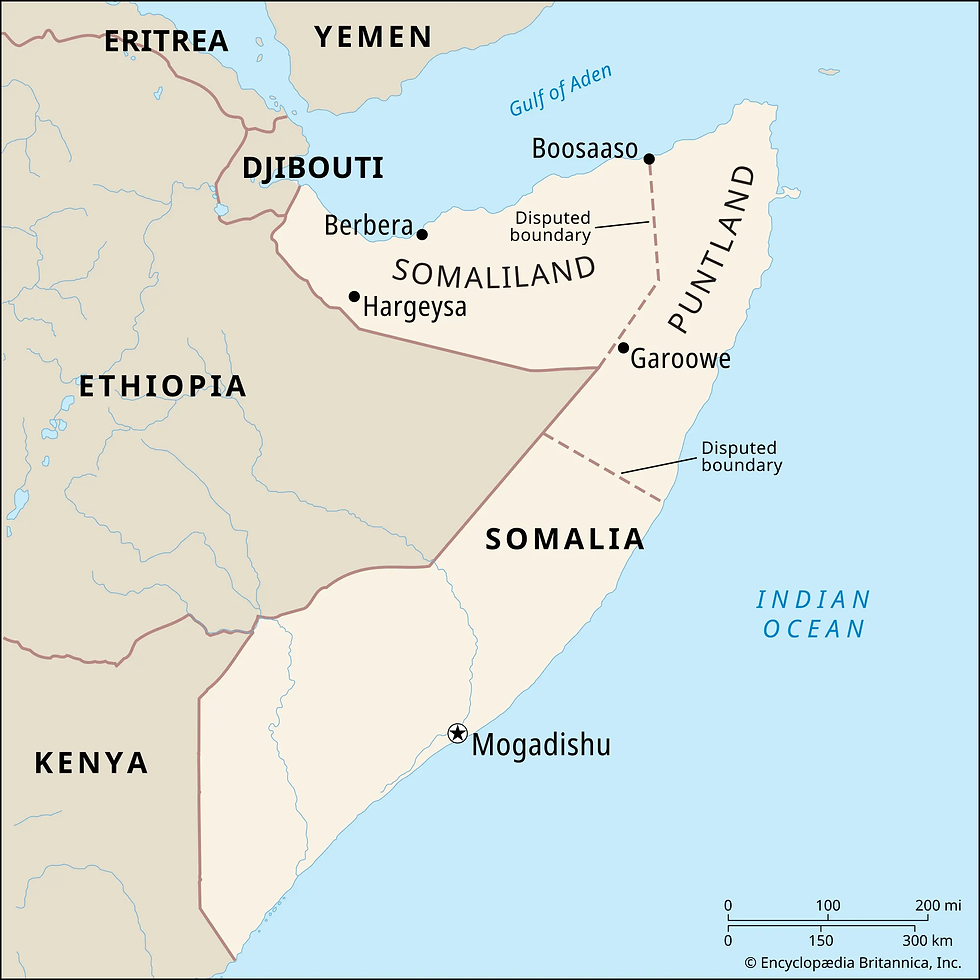
Geographical Overview of Somaliland
The Republic of Somaliland is located in the Horn of Africa.
It borders the Gulf of Aden to the north, Somalia to the east, Ethiopia to the south and west.
It shares its northwestern border with Djibouti.
The capital city of Somaliland is Hargeisa.
State of Marginal Farmers in India 2025 Report
The State of Marginal Farmers in India 2025 Report was released to examine the condition of marginal farmers.
The report focuses on cooperative engagement as a pathway for rural development.
Cooperatives are identified as catalysts for poverty reduction, livelihood security, and rural transformation.
Profile of Marginal Farmers in India
Marginal farmers are defined as cultivators owning less than one hectare of land.
Marginal farmers constitute approximately 65.4% of India’s total farming population.
Marginal farmers collectively own only 24% of the cultivable land area.
Small landholding size places marginal farmers among the most vulnerable groups in agriculture.
Vulnerabilities and Structural Constraints
Marginal farmers face constraints due to limited access to institutional credit.
Limited access to quality agricultural inputs affects productivity.
Weak market access reduces income realization.
Inadequate access to public services compounds livelihood insecurity.
Role of Cooperatives and PACS
Primary Agricultural Credit Societies (PACS) are the most accessible institutions for marginal farmers.
PACS are village-level cooperatives providing credit, inputs, and basic agricultural services.
Agricultural cooperatives serve as proximate and consequential institutional touchpoints.
Cooperatives support both agricultural production and livelihood needs.
Barriers to Cooperative Engagement
A. Farmer-Level Constraints
Limited awareness of cooperative schemes reduces farmer participation.
Lengthy and bureaucratic procedures discourage engagement.
Long distances to cooperative offices increase transaction costs.
Low levels of digital literacy restrict use of digital services.
B. Funding Constraints
Inadequate capital availability weakens PACS operations.
Insufficient credit availability limits service expansion.
Funding constraints are evident in Uttarakhand and Maharashtra.
C. Service Delivery and Capacity Issues
Cooperative service uptake remains low among marginal farmers.
Limited local capacity affects quality of service delivery.
Shortage of trained staff reduces operational efficiency.
Geographic and logistical barriers limit outreach.
D. Infrastructure and Digital Deficits
Inadequate physical infrastructure hinders cooperative functioning.
Shallow digitalisation reduces transparency and outreach.
Infrastructure deficits are particularly visible in Uttarakhand.
E. Gender Gaps in Cooperatives
Cooperatives remain male-dominated institutional spaces.
This persists even in regions where women contribute significantly to agriculture.
Women play a central role in household economic activity despite limited representation.
Recommendations to Improve Cooperative Engagement
A. Strengthening PACS Visibility
PACS visibility should be enhanced through broadcast campaigns.
Community-level awareness initiatives should be undertaken.
Digital tools should be leveraged for outreach.
PACS should promote their diversified roles beyond credit provision.
B. Mission-Mode and Grassroots Approach
A mission-mode approach is recommended for cooperative reform.
The approach aligns with the vision of “Sahkar Se Samridhi”, meaning prosperity through cooperation.
A dedicated cadre called Sahkar Shakti should be created.
The Sakha/Sakhi Model refers to trained male and female facilitators at the grassroots level.
C. Institutional and Digital Support Systems
Administrative procedures should be simplified.
Financial inclusion of marginal farmers should be expanded.
Digital inclusion should be strengthened.
Development of Digital Public Infrastructure (DPI) is essential.
DPI refers to shared digital systems enabling scalable service delivery.
A Cooperative Stack should integrate cooperative services digitally.
Emerging Institutional Models
The report highlights the importance of a dual institutional architecture.
Under this architecture, PACS operate alongside Farmer Producer Companies (FPCs).
FPCs are farmer-owned companies that enable collective marketing and value addition.
This coexistence is prominently observed in Bihar.
Together, PACS and FPCs form a unique ecosystem of collective farmer institutions.
Manufacturing Sector in India
India’s manufacturing sector has grown slower than its global peers. This slowdown is linked to low productivity, informal employment, limited automation, and consumption-led growth.
As a result, strategic technology adoption and policy reforms are required to revive manufacturing.
India’s growth trajectory contrasts sharply with countries such as China and South Korea.
In these peer economies, manufacturing emerged as a key driver of structural transformation.
In India, manufacturing failed to play a comparable transformational role.
India’s manufacturing stagnation can be partially explained using the concept of Dutch Disease.
Dutch Disease refers to an economic phenomenon where growth in one sector weakens manufacturing and other tradable sectors.
In India’s case, rising public sector wages reduced industrial competitiveness.
This process contributed to deindustrialization pressures within the economy.
India’s Manufacturing Sector: Current Status
Manufacturing contributes approximately 17% to India’s GDP.
China’s manufacturing share of GDP ranges between 25–29%.
South Korea’s manufacturing sector contributes around 27% to GDP.
Vietnam’s manufacturing sector contributes nearly 24% to GDP.
Only 11.4% of India’s workforce is employed in manufacturing.
Around 45% of India’s workforce remains employed in agriculture.
Approximately 29% of the workforce is employed in the services sector.
Structural Reasons for Manufacturing Stagnation
Informality dominates manufacturing employment in India.
Informal employment limits access to training and skill development.
Informality restricts technology diffusion across firms.
It also hampers quality upgrades and stable industrial relations.
India’s industrial landscape is dominated by micro-enterprises.
This dominance prevents firms from achieving economies of scale.
Economies of scale refer to cost advantages gained through large-scale production.
Low innovation remains a persistent constraint on manufacturing growth.
India’s Gross Expenditure on Research and Development (GERD) is only 0.6–0.7% of GDP.
GERD measures total national spending on research and innovation.
India’s R&D spending is significantly lower than that of China and the USA.
India follows a consumption-led growth model.
A consumption-led model relies primarily on domestic demand for growth.
China follows an investment- and export-driven growth model.
This divergence has weakened India’s manufacturing competitiveness.
Limited automation reduces productivity growth in Indian manufacturing.
High logistics costs increase production and transaction expenses.
Way Forward for India’s Manufacturing Sector
India should prioritize strategic deployment of frontier technologies.
Frontier technologies include Artificial Intelligence (AI/ML), advanced materials, and robotics.
Large-scale adoption of these technologies can improve productivity and competitiveness.
India must significantly increase investment in R&D.
The private sector should be incentivized to expand research spending.
Centralized Research Hubs should be established to support innovation.
Technology Transfer Offices (TTOs) should be developed to commercialize research outputs.
These recommendations align with proposals by NITI Aayog.
Workforce upskilling is essential for manufacturing transformation.
Technical education curricula in ITIs and Polytechnics must be revamped.
Industrial growth requires the development of industrial clusters.
Plug-and-Play Industrial Parks should be created to reduce entry barriers.
These parks should be enabled with frontier technologies.
Shared facilities such as R&D centers, 5G networks, and testing laboratories should be provided.
Structural and regulatory barriers must be addressed simultaneously.
Bureaucratic hurdles to firm entry should be reduced.
Tariffs on raw materials should be lowered to reduce input costs.
Land access for industrial purposes must be streamlined.
Unclaimed Financial Assets
Unclaimed financial assets have emerged as a significant issue within India’s financial system.
Nearly ₹2,000 crore worth of unclaimed financial assets have been returned to rightful owners.
This recovery was achieved under the “Your Money, Your Right” initiative.
The initiative was launched in October 2025.
The initiative aims to reconnect citizens with their dormant financial assets.
About Unclaimed Financial Assets
Unclaimed financial assets refer to money lying idle with financial institutions. These institutions include banks, insurance companies, mutual funds, and pension funds.
Assets become unclaimed when account holders do not access them for a prolonged period.
Migration of account holders can lead to assets becoming unclaimed.
Death of the account holder without timely claims by legal heirs is another major reason.
Legal heirs are individuals legally entitled to inherit the financial assets of the deceased.
Digital Portals for Tracing Unclaimed Assets
The government has enabled digital portals to help citizens trace unclaimed assets.
The UDGAM Portal, developed by the Reserve Bank of India (RBI), is used to trace unclaimed bank deposits.
Unclaimed bank deposits refer to inactive bank balances not operated for a specified period.
The Bima Bharosa Portal, managed by the Insurance Regulatory and Development Authority of India (IRDAI), helps trace unclaimed insurance policy proceeds.
Insurance policy proceeds include maturity benefits, survival benefits, or death claims.
The MITRA Portal is used to trace unclaimed mutual fund investments.
Colliery Control (Amendment) Rules, 2025
The Government of India has notified the Colliery Control (Amendment) Rules, 2025.
The amendment aims to enhance ease of doing business in the coal sector.
The rules seek to make the coal sector more business-friendly.
About the Colliery Control (Amendment) Rules, 2025
Earlier, coal companies required prior opening permission to open a coal mine.
Prior permission was also required for opening individual seams or sections of a seam.
This approval was granted by the Coal Control Organisation (CCO).
The Coal Control Organisation (CCO) is a regulatory body overseeing coal production and distribution.
Under the amended rules, the requirement of prior opening permission from CCO has been dispensed with for coal companies.
This applies to opening a coal mine. Also applies to opening individual seams or sections of a seam.
A seam refers to a distinct layer of coal within the earth.
Under the amended provisions, the authority to approve mine or seam opening permission has been vested with the board of the concerned coal company.
The board of the coal company refers to the company’s highest decision-making body.
This change decentralizes decision-making within coal companies.
For entities other than companies, the approval process remains unchanged.
Such entities must continue to seek approval through the Coal Control Organisation (CCO).
Digital Initiatives to Strengthen Citizen-Centric Administration
The Department of Personnel and Training (DoPT) has launched multiple digital and capacity-building initiatives.
These initiatives reflect the government’s emphasis on digital governance.
The initiatives also focus on capacity building of civil servants.
Citizen-centric administration refers to governance systems designed around citizen needs and convenience.
New Features on the iGOT Karmayogi Portal
The iGOT Karmayogi Portal is a national digital platform for continuous learning of government officials.
New features have been introduced to enhance personalized learning experiences.
iGOT AI Sarthi enables intelligent discovery of relevant learning resources.
Artificial Intelligence (AI) refers to systems that simulate human intelligence for decision-making and recommendations.
iGOT AI Tutor provides personalized in-course learning support.
Personalized support helps learners progress at their own pace.
Karmayogi Digital Learning Lab 2.0
The Karmayogi Digital Learning Lab 2.0 is a next-generation digital learning facility.
The lab is designed to produce high-quality digital learning content.
It uses Augmented Reality (AR) to overlay digital information onto real-world environments.
It also uses Virtual Reality (VR) to create immersive simulated learning environments.
Gamification is used to enhance learner engagement through game-based elements.
Interactive simulations allow learners to practice real-world administrative scenarios.
Role of Digitization in Citizen-Centric Administration
Transforming Public Administration
Digitization transforms public administration by replacing paper-based systems.
Paper-based bureaucracy refers to rigid administrative processes dependent on physical documents.
Digital governance systems enable faster decision-making.
Agile governance refers to flexible and responsive administrative structures supported by technology.
Enhancing Service Delivery
Digitization enhances service delivery through online platforms.
Online platforms enable anytime-anywhere access to public services. This reduces delays in service provision.
Digitization minimizes the need for physical visits to government offices.
Procedural complexity is reduced through simplified digital workflows.
Strengthening Citizen Engagement and Participation
Digitization strengthens citizen engagement through two-way digital interaction.
Feedback portals enable citizens to share service experiences.
Digital consultations allow citizen participation in policymaking.
Online grievance redressal systems improve responsiveness.
Citizen-centric digital services reflect private-sector efficiency.
Mobile access improves convenience for service users.
Real-time updates increase transparency in service delivery.
Personalization tailors services to individual citizen needs.
Increasing Accountability and Trust
Digitization increases accountability in governance.
Digital systems create traceable records.
Audit trails refer to chronological records tracking administrative actions.
Reduced discretion lowers the scope for corruption.
Transparency strengthens citizen trust in public institutions.
Improving Efficiency and Reducing Costs
Digitization improves administrative efficiency.
Automation replaces repetitive manual tasks.
Remember, Automation refers to the use of technology to perform tasks with minimal human intervention.
Automation reduces bureaucratic delays and minimizes human errors.
Operational costs are reduced through digital processes.
Enabling Data-Driven Governance
Digitization enables data-driven governance.
Digital systems generate large volumes of administrative data.
Evidence-based policymaking uses data and analysis to design effective policies.
Actionable data supports better planning and implementation.
Report on “Implementation and Effectiveness of the RFCTLARR Act, 2013”
The Standing Committee on Rural Development and Panchayati Raj released a report on the implementation and effectiveness of the RFCTLARR Act, 2013.
The Right to Fair Compensation and Transparency in Land Acquisition, Rehabilitation and Resettlement Act, 2013 (RFCTLARR Act, 2013) governs land acquisition, rehabilitation, and resettlement in India.
The report evaluates how effectively the Act has been implemented across states and union territories.
Key Issues / Observations
Faulty Implementation in Scheduled Areas
Violations occur in Scheduled Areas despite statutory safeguards.
Scheduled Areas are regions with a significant tribal population requiring special protections under the Constitution.
Issues include undervaluation of land.
Gram Sabha consultations are often superficial.
Vulnerable groups are frequently excluded from the consultation process.
Non-Compliance with PESA Rules
The Provisions of the PESA Act regarding consultation are not strictly followed in Scheduled Areas.
PESA refers to the Panchayats (Extension to Scheduled Areas) Act, 1996, which mandates local self-governance and consultation for development projects.
Violation of Forest Rights Act (FRA)
Forest land is acquired without settling customary forest rights.
The Forest Rights Act (FRA), 2006 recognizes the rights of forest-dwelling communities over land and resources.
Superficial Assessments (SIA/EIA)
Social Impact Assessments (SIA) and Environmental Impact Assessments (EIA) are sometimes carried out merely as formalities.
Reports are often pre-designed to favor land acquisition.
SIA evaluates the social consequences of a project, while EIA assesses environmental effects.
Failure of National Monitoring Committee (NMC)
The National Monitoring Committee (NMC) has failed to quell discontent in large projects.
Examples include the Ken-Betwa and Polavaram projects.
NMC is responsible for monitoring compliance with RFCTLARR provisions.
Land Classification Manipulation
Rural or Greenfield land is sometimes reclassified as urban or Brownfield.
Greenfield land refers to undeveloped land, while Brownfield land refers to previously developed or urbanized land.
Such reclassification reduces compensation liabilities for project developers.
Failure to Establish Authorities
Many states and union territories have failed to establish the Land Acquisition, Rehabilitation & Resettlement Authority mandated under the RFCTLARR Act, 2013.
These authorities are meant to adjudicate disputes and oversee rehabilitation processes.
Committee Recommendations
Strengthening Role of Gram Sabha
Gram Sabha consent should be made mandatory for all land acquisitions.
Gram Sabha should have the power to veto proposals contrary to local development plans or community interests.
This empowers local communities to influence land acquisition decisions.
Codified Consent in Scheduled Areas
The LARR Act should be aligned with PESA to codify mandatory Gram Sabha consent in Scheduled Areas.
This ensures statutory protection for tribal and vulnerable communities.
Integration of LARR and FRA
Loss of customary forest rights must be treated as economic displacement requiring full rehabilitation.
Economic displacement refers to the loss of livelihood or productive resources due to development projects.
Strict Guideline Adherence
The Department of Land Resources must ensure both EIA and SIA are strictly followed.
This is necessary to effectively mitigate adverse environmental and social impacts.
Basin-Wide Assessment
Projects should begin with a single integrated “basin-to-basin” SIA.
The NMC must be structurally strengthened to actively intervene, set timelines, and host a centralized grievance portal.
Central Monitoring of Land Classification
A dedicated Central Monitoring and Grievance Redressal Mechanism should oversee land classification processes.
Detailed disclosures must be mandated for boundary changes.
Officials involved in unauthorized land classification manipulations should be penalized.
Proactive State Coordination
The Ministry of Rural Development should coordinate proactively with state governments.
This ensures timely notification and operationalization of Land Acquisition, Rehabilitation & Resettlement authorities.
NITI Aayog Report on Gender Parity at the Workplace
The “From Intent to Impact” compendium is a joint initiative by NITI Aayog and the Confederation of Indian Industry (CII).
The compendium provides a strategic roadmap for achieving gender parity in Indian workplaces.
Achieving gender parity is crucial for India to become a $30 trillion economy by 2047.
This requires adding an estimated 145 million women to the workforce.
Gender parity also contributes to SDG 5: Gender Equality. It further supports SDG 8: Decent Work and Economic Growth.
Structural and Social Barriers Hindering Gender Parity
Entry Barriers
Entry barriers include unconscious bias in recruitment.
Unconscious bias refers to unintended prejudices affecting hiring decisions.
Gendered occupational stereotyping limits women to certain professions.
For example, in STEM fields, 43% of graduates are women, but only 27% are employed in these roles in India.
Retention Barriers
Retention barriers arise due to the maternity penalty faced by working mothers.
The maternity penalty refers to the disadvantages women face in career progression due to maternity.
Around 75% of working mothers experience career setbacks after childbirth.
Growth Barriers
Women are often excluded from informal “old boys’ club” networks.
Old boys’ club networks are informal male-dominated professional groups that influence opportunities.
Lack of structured leadership development programs restricts career advancement.
Systemic Issues
Globally, women perform 76% of unpaid care work.
Unpaid care work includes household chores, childcare, and eldercare that are not financially compensated.
This burden limits women’s economic participation.
Way Forward: Lifecycle Approach to Gender Parity
Promoting Entry (Hiring)
Organizations should implement gender-neutral recruitment practices.
Blind screening removes personal identifiers to reduce bias in hiring.
Targeted outreach encourages applications from diverse talent pools.
Companies like Capgemini and Unilever use AI tools in job descriptions to attract women.
Enabling Retention
Inclusive parental leave policies support employee retention.
Flexible work models help employees balance professional and personal responsibilities.
Providing childcare support ensures women can continue working after childbirth.
For example, Netflix offers unlimited parental leave.
Ensuring Growth and Progress
Programs like PropelHER and SheLeads coach women in negotiation and strategic thinking.
These programs aim to improve women’s leadership and decision-making skills.
Building Inclusive Culture
Companies must ensure significant female representation on boards of directors.
Tech Mahindra and Genpact are examples of organizations with inclusive board representation.
Case Studies: Global and Indian Best Practices Equal Pay & Legal Protection
Shared Care & Parental Leave
Flexible Work & Returnship
Structural & Institutional Enablers
|
K-4 Missile
The Defence Research and Development Organization (DRDO) successfully tested the K-4 submarine-launched ballistic missile (SLBM).
The test was conducted from INS Arighat, India’s second Arihant-class submarine.
Arihant-class submarines are indigenously nuclear-powered ballistic missile submarines (SSBNs).
SSBNs are submarines capable of carrying and launching ballistic missiles with nuclear warheads, providing stealth and second-strike capability.
About K-4 Missile
K-4, also known as Kalam-4, is a nuclear-capable intermediate-range submarine-launched ballistic missile.
The missile has a range of 3,500 km, enabling it to strike targets at long distances.
K-4 is a crucial component of India’s nuclear triad, which ensures nuclear deterrence from land, air, and sea.
Nuclear triad refers to a country’s ability to deliver nuclear weapons through land-based missiles, strategic aircraft, and submarine-launched missiles.
The missile provides India with a credible second-strike capability, allowing retaliation even after a nuclear attack.
K-4 has been specifically designed for Arihant-class submarines, including INS Arihant and INS Arighat
Nitrate Contamination
Over 20% of groundwater samples collected in Delhi in 2023 had nitrate levels exceeding the permissible limit.
This data comes from the Central Groundwater Board (CGB).
The permissible limit of nitrate in drinking water is 45 mg/l.
Excessive nitrate levels in water are primarily caused by overuse of nitrogen-based fertilizers.
Another major source is animal waste in agriculture, which leaches nitrates into groundwater.
High nitrate intake can cause methemoglobinemia, also known as blue baby syndrome.
Methemoglobinemia is a life-threatening condition where hemoglobin cannot effectively carry oxygen in the blood.
Environmentally, high nitrate levels promote algal blooms in water bodies.
Algal blooms lead to eutrophication, a process where water bodies become nutrient-rich, reducing oxygen and harming aquatic life.
India’s Tsunami-Ready Villages Initiative
India aims to have 100 villages recognized as tsunami-ready under the Tsunami Ready Recognition Programme (TRRP).
Currently, 24 coastal villages in Odisha have been certified as tsunami-ready.
The certification is based on verification by the National Tsunami Ready Recognition Board (NTRB).
A tsunami-ready village is one that demonstrates high awareness about tsunami hazards, maintains hazard preparedness and mapping, displays public evacuation maps, has 24-hour warning systems, and conducts mock drills.
About UNESCO-IOC Tsunami Ready Recognition Programme (TRRP)
The TRRP is an international voluntary community-based effort by UNESCO’s Intergovernmental Oceanographic Commission (IOC).
Its aim is to strengthen risk prevention and mitigation across global coastal zones.
The programme uses 12 preparedness indicators to ensure consistent evaluation of villages.
Recognition under TRRP is renewable every four years.
In India, the programme is implemented by the NTRB, established under the Ministry of Earth Sciences.
The NTRB is chaired by the Director of INCOIS and includes members from Indian National Centre for Ocean Information Services (INCOIS), National Disaster Management Authority (NDMA), and Ministry of Home Affairs (MHA).
India’s Other Efforts to Tackle Tsunami
Tsunami Risk Management Guidelines by NDMA recommend awareness generation, capacity building, education, training, and R&D for effective tsunami risk management.
The Indian Tsunami Early Warning Centre (ITEWC) provides tsunami advisories to Indian Ocean countries, ensuring last-mile connectivity.
India uses advanced technology such as Bottom Pressure Recorders (BPRs), buoys, and satellite communication for tsunami warnings.
About UNESCO’s Intergovernmental Oceanographic Commission (IOC)
The IOC was established in 1960 to promote international cooperation in marine sciences.
Its secretariat is located in Paris, France.
The IOC aims to improve management of oceans, coasts, and marine resources.
It has 152 Member States, including India.
The IOC coordinates the UN Decade of Ocean Science for Sustainable Development 2021-2030, also known as The Ocean Decade.
Dulhasti Stage-II project
Union Environment Ministry gave nod for 260 MW Dulhasti Stage-II project on Chenab River in J&K.

About Dulhasti Stage-II project
It will utilise surplus water diverted from the Marusudar River, through the Pakal Dul project.
Other Operational projects on Chenab: Dulhasti-I (Kishtwar), Baglihar (Ramban) and Salal (Reasi).
Under construction: Ratle (850MW), Kiru (624 MW), and Kwar (540 MW) projects.
About Chenab River
Source: Confluence of Chandra and Bhaga rivers in Himachal Pradesh.
Course in India: Flows west through Jammu & Kashmir, between the Siwalik Range (south) and the Lesser Himalayas (north).
Tributaries & Confluence: Receives Jhelum River in Pakistan; later joins the Sutlej River.
Ratanmahal Wildlife Sanctuary and Tiger in Gujarat
Gujarat has regained its status as a ‘Tiger State’ after 33 years with the presence of a tiger in Ratanmahal Wildlife Sanctuary.
With this, Gujarat has become the only state in India to host three big cat species simultaneously: lion, tiger, and leopard.
About Ratanmahal Wildlife Sanctuary
Ratanmahal Wildlife Sanctuary is located in Dahod district, central Gujarat, along the Gujarat-Madhya Pradesh border.
The sanctuary was declared in 1982 as a protected area to conserve wildlife.
It harbours the maximum population of sloth bears in Gujarat.
Sloth bears are a species of bear native to the Indian subcontinent, known for feeding on termites and ants.
Other fauna in the sanctuary include leopard, nilgai, and four-horned antelope.
Nilgai is the largest Asian antelope, also called the blue bull.
The sanctuary’s forests form the catchment area of the river Panam, a major river in central Gujarat.
Catchment area refers to the region from which rainfall flows into a river, supporting water availability and ecological balance.
BIS Standards for Incense Sticks (Agarbatti)
The Union Minister for Consumer Affairs, Food & Public Distribution released the new BIS Standard IS 19412:2025 for incense sticks (agarbatti).
The standard aims to enhance consumer safety and product quality.
IS 19412:2025 prohibits the use of insecticidal chemicals such as alethrin, permethrin, cypermethrin, deltamethrin, and fipronil in agarbatti production.
Insecticidal chemicals are substances used to kill or control insects.
The standard also prohibits synthetic fragrance intermediates like benzyl cyanide, ethyl acrylate, and diphenylamine.
Synthetic fragrance intermediates are chemical compounds used to create artificial scents in products.
About BIS
The Bureau of Indian Standards (BIS) is the national standard body of India.
BIS was established under the BIS Act, 2016.
Its objective is the harmonious development of standardization, marking, and quality certification of goods in India.
Standardization ensures uniformity in product quality and safety, while marking and certification indicate compliance with these standards.
Veer Baal Diwas
Veer Baal Diwas was observed on 26 December, coinciding with the distribution of the Rashtriya Bal Puraskar.
This day has been celebrated annually on 26 December since 2022.
The day pays tribute to the younger sons of the 10th Sikh Guru, Guru Gobind Singh Ji.
These sons are Shaheed Sahibzada Baba Zorawar Singh and Sahibzada Baba Fateh Singh.
Both were captured by the Mughal army at Anandpur Fort.
They were martyred at Sirhind on 26 December, commemorating their sacrifice.
About Pradhan Mantri Rashtriya Bal Puraskar
The Pradhan Mantri Rashtriya Bal Puraskar is a national-level award conferred annually by the President of India.
The award recognises exceptional achievements of children aged 5-18 years.
It is awarded across multiple fields, including education, art, innovation, culture, and social service.
Rashtriya Bal Puraskar aims to encourage young achievers and inspire others through their exemplary contributions.
Kimberley Process
The Kimberley Process (KP) Plenary has selected India to assume the chairpersonship of the KP from 1 January 2026.
The Kimberley Process is a tripartite initiative, meaning it involves three key groups: governments, the international diamond industry, and civil society.
The primary aim of the KP is to prevent the trade in “conflict diamonds.”
Conflict diamonds are defined as rough diamonds used by rebel movements or their allies to finance armed conflicts aimed at undermining legitimate governments.
The KP currently has 60 participants, including India and the European Union (EU).
Together, KP participants account for over 99% of the global rough diamond trade, making it a highly influential body in the diamond market.
The KP ensures the exclusion of conflict diamonds through rigorous certification protocols, which are standardized processes that verify the origin of diamonds.
The KP also conducts compliance assessments to make sure participating countries adhere to the agreed standards.
By maintaining these high standards, the KP ensures that conflict diamonds are kept out of the international market.
First Santhali Translation of the Constitution of India Released
The Ministry of Law and Justice has published, for the first time, the translation of the Constitution of India in the Santhali language.
This publication was released to mark the Birth Centenary year of the Ol Chiki Script, which is used for the Santhali language.
The Ol Chiki Script was developed by Pandit Raghunath Murmu in 1925.
The Santhali language originates from the Munda family of languages, which is a part of the Austric (Austro-Asiatic) language family.
The Austro-Asiatic language family is a group of languages spread across South and Southeast Asia.
Santhali was included in the Eighth Schedule of the Constitution of India, which lists 22 recognized languages, through the 92nd Constitutional Amendment Act, 2003.
People who speak Santhali are called Santhals.
The Santhals are primarily located in Jharkhand, Odisha, West Bengal, and Bihar.
2,000-Year-Old Stone Labyrinth Unearthed in Sholapur, Linking to Indo-Roman Trad
India’s largest circular labyrinth has been discovered in the Boramani grassland in Sholapur, Maharashtra.
The structure is nearly 2,000 years old, dating from around the 1st to 3rd century CE, which corresponds to the Satavahana period.
The Satavahana period refers to an ancient Indian dynasty that ruled large parts of central and southern India.
The labyrinth consists of 15 concentric stone circuits, which is the highest number documented so far in any circular labyrinth found in India.
A circular labyrinth is a structure made of paths arranged in circles that lead to a central point.
The discovery is significant because it can be connected to ancient Indo-Roman trade, suggesting historical interactions between India and the Roman world.
Camellia Sinensis: FSSAI Alerts Against Mislabeling Herbal Infusions as Tea
The Food Safety and Standards Authority of India (FSSAI) has warned food businesses against labeling herbal infusions as ‘tea’.
Camellia sinensis, commonly known as Assam Tea, Tea Camellia, or Tea Plant, is the plant used to produce true tea.
Tea grows well in tropical and sub-tropical climates with deep, fertile, and well-drained soil rich in humus and organic matter.
Humus refers to the organic component of soil formed from decomposed plant and animal matter, which improves fertility.
Tea bushes require a warm and moist climate that is frost-free for most of the year.
Tea plants thrive under well-distributed annual rainfall of 2000–4000 mm.
The ideal temperature range for tea cultivation is approximately 13 to 32 °C.
Tea plants grow best in slightly acidic soils with a pH range of 4.5 to 5.5.
Undulating topography, meaning gently rolling terrain, is suitable for tea cultivation.
Major tea-producing regions in India include Assam and West Bengal.
Quality Council of India Launches Q Mark, Quality Setu, and Quality Passport
The Quality Council of India (QCI) has announced Next-Generation Quality Reforms to strengthen India’s quality ecosystem.
The first reform, Q Mark – Desh ka Haq, is a new QR-coded quality mark.
This QR code helps verify whether a hospital, lab, or small business is genuine.
Q Mark – Desh ka Haq aims to eliminate fake certificates.
The second reform, Quality Setu, is a new online help-desk system.
Quality Setu allows people and businesses to submit complaints or feedback.
Complaints and feedback submitted through Quality Setu are resolved within a set timeframe.
The third reform, Quality Passport, will be launched for Indian products.
Quality Passport is designed to enable better market access for Indian products.
The Quality Council of India (QCI) is supported jointly by the Government of India and Indian industry.
QCI is registered as a non-profit organisation under the Societies Registration Act, 1860.
The nodal ministry for QCI is the Department for Promotion of Industry and Internal Trade (DPIIT) under the Ministry of Commerce and Industry.
The Chairman of QCI is appointed by the Prime Minister on the recommendation of the industry to the government.
CAG Audit on PMKVY
The Comptroller and Auditor General of India (CAG) flagged significant gaps in the Pradhan Mantri Kaushal Vikas Yojana (PMKVY).
The audit evaluated the first three phases of PMKVY, covering 2015 to 2022.
Major operational and financial challenges were highlighted in the scheme’s implementation.
Key Issues Identified by CAG
Skill-Gap Discrepancies: Trainings were not consistently aligned with skill requirements identified in the National Policy for Skill Development and Entrepreneurship (NPSDE), which defines sector-wise skill needs.
Underutilization of Funds: About 20% of funds released for state components remained unspent as of March 2024.
Data Integrity Issues: The Skill India Portal (SIP) had serious lapses, with ~95% of candidate information such as email IDs and bank accounts being invalid or missing.
Technical Qualification Lapses: For roles requiring prior technical education, 85.40% of certified candidates had only basic literacy.
Fictitious Agencies: Certifications were awarded through agencies that were non-existent or ineligible.
Low Placement Rates: Only 41% of trained candidates secured employment.
Duplicate Records: Instances of duplicate bank accounts or identical photographs were observed.
Educational Deficiencies: Many candidates lacked the required educational background for certain roles.
Poor Centre-State Coordination: Coordination between central and state authorities was inadequate.
CAG Recommendations
Align skill training programs with skill-gaps identified in job roles across sectors and states, based on market demand.
Expedite the preparation of the National Skill Development Plan (NSDP), a roadmap for skill development initiatives nationwide.
Strictly enforce IT controls under PMKVY 4.0 and implement a data retention policy for accuracy.
Strengthen oversight mechanisms and ensure strict enforcement of system validation checks.
Expedite integration of Unified District Information System for Education (UDISE) data with PMKVY to improve monitoring and coordination.
About PMKVY
Launched in 2015 by the Ministry of Skill Development and Entrepreneurship (MSDE).
Objective: Provide short-term skill training and upskilling/re-skilling through Recognition of Prior Learning (RPL), which validates existing skills of youth.
Targets youth nationwide, including those in rural areas.
Phases of PMKVY
PMKVY 1.0: Pilot phase in 2015-16.
PMKVY 2.0: Trained around 1.10 crore candidates.
PMKVY 3.0: Included Customised Crash Course Programme for COVID Warriors and Skill Hub Initiative (SHI).
PMKVY 4.0: Focus on New Age Skills like Industry 4.0 technologies, Web 3.0, AR/VR, climate change, circular economy, and green economy.
Achievements of PMKVY
Over 1.6 crore youth trained since 2015.
Approximately 45% of trained candidates are women, promoting gender inclusion.
PM-SETU Scheme
The Ministry of Skill Development and Entrepreneurship (MSDE) has invited industries to participate in the PM-SETU scheme.
PM-SETU stands for Pradhan Mantri Skilling And Employability Transformation Through Upgraded ITIs.
It is a Centrally Sponsored Scheme, meaning the central government provides major funding while states implement it.
The scheme is administered by the Ministry of Skill Development and Entrepreneurship.
Structure of the Scheme
PM-SETU is structured into two components for improving technical education and employability.
Component I: Focuses on the upgradation of 1,000 ITIs (Industrial Training Institutes) in Hub-and-Spoke clusters, where a central “hub” ITI supports multiple smaller “spoke” ITIs.
Component II: Involves capacity augmentation of five National Skill Training Institutes (NSTIs) and setting up five National Centres of Excellence (NCOEs) within these NSTIs.
The management of upgraded ITIs is done through a Special Purpose Vehicle (SPV) partnership.
The SPV consists of 51% industry leaders and 49% government, ensuring collaboration between public and private sectors.
Funding Support
The scheme receives co-financing support from Asian Development Bank (ADB) and the World Bank.
These institutions contribute 50% of the Central share, reducing the financial burden on the government.
25 Years of Pradhan Mantri Gram Sadak Yojana (PMGSY)
PMGSY has sanctioned a total of 8,25,000 km of rural roads since its inception.
Of this, approximately 7,87,000 km have been completed, reflecting nearly 95% physical progress as of December 2025.
Application of Advanced Technologies in Rural Road Development
Digital Monitoring & Transparency: PMGSY uses the Online Management, Monitoring and Accounting System (OMMAS) to track physical and financial progress across States.
eMARG Platform: This platform uses geo-tagged photos from its mobile app to verify road maintenance work for payments and monitor contractor performance.
GPS-enabled Vehicle Tracking Systems (VTS): These systems monitor equipment deployment, operational duration, and compliance with construction norms.
ECOD (Eco-Friendly Construction): PMGSY promotes the use of eco-friendly materials such as fly ash, slag, construction & demolition (C&D) waste, waste plastic, crumb rubber modified bitumen, geosynthetics, and bio-bitumen.
About PMGSY
PMGSY is administered by the Ministry of Rural Development.
It was launched in December 2000 as a centrally sponsored scheme, meaning the central government provides funding while states implement the program.
The scheme’s objective is to provide all-weather road connectivity to eligible unconnected rural habitations as a strategy for poverty alleviation.
Bridges are constructed or modernized along the alignment of these rural roads.
Habitation Population Criteria for PMGSY-IV
In Plains, habitations with 500+ population are eligible.
In North-Eastern, special category, and Hill States, habitations with 250+ population are eligible.
In Left-Wing Extremism (LWE) affected districts, habitations with 100+ population are eligible, based on Census 2011 data.
Road Connectivity Project for LWE Affected Areas
Launched in 2016 to improve rural road connectivity in LWE-affected districts.
The project is implemented as a vertical under PMGSY, meaning it is a dedicated sub-scheme within the main program.
Phases of PMGSY
Phase I (2000): Established the foundation for universal rural access by linking villages with markets, educational institutions, and healthcare facilities.
Phase II (2013): Focused on consolidating the existing rural road network.
Phase III (2019): Strengthened connectivity between rural habitations and key socio-economic institutions.
PMGSY-IV (2024–28): Aims to connect 25,000 habitations through 62,500 km of roads.
Comments