What Is Coronary Thrombosis? Causes, Symptoms, Diagnosis, Treatment and Risk Factors Explained

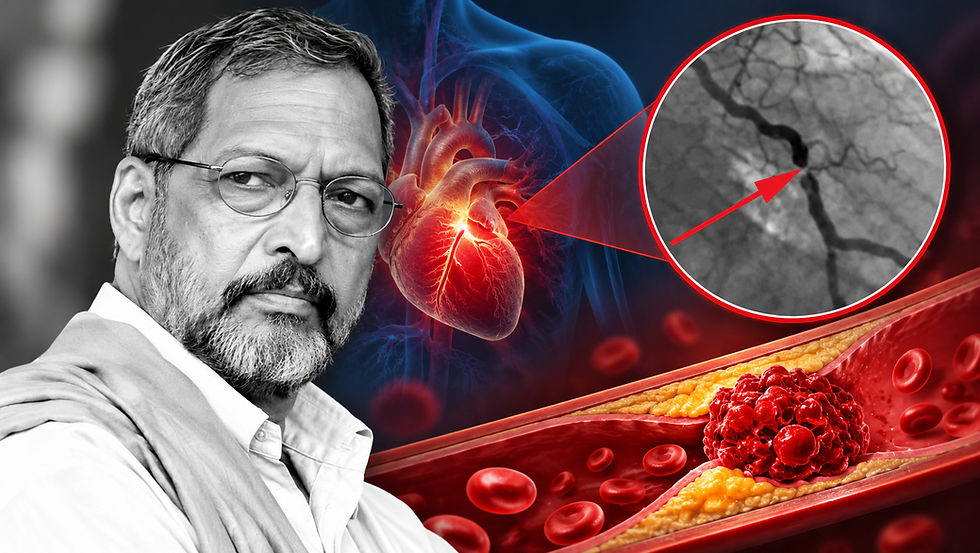
The reported death of veteran actor Nana Patekar (75) has brought renewed attention to coronary thrombosis, a potentially life-threatening condition in which a blood clot blocks one of the arteries supplying blood to the heart. According to published accounts of the autopsy report, a clot blocked the left main coronary artery, severely restricting blood flow to a large portion of the heart muscle.
Coronary thrombosis is one of the leading causes of heart attacks (myocardial infarction) worldwide. It usually develops when a blood clot forms over a ruptured atherosclerotic plaque inside a coronary artery, cutting off oxygen-rich blood to the heart muscle.
This article explains what coronary thrombosis is, what causes it, warning signs, risk factors, diagnosis, treatment options, and prevention, based on information from authoritative medical sources, including the World Health Organization (WHO), American Heart Association (AHA), National Heart, Lung, and Blood Institute (NHLBI), and European Society of Cardiology (ESC).
Key Highlights
|
What Is Coronary Thrombosis?
Coronary thrombosis is the formation of a blood clot (thrombus) inside a coronary artery—the blood vessels responsible for supplying oxygen and nutrients to the heart muscle.
When the clot partially or completely blocks the artery:
Blood flow to the heart muscle decreases.
The affected heart tissue is deprived of oxygen.
If blood flow is not restored quickly, heart muscle cells begin to die.
This can result in a heart attack (myocardial infarction).
The severity depends on:
Which coronary artery is blocked.
How much of the artery is obstructed.
How quickly medical treatment restores blood flow.
What Causes Coronary Thrombosis?
The most common cause is atherosclerosis, a condition in which fatty deposits (plaques) gradually build up inside artery walls.
These plaques consist of:
Cholesterol
Fat
Calcium
Cellular waste products
Inflammatory cells
Many people have plaque buildup for years without noticeable symptoms.
Problems arise when:
A plaque ruptures, or
The plaque's surface erodes.
When this happens:
The body's clotting system identifies the rupture as an injury.
Platelets rapidly gather at the damaged site.
Blood-clotting proteins are activated.
A thrombus (blood clot) forms.
The clot may suddenly block the artery.
This interruption of blood flow can trigger an acute heart attack.
What Are the Symptoms of Coronary Thrombosis?
Symptoms vary depending on the size and location of the blockage.
The most common warning signs include:
Chest Pain
Usually described as:
Pressure
Tightness
Heaviness
Squeezing sensation
Burning discomfort
The pain often occurs behind the breastbone.
Pain That Spreads
Pain may radiate to:
Left arm
Both arms
Shoulder
Neck
Jaw
Back
Shortness of Breath
Breathlessness may occur:
During activity
At rest
Alongside chest discomfort
Other Symptoms
People may also experience:
Cold sweating
Nausea
Vomiting
Dizziness
Light-headedness
Extreme fatigue
Some individuals—particularly women, older adults and people with diabetes—may experience atypical symptoms or even no obvious symptoms before a serious blockage develops.
Because symptoms alone cannot confirm coronary thrombosis, urgent medical evaluation is essential.
When Should You Seek Emergency Medical Care?
Immediate emergency treatment is required if chest pain:
Lasts more than a few minutes.
Returns repeatedly.
Is accompanied by:
Breathlessness
Sweating
Fainting
Severe weakness
Rapid restoration of blood flow significantly improves survival and reduces permanent heart damage.
Who Is at Risk?
People with coronary artery disease (CAD) are at the greatest risk.
Major risk factors include:
Smoking
High blood pressure (hypertension)
High LDL ("bad") cholesterol
Diabetes
Obesity
Physical inactivity
Unhealthy diet
Chronic stress
Excessive alcohol use
Other important risk factors include:
Older age
Family history of premature heart disease
Chronic kidney disease
Inflammatory diseases affecting blood vessels
In some cases, coronary thrombosis may develop due to:
Injury to the artery
Blood vessel inflammation
Rare clotting disorders
Notably, some individuals experience coronary thrombosis before they are diagnosed with coronary artery disease, because underlying plaque buildup had remained undetected.
How Is Coronary Thrombosis Diagnosed?
Doctors combine symptoms, physical examination and specialised investigations.
1. Electrocardiogram (ECG)
An ECG records the heart's electrical activity and helps identify whether part of the heart muscle is receiving inadequate blood supply.
2. Cardiac Troponin Blood Test
Troponin is a protein released when heart muscle cells are damaged.
Elevated troponin levels strongly suggest a heart attack.
3. Coronary Angiography
This is considered the gold standard for identifying blocked coronary arteries.
Doctors inject a contrast dye into the coronary arteries and use X-ray imaging to identify:
Blockage location
Severity
Blood flow
The findings guide treatment decisions.
4. Additional Tests
Depending on the patient's condition, doctors may also use:
Echocardiography
CT Coronary Angiography
Stress tests (after stabilization)
How Is Coronary Thrombosis Treated?
The primary goal is to restore blood flow as quickly as possible.
Treatment depends on:
Extent of blockage
Location
Time since symptom onset
Overall patient condition
1. Percutaneous Coronary Intervention (PCI)
Also known as angioplasty.
During the procedure:
A thin catheter reaches the blocked artery.
A balloon is inflated.
The artery is widened.
A stent is usually inserted to keep the artery open.
This is the preferred treatment for many acute heart attacks.
2. Antiplatelet Medicines
These medicines reduce platelet aggregation and prevent further clot formation.
Examples include aspirin and other antiplatelet agents prescribed by doctors.
3. Anticoagulants
Anticoagulants interfere with the blood-clotting process and help prevent clot enlargement.
4. Thrombolytic ("Clot-Busting") Medicines
In selected patients—particularly where immediate angioplasty is unavailable—doctors may administer medicines that dissolve blood clots.
5. Coronary Artery Bypass Grafting (CABG)
Bypass surgery may be recommended when:
Multiple arteries are severely blocked.
Left main coronary artery disease is extensive.
Angioplasty is unlikely to provide durable results.
Can Coronary Thrombosis Be Prevented?
Many cases can be prevented through risk-factor management.
Doctors recommend:
Quitting tobacco use.
Maintaining healthy blood pressure.
Controlling cholesterol levels.
Managing diabetes effectively.
Following a heart-healthy diet.
Exercising regularly (as advised by a physician).
Maintaining a healthy weight.
Taking prescribed medicines consistently.
Undergoing regular medical check-ups if at high cardiovascular risk.
Why Is the Left Main Coronary Artery So Important?
The left main coronary artery supplies blood to a large portion of the heart through its major branches:
Left Anterior Descending (LAD) artery
Left Circumflex artery
A blockage in this artery can compromise blood supply to much of the left ventricle, making it one of the most dangerous forms of coronary artery disease.
Prompt emergency treatment is therefore critical.
Coronary thrombosis is a medical emergency that occurs when a blood clot blocks a coronary artery, depriving the heart muscle of oxygen-rich blood. It is most commonly triggered by rupture of an atherosclerotic plaque and remains one of the leading causes of heart attacks worldwide.
Recognising symptoms early, seeking immediate medical attention, and controlling cardiovascular risk factors can significantly improve outcomes. Advances in angioplasty, coronary stenting, medicines, and cardiac care have greatly increased survival rates when treatment is delivered promptly.
Frequently Asked Questions (FAQs)
Q1. What is coronary thrombosis?
Answer. Coronary thrombosis is the formation of a blood clot inside a coronary artery that reduces or blocks blood flow to the heart muscle and may cause a heart attack.
Q2. Is coronary thrombosis the same as a heart attack?
Answer. No. Coronary thrombosis is the blockage caused by a blood clot, while a heart attack (myocardial infarction) is the damage to heart muscle resulting from that blockage.
Q3. What causes coronary thrombosis?
Answer. The most common cause is rupture of an atherosclerotic plaque inside a coronary artery, leading to rapid blood clot formation.
Q4. What are the warning signs?
Answer. Symptoms include chest pain, pressure, breathlessness, sweating, nausea, dizziness, fatigue, and pain radiating to the arm, shoulder, neck, jaw or back.
Q5. How is coronary thrombosis diagnosed?
Answer. Doctors use ECG, cardiac troponin blood tests, coronary angiography, echocardiography, and other cardiac investigations depending on the patient's condition.
Q6. What is the best treatment?
Answer. Emergency angioplasty with stent placement (PCI) is the preferred treatment whenever available. Medicines such as antiplatelets, anticoagulants, thrombolytics, and sometimes bypass surgery may also be required.
Q7. Can coronary thrombosis be prevented?
Answer. Yes. Managing blood pressure, cholesterol, diabetes, quitting smoking, exercising regularly, eating a healthy diet, and taking prescribed medicines significantly reduce the risk.


Comments